
Wearable Sensors and AI Could Replace Some Invasive Blood-Pressure Lines
Table of Contents
01 Event
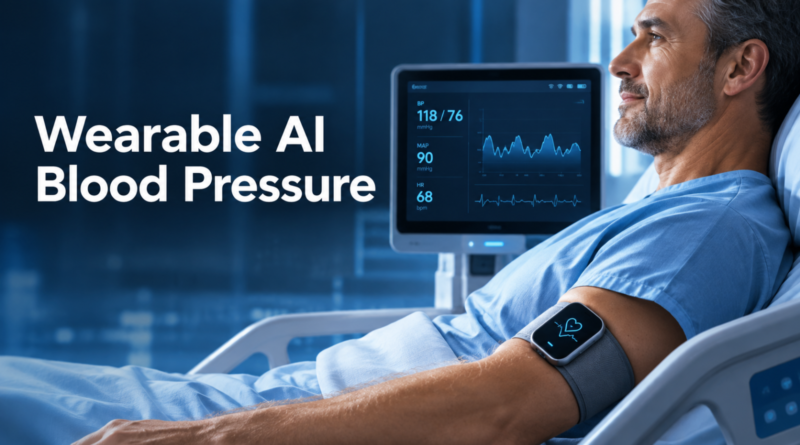
Johns Hopkins researchers tested a wearable sensor system paired with artificial intelligence that can reconstruct continuous blood-pressure waveforms without inserting a catheter into an artery.
02 What Changed?
The system, called MOSAIC, uses sensors on the chest and finger to capture heart and blood-flow signals. A deep-learning model converts those signals into a continuous blood-pressure reading.
03 Why It Matters
ICU patients often need constant blood-pressure monitoring, but arterial lines are invasive and can cause bleeding, clotting, infection, and reduced mobility. A reliable non-invasive alternative could improve safety and eventually expand continuous monitoring beyond intensive care.
04 What It Means for You
The technology is still being validated and is not ready to replace standard arterial monitoring everywhere. If larger studies confirm the results, the same approach could eventually be useful in hospital wards or even for people managing hypertension at home.
05 Numbers + Context
In an initial study of 28 ICU patients at Johns Hopkins Hospital, the system produced waveforms that closely matched traditional arterial catheter readings. Researchers are now testing it in a larger group. Source: Johns Hopkins Biomedical Engineering.
06 Earnyx Takeaway
This is a strong example of AI becoming useful when it removes friction from something clinicians already need. The real breakthrough would not be the algorithm itself, but making continuous blood-pressure monitoring safer, easier, and available in more places.


