ATM Fees Abroad: Why Cash Withdrawals Can Cost More Than You Expect
Table of Contents
01 Event
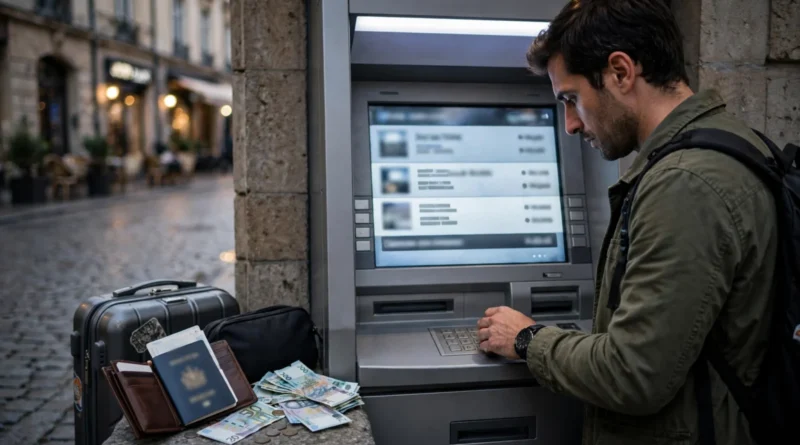
Travelers often rely on ATMs for local currency because withdrawing cash after arrival is convenient. The screen may show one fee, but that is not always the complete cost.
02 What Changed?
An international withdrawal can involve several layers: a local ATM operator fee, a fee from your own bank, a foreign transaction or currency conversion charge, and potentially an unfavorable conversion option presented by the ATM.
03 Why It Matters
Fixed fees punish small withdrawals. Taking out the equivalent of $20 while paying $5 in combined fixed charges effectively adds 25% before considering any exchange-rate cost.
04 What It Means for You
Check your bank’s international ATM terms before departure. When safe and practical, fewer appropriately sized withdrawals can reduce repeated fixed charges. Be cautious when an ATM offers to convert the withdrawal into your home currency; compare the displayed conversion with letting your card network or bank handle the conversion.
05 Numbers + Context
Suppose an ATM charges $4 and your bank charges another $3. Four small withdrawals create $28 in fixed fees, while one withdrawal would incur the fixed fee stack once. Your actual costs depend on the bank, ATM network, country and account.
References: Consumer Financial Protection Bureau — Bank Fees; review your own bank’s current fee schedule before travel.
06 Earnyx Takeaway
The cost of overseas cash is not just the exchange rate. Look at the entire withdrawal chain. Repeated small ATM visits can turn a few fixed fees into a surprisingly expensive way to access your own money.