Personal-Item-Only Travel: How Much Can You Really Save by Packing Light?
Table of Contents
01 Event
As airlines increasingly charge separately for cabin and checked baggage, some travelers are reducing luggage to the smallest allowance included with the ticket: a personal item that fits under the seat. The strategy can cut flight costs and simplify airport movement, but packing extremely light is not automatically the best value for every trip.
02 What Changed?
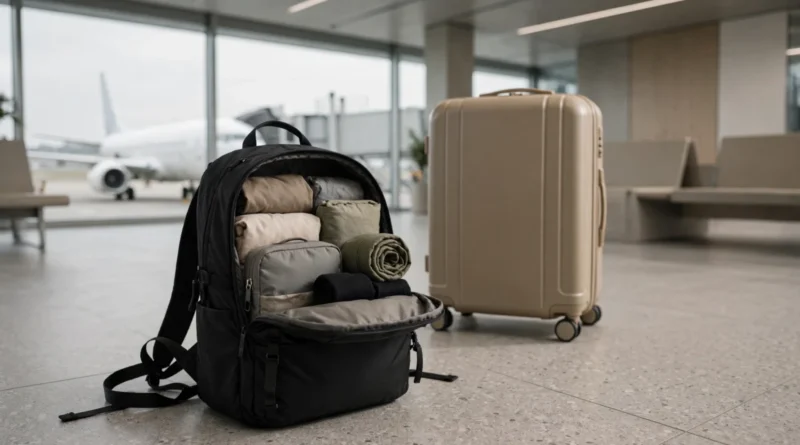
Low headline fares often rely on unbundled baggage. A carry-on that once felt like a normal part of flying may now add a separate fee on some fare types. Travelers have responded with compact backpacks, packing cubes and minimalist wardrobes designed around personal-item dimensions.
Airline size and weight limits vary, so a bag accepted by one carrier may not qualify on another.
03 Why It Matters
Baggage fees are recurring trip costs. Avoiding a $40 carry-on fee each direction saves $80 on one round trip. Frequent travelers can save hundreds over a year.
But packing too aggressively can create replacement spending at the destination. Buying toiletries, clothing or other items because they did not fit reduces the saving. The strategy can also be impractical for cold climates, formal events, long trips or travel with specialized equipment.
04 What It Means for You
Start with the airline’s actual personal-item dimensions, not the bag manufacturer’s marketing. Pack around the trip’s essential activities and weather. Rewearing versatile clothing and using accommodation laundry can extend a small wardrobe significantly.
Do not buy expensive minimalist travel gear solely to avoid a small number of baggage fees without calculating payback. A $180 specialty backpack replacing a $40-each-way carry-on fee needs several trips before the equipment itself produces savings.
Also consider convenience. Traveling without overhead-bin luggage can speed boarding, connections and ground transportation. That nonfinancial benefit can be substantial on multi-city trips.
05 Numbers + Context
Suppose a round trip charges $45 each way for a larger cabin bag. Personal-item-only travel saves $90. If you take five similar trips a year, potential annual savings reach $450.
Now assume minimalist packing causes you to spend $35 on items at the destination during each trip. The effective saving falls to $55 per trip, or $275 annually. Still useful, but materially different from the headline baggage-fee avoidance.
Because baggage rules differ by airline and fare, verify the exact dimensions, weight limits and enforcement policies before departure.
There is also a risk-management advantage: keeping everything with you eliminates checked-bag delay or loss from the itinerary. On tight connections or short trips, that can be worth more than the fee saving itself. However, liquids and security restrictions may make a tiny cabin-only setup less practical depending on what you need to carry.
Couples and families can mix strategies rather than applying one rule to everyone. Sharing one paid larger bag while the remaining travelers use personal items can preserve most of the savings without forcing every essential into the smallest allowance.
06 Earnyx Takeaway
Personal-item-only travel is strongest when packing light fits the trip naturally. It can reduce baggage fees, waiting and physical hassle without sacrificing much. The goal should not be fitting everything into the smallest possible bag at any cost. Compare the avoided fee with any gear purchases, destination spending and inconvenience. If the trip still works comfortably with less luggage, the saving is real—and you may discover that carrying less is valuable even beyond the airfare.