
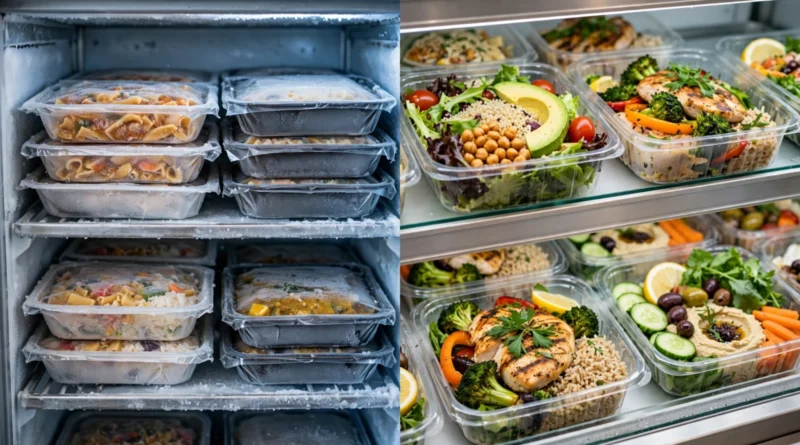
Frozen Ready Meals vs Fresh Prepared Meals: What Are You Paying for Convenience?
Table of Contents
01 Event
Supermarkets now offer a wide range of meals that require little or no preparation, from long-lasting frozen entrées to refrigerated fresh prepared dishes. Both options sell convenience, but their economics differ because one prioritizes storage life while the other emphasizes freshness and immediate use.
02 What Changed?
Prepared-food sections have expanded beyond basic frozen dinners. Consumers can buy refrigerated bowls, cooked proteins, salads, side dishes and complete meals designed to compete with takeout. At the same time, frozen food quality and variety have improved, giving households more ways to keep fast meals available without ordering from a restaurant.
This creates a useful decision: pay more for a fresh prepared meal that may feel closer to restaurant food, or keep frozen options that can wait in the freezer until needed.
03 Why It Matters
Sticker price is only one part of the comparison. Fresh prepared food may have a short use-by window, creating waste if plans change. Frozen meals can remain available much longer, which gives them option value: they can prevent an expensive last-minute delivery order weeks after purchase.
Portion size also matters. Two products with similar package prices may contain very different amounts of food. Comparing cost per serving or per unit of weight can reveal a different result than comparing packages.
04 What It Means for You
Use fresh prepared meals when you know when they will be eaten and value texture, variety or minimal reheating. Use frozen meals as flexible backup inventory for unpredictable schedules.
Compare nutrition and ingredients based on your own priorities rather than assuming “fresh” automatically means healthier or “frozen” automatically means lower quality. Both categories contain a wide range of products.
Think about waste. A $10 fresh meal thrown away is more expensive than a $7 frozen meal that gets eaten. Conversely, a freezer packed with forgotten meals is not saving money either. Inventory only has value when it eventually replaces another purchase.
05 Numbers + Context
Suppose a refrigerated prepared meal costs $11 and a comparable frozen meal costs $7. The fresh option carries a $4 premium. Buying two fresh meals each week instead of frozen alternatives would add roughly $416 a year if all are consumed.
But imagine the frozen meal prevents one $25 delivered dinner each month. Even after paying $7 for the frozen meal, the household avoids roughly $18 of alternative spending each time, or $216 over a year. The value comes from what the convenient meal replaces.
Prices, serving sizes and product quality vary widely, so shoppers should compare current labels and unit prices for products they would genuinely eat.
Storage capacity is another practical constraint. Frozen meals need freezer space, while fresh prepared food competes for refrigerator space and must be consumed quickly. A bargain is less useful if the household lacks room to store it safely or forgets it before use.
06 Earnyx Takeaway
Frozen and fresh prepared meals solve slightly different convenience problems. Fresh prepared food is strongest when you want a near-term meal with minimal work; frozen food is strongest when you want inexpensive flexibility waiting for a busy day. The best household strategy may use both: fresh meals for planned convenience and frozen meals as insurance against expensive impulse takeout. Judge each option by price, waste risk and what it realistically replaces.



Pingback: Freezer Grocery Savings: What Actually Works