
Taylor Swift Reveals ‘I Knew You Were Trouble’ Started as a Sad Piano Ballad
Table of Contents
01 Event
Taylor Swift has revealed that “I Knew You Were Trouble,” one of the defining pop singles from her 2012 album Red, originally sounded very different from the finished record millions of listeners know.
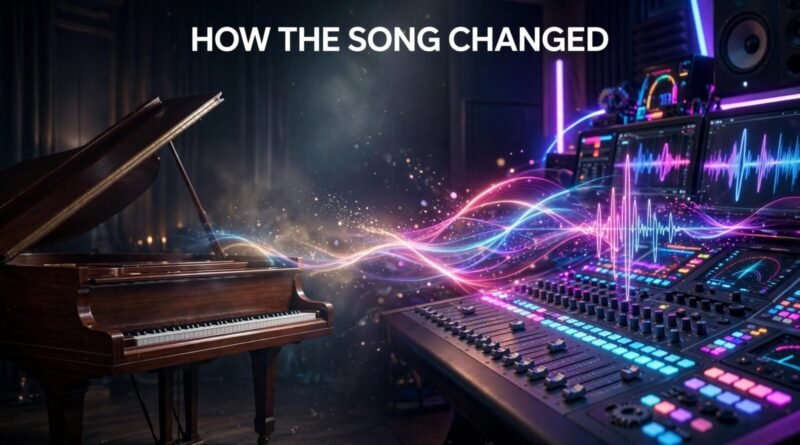
Speaking during the Grammy Museum’s Icon Sessions retrospective in Los Angeles, Swift said the song began as a “really sad” piano ballad. The transformation came during the production process with Max Martin and Shellback, whose approach pushed the track toward the aggressive electronic sound that ultimately became part of its identity.
02 What Changed?
The underlying songwriting did not need to be discarded. The lyrics, melody and emotional premise already existed. What changed was the way those elements were presented.
Swift explained that producers Martin and Shellback taught her that production does not always have to mirror the emotion of the lyrics. A sad lyric can be paired with energetic or unexpected production, creating tension between what the song says and how it feels. In the case of “I Knew You Were Trouble,” that experimentation helped move the song away from a conventional piano ballad and toward the explosive pop production associated with the released version.
03 Why It Matters
The story is resonating with fans because familiar cultural products often feel inevitable in hindsight. Once a hit has been heard millions of times, it is difficult to imagine it existing in another form. Swift’s account is a reminder that successful creative work frequently goes through major changes before the public sees the final version.
It also highlights the economic value of production. A song is not only lyrics and melody; arrangement, sound design, pacing and performance can determine the audience it reaches and the context in which people want to hear it.
“I Knew You Were Trouble” became a major commercial hit and reached No. 2 on the Billboard Hot 100. Its production was also widely discussed at the time because it represented a conspicuous expansion of Swift’s sound beyond the country-pop identity associated with her earlier work.
04 What It Means for You
There is a broader consumer and creator lesson here. A product can have a strong core idea and still underperform if the packaging, positioning or presentation does not connect with the intended audience.
That applies to far more than music. A restaurant can keep the same food while changing how it is presented. Software can keep the same underlying capability while simplifying the interface. A creator can keep the same insight while changing the headline, pacing or visual format. None of those changes automatically makes the underlying product better—but they can dramatically change how people experience it.
The important distinction is between improving the idea and improving its delivery. Swift’s story suggests that the final breakthrough for this particular song came from being willing to reconsider the second part.
05 Numbers + Context
“I Knew You Were Trouble” was released during the Red era and peaked at No. 2 on the Billboard Hot 100. More than a decade later, the production decision is still notable enough to become a fresh discussion point during a 20-year retrospective of Swift’s songwriting career.
The Grammy Museum event included an extended conversation about songwriting and performance, giving audiences new context around how several familiar songs developed.
06 Earnyx Takeaway
The interesting part of this story is not simply that a Taylor Swift song once sounded different. It is that a major hit emerged after collaborators challenged the obvious way to package an already-written idea.
Consumers usually encounter only the final product, so the decisions behind it are invisible. Yet those decisions—production, design, format, timing and positioning—can determine whether a good idea stays niche or reaches a much larger audience.
Sometimes the valuable change is not replacing the product. It is finding the version of the product that communicates its value better.
Sources / References
NBC reporting on Swift’s Grammy Museum comments, Aug. 25, 2026; Grammy Museum / Recording Academy Icon Sessions material; JamBase coverage of the interview and performance; historical Billboard chart context.