
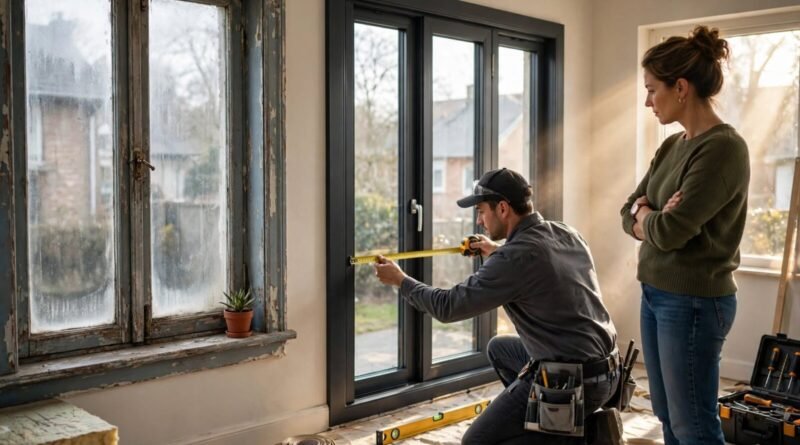
Window Replacement Economics: When New Windows Save Money—and When They Don’t
Window replacement is often sold as an energy-saving project, but the financial case depends on more than the efficiency label. Existing window condition, air leakage, climate, installation quality, shading, utility rates, comfort problems, and the price of the replacement all matter.
The strongest decision starts by separating three goals: fixing failed windows, improving comfort, and reducing energy use. A project can be worthwhile for one reason even when the energy payback alone is weak.
Table of Contents
Start with the problem you are trying to solve
Replacement can make sense when windows are rotted, difficult to operate, leaking water, structurally damaged, or failing in ways that repair cannot reasonably solve. Energy savings may then be a secondary benefit.
If the existing windows are functional, the question becomes whether lower air leakage, better glass performance, improved comfort, or reduced maintenance justify the installed cost.
DOE distinguishes window replacement from lower-cost improvements
The U.S. Department of Energy’s Energy Saver window guidance discusses both replacing windows and improving existing ones with measures such as weatherstripping, caulking, storm windows, and coverings.
That matters because a full replacement is not always the first or cheapest way to address drafts and heat gain.
Air leakage and glass performance are different issues
A window can feel drafty because of gaps around the sash or frame, while solar heat gain and conductive losses depend more on glazing and frame properties.
Diagnose the source before assuming every comfort problem requires new windows.
Installation quality matters
An efficient window installed poorly can leak air or water. The rough opening, flashing, sill pan, insulation around the frame, exterior sealants, and interior air seal all affect performance.
Compare installation details, not only the window brand.
ENERGY STAR ratings can help compare products
ENERGY STAR provides criteria for certified residential windows, doors, and skylights. Ratings such as U-factor and solar heat gain coefficient help compare thermal performance for different climates.
Use the ratings to choose among suitable products, but do not assume a certified window guarantees a short financial payback in every home.
A hypothetical energy-payback example
Suppose a window project costs $18,000 installed and the homeowner estimates, using actual utility data and a credible energy model, that the project saves $450 per year in heating and cooling.
The simple energy-only payback is 40 years:
$18,000 ÷ $450 = 40 years
That does not mean the project is bad. It means comfort, maintenance, noise reduction, water control, and replacement of failing windows are doing much of the economic work.
These figures are hypothetical.
Repair can be financially stronger for serviceable windows
Weatherstripping, sash repair, hardware replacement, exterior caulking, storm windows, or targeted glazing work may solve the main problem at far lower cost.
Historic or durable older windows can sometimes be repaired effectively, depending on condition and local expertise.
Water damage changes the urgency
Rot, staining, failed flashing, or repeated leakage can damage walls and framing. In that case, the project should address the building-envelope defect, not simply replace the sash.
Ask whether the proposed scope includes correcting flashing and exterior water management.
Noise and comfort have value
Improved glazing and tighter assemblies can reduce drafts, cold interior surfaces, and outdoor noise. These benefits can be important even when they do not appear on the utility bill.
Separate these quality-of-life benefits from the claimed energy savings so the decision remains transparent.
Shading can be cheaper than replacement for solar gain
Exterior shading, awnings, window films where appropriate, blinds, trees, and other strategies can reduce unwanted solar heat gain depending on orientation and climate.
If afternoon overheating is the main problem, replacing every window may be unnecessary.
Compare full installed scopes
For each bid, record:
- window type and manufacturer;
- U-factor and solar heat gain coefficient;
- frame material;
- glass package;
- full-frame versus insert installation;
- flashing;
- interior and exterior trim;
- lead-safe work where applicable;
- disposal;
- and warranties.
Lead-safe work can apply in older homes
Replacing windows in pre-1978 U.S. housing can disturb painted surfaces and may trigger EPA Renovation, Repair and Painting requirements.
Do not compare a compliant bid with one that ignores required lead-safe practices.
Financing can overwhelm modest energy savings
If a project is financed, include total interest and fees. A $200 monthly loan payment is not offset by $40 monthly utility savings simply because the project is “energy efficient.”
Use the expected ownership period
Energy savings accumulate over time. If you expect to move in a few years, the value you personally capture may be smaller, although resale appeal or condition can still matter.
Internal Earnyx comparison
Earnyx’s insulation versus new windows analysis explains why building-envelope upgrades should be ranked by the actual problem they solve rather than by marketing visibility.
Bottom line
Window replacement is financially strongest when the existing windows are failing, water-damaged, difficult to operate, or causing comfort problems that cheaper repairs cannot solve.
For energy savings alone, compare the full installed cost with realistic modeled savings, and test lower-cost measures first. New windows can be a good project without pretending that every replacement pays for itself quickly on utility bills.