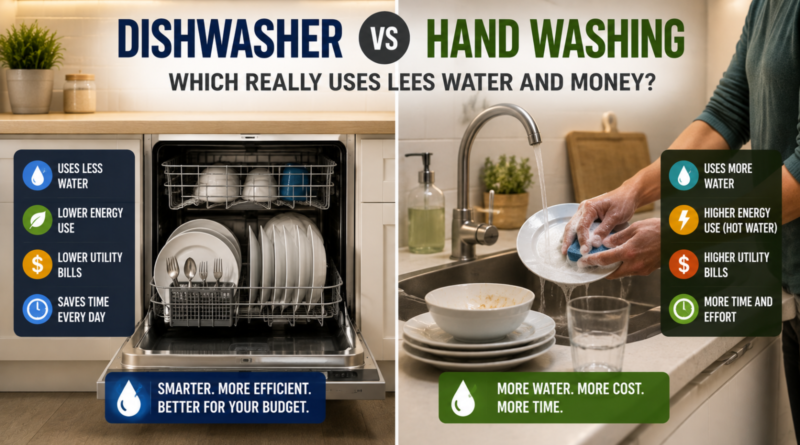
Dishwasher vs Hand Washing: Which Really Uses Less Water and Money?
Table of Contents
01 Event
Hand washing dishes feels cheaper because there is no machine running, but modern dishwashers have become efficient enough that the intuition can be wrong. ENERGY STAR says a certified dishwasher can use less than half as much energy as hand washing and can save thousands of gallons of water per year.
02 What Changed?
Older dishwashers gave efficiency a bad reputation. Newer models use soil sensors, tighter water limits and lower-energy drying options. The comparison now depends heavily on whether the dishwasher is run full and whether dishes are pre-rinsed under running water.
03 Why It Matters
The cost is not just electricity. Hand washing can consume more hot water and more of your time. A dishwasher that uses fewer gallons per cycle can lower both water and water-heating costs while also freeing time.
04 What It Means for You
Run full loads, scrape food instead of rinsing every plate, and use an air-dry or no-heat setting when practical. If your dishwasher is very old, compare its EnergyGuide estimate with a current model before assuming replacement makes financial sense.
05 Numbers + Context
ENERGY STAR says using a new certified dishwasher instead of hand washing can cut utility bills by about $220 per year and save roughly 8,400 gallons of water annually under its test assumptions. Standard certified models are limited to about 3.2 gallons per cycle. Source: ENERGY STAR, “Dishwashers” — https://www.energystar.gov/products/dishwashers
06 Earnyx Takeaway
The dishwasher is not automatically cheaper, but efficient machines used correctly can beat hand washing on both money and time. The biggest waste is usually not the appliance itself; it is half-empty cycles and long pre-rinses that erase the efficiency advantage.