Furniture Assembly Service vs DIY: When Is Paying for Setup Worth It?
Paying for furniture assembly can look extravagant when the instructions are included for free. But DIY assembly has a real cost in time, tools, frustration and the risk of mistakes. The decision is a classic time-value calculation: does the service fee cost less than the time and risk it removes?
Table of Contents
01 Event
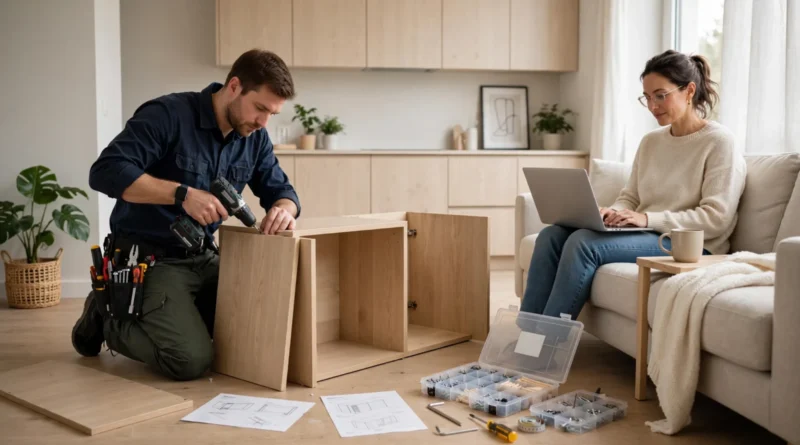
Flat-pack furniture keeps purchase and shipping costs down by transferring final assembly to the buyer. Retailers and third-party services increasingly offer paid setup, turning assembly into an optional add-on rather than an unavoidable chore.
The service can be worthwhile for complex items, large orders, people with limited time or households without appropriate tools. Simple furniture may still be easy to assemble yourself.
02 What Changed?
Online booking has made assembly services easier to price and schedule. Buyers can often see the service cost before checkout, which makes it possible to compare the fee directly with expected DIY time.
That transparency is useful only if the scope is clear. Some services assemble the item but do not move packaging, mount furniture to walls or correct pre-existing product defects.
03 Why It Matters
DIY is not free when it consumes scarce weekend or evening hours. But assigning an unrealistic hourly value to leisure time can also make every convenience service look worthwhile.
The most useful approach is to ask what you would genuinely do with the saved time and how much you would willingly pay to avoid the task.
Earnyx’s remote work versus commuting guide uses a similar framework for translating hours saved into a practical personal value.
04 What It Means for You
Estimate DIY time from the product complexity, number of pieces and your experience. Include unpacking, tool setup, cleanup and correction time—not just the minutes spent tightening fasteners.
Check whether you already own the required tools. Buying a drill, bits or specialty tools solely for one project raises the DIY cost, although reusable tools retain future value.
Read the assembly-service scope. Confirm whether anchoring, disposal of packaging, moving the finished item and rescheduling are included.
Consider injury and lifting risk. Large or awkward furniture may require two people even if the instructions are straightforward.
05 Numbers + Context
Suppose a hypothetical assembly service costs $90. You estimate the project would take four hours yourself, including unpacking and cleanup. The service effectively costs $22.50 for each DIY hour avoided.
If the job would take only 45 minutes, the same $90 fee costs $120 per hour saved. That makes DIY much more attractive unless the task is particularly difficult or risky.
These figures are illustrations; service pricing and assembly times vary by product and location.
06 Earnyx Takeaway
Paid assembly is most valuable when the item is complex, your time is constrained or mistakes could be costly.
Simple items with clear instructions and tools you already own are usually stronger DIY candidates.
Bundle economics matter. A service call that covers several pieces can produce a lower effective fee per item than paying separately.
Delivery timing matters. If furniture arrives before a move, event or guest visit, professional setup may reduce deadline risk.
Check damage responsibility. Understand what happens if the assembler damages the furniture or discovers missing parts.
Wall anchoring deserves special attention. Some furniture should be anchored for safety, but this may require different tools or service scope.
Keep instructions and spare hardware after professional assembly. You may need them for moving, adjustment or future disassembly.
DIY experience compounds. The first flat-pack project may take hours, while later ones become faster. If you expect to assemble furniture regularly, learning has future value.
Professional experience compounds too. A skilled assembler may complete a project much faster than a first-time buyer and recognize errors before they become difficult to undo.
Travel or minimum-call fees can make small jobs poor candidates for paid service. Compare the complete checkout price.
Do not value every saved hour at your wage automatically. An hour of free time cannot always be converted into paid work. Use the amount you personally would pay to reclaim that hour.
The Earnyx method is to divide the complete service fee by realistic hours avoided, then add tool, error and lifting risk. Pay when that effective hourly price is worth the convenience to you.