
Pay for a Seat Assignment or Take the Free Seat at Check-In?
Table of Contents
01 Event
Many airline fares no longer include unrestricted advance seat selection. Travelers can pay to choose a seat before departure or wait for a free assignment during check-in. The choice turns something once treated as part of the ticket into a separate purchase.
02 What Changed?
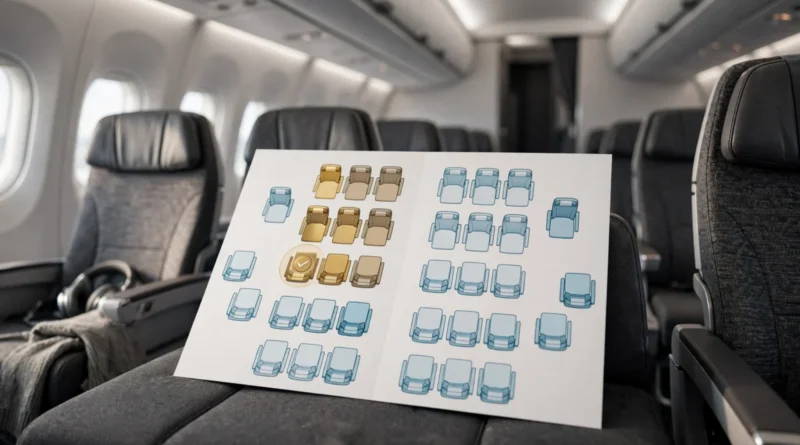
Airlines increasingly monetize seat maps by charging for preferred locations and, on some fares, ordinary advance assignments. Prices can vary by row, location, flight and demand. Travelers who decline may receive an automatically assigned seat later, subject to availability and airline policy.
Paying therefore buys certainty about location more than transportation itself: both passengers still reach the same destination.
03 Why It Matters
Seat value differs dramatically by traveler. A solo passenger on a short flight may care little about an aisle versus middle seat. A family, couple, tall traveler or someone who needs easy aisle access may place much greater value on knowing the seat in advance.
Small fees also multiply. A $20 seat selection each way is $40 per traveler. For four people on a round trip, that becomes $160 before any baggage or other extras.
04 What It Means for You
Decide what outcome you are actually trying to protect. If any standard seat is acceptable, waiting can preserve money. If sitting together or avoiding a middle seat materially affects the trip, advance selection may be a rational purchase.
Review the airline’s family-seating and assignment policies rather than assuming payment is always necessary or that adjacent seats are guaranteed without it. Policies differ by carrier and jurisdiction.
Also check the seat map over time. Paying early may offer the widest choice, but the existence of many unassigned seats does not necessarily mean they will remain available at check-in.
05 Numbers + Context
Suppose advance selection costs $18 per segment. One traveler taking a round trip pays $36 for certainty. A family of four pays $144. If the flight is two hours long, the family is effectively deciding whether several hours of preferred seating arrangement are worth $144.
On a 12-hour flight, the same amount may feel very different. Duration, group size and personal comfort change the value even when the fee is identical.
Seat fees and assignment rules vary by airline, fare and route, so use the carrier’s current seat map and conditions when making the decision.
Consider whether status, credit-card benefits or fare class already includes seat selection before paying. Travelers sometimes buy an option that their existing benefits would have provided. Likewise, do not confuse a paid standard seat with an extra-legroom product; the first may simply reserve location while the second changes the physical space.
For connecting itineraries, price every segment. A small fee repeated across four flight legs can turn into a surprisingly large add-on.
06 Earnyx Takeaway
Advance seat assignment is an optional certainty purchase. It makes the most sense when seat location or sitting together has real value to you. If you genuinely do not care where you sit, paying simply because the seat map prompts you to choose can be unnecessary. Multiply the fee across every segment and passenger, then decide whether the comfort and certainty are worth the complete amount.


