
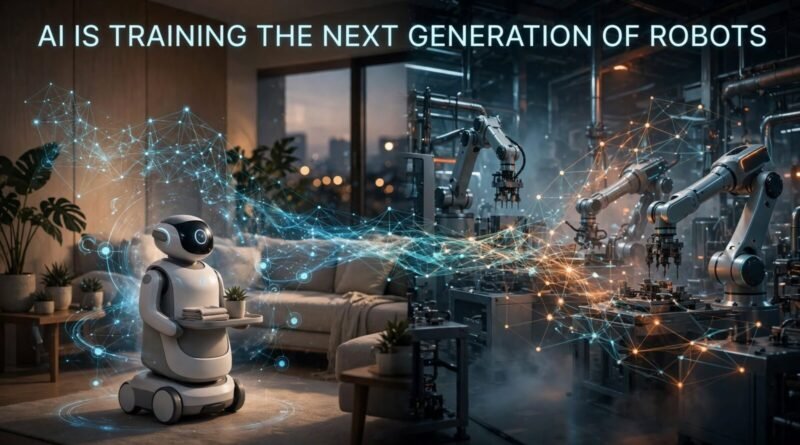
LG Is Using NVIDIA Technology to Train Home and Factory Robots
LG Electronics is accelerating its robotics push with a new Data Factory in Seoul designed to train machines for household, manufacturing and logistics work. The facility combines LG’s real-world operational data with NVIDIA’s robotics and simulation technologies, illustrating how the next phase of artificial intelligence is moving from screens into physical machines.
Table of Contents
01 Event
LG announced in August 2026 that it is expanding its robotics collaboration with NVIDIA. Senior representatives from the companies met at LG’s Data Factory at the Yangjae R&D Campus in Seoul after LG Group and NVIDIA signed a memorandum of understanding on strategic collaboration.
The facility is intended to generate and expand robot-learning data. LG’s CLOiD home robots will perform household tasks, while other machines will train on manufacturing and logistics activities. NVIDIA technologies including Omniverse libraries, Cosmos open-world models and the Isaac robotics platform are being used across the data-to-deployment workflow.
02 What Changed?
LG is treating robotics training as an industrial-scale data problem. Instead of teaching a robot only through isolated demonstrations, the company wants a continuous “data flywheel” in which real activity produces training data, synthetic systems expand it, and improved models are deployed back into machines.
The strategy also connects several LG businesses. Home robots can learn domestic tasks, industrial robots can practice factory operations, LG CNS can apply robotics to logistics automation, and LG Innotek can work on robotic-hand training.
03 Why It Matters
Generative AI became powerful partly because enormous datasets and computing infrastructure allowed models to learn patterns at scale. Robotics faces a harder version of that problem because physical environments are messy. Objects move, surfaces differ, people behave unpredictably and mistakes can damage equipment or injure someone.
Simulation and synthetic data can let developers expose robots to more scenarios without reproducing every situation physically. Real-world training remains essential because simulations cannot perfectly represent homes, factories and warehouses.
04 What It Means for You
Consumers should not expect general-purpose household robots to become ordinary appliances overnight. Training data, hardware cost, reliability and safety remain substantial constraints. However, investment at this scale suggests that large manufacturers increasingly see robotics as a commercial platform rather than a laboratory project.
The earliest impact may be less dramatic: better logistics, factory automation and specialized machines performing repetitive tasks. Home robots could follow as systems become safer and more capable.
05 Numbers + Context
LG says the Yangjae Data Factory spans about 10,000 square meters across four floors and is expected to house several hundred robots by the end of 2026. The company expects directly collected and synthetically generated training material to reach about 100,000 hours by year-end—roughly 12 years of continuous data if viewed sequentially.
06 Earnyx Takeaway
The most important part of LG’s announcement is not a single robot. It is the infrastructure being built behind the robots. If physical AI becomes commercially important, companies with large amounts of real manufacturing, logistics and household-device data may have an advantage. LG is trying to turn that operational footprint into a training engine before the humanoid-robot market fully matures.
That makes the project a useful indicator to watch even before consumer humanoids become common. The investment is measurable today in facilities, computing infrastructure and training data, while the eventual commercial payoff remains uncertain.
Related Earnyx reading: For more on the economics behind AI adoption, see Nvidia Earnings Could Decide Whether the AI Rally Has More Room to Run and How Much Should You Really Pay for an AI Tool?.
Sources: LG Electronics corporate announcement, August 21, 2026; PhilSTAR Tech, August 25, 2026.



Pingback: Nvidia-Hugging Face Deal: What a $12.9B Buyout Could Mean
Pingback: Nvidia and Salesforce Rally as AI Spending Stays Strong
Pingback: AI Data Center Spending Tops $700B as Backlash Grows