Cash vs Credit Cards Abroad: Which Payment Method Costs Less?
Table of Contents
01 Event
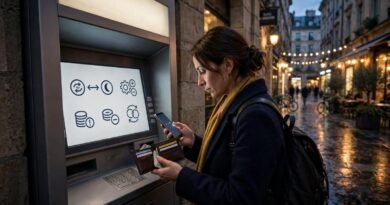
Paying abroad sounds simple until the first purchase appears in another currency. Travelers often choose between carrying cash, withdrawing local currency from an ATM or paying by credit card. Each option can work well, but each can also hide costs through exchange-rate spreads, foreign transaction fees, ATM charges, merchant conversion and poor payment habits.
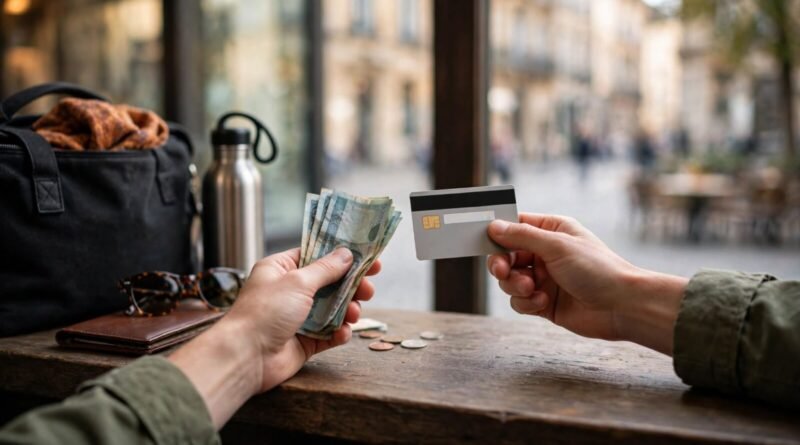
The cheapest-looking option is not always the cheapest in practice. Cash can feel free once it is in your wallet, but exchanging too much can create conversion losses twice. Cards can offer strong exchange rates and fraud protection, but fees can erase that advantage. The real question is which mix gives you the lowest total cost with enough flexibility and security.
02 What Changed?
Card acceptance has expanded dramatically in many destinations, and contactless payment has reduced the need to carry large amounts of cash. At the same time, banks and card networks now handle currency conversion automatically at the point of purchase. This can be convenient, but travelers still need to understand whether their issuer charges a foreign transaction fee.
Another major issue is dynamic currency conversion. A merchant or ATM may offer to charge you in your home currency instead of the local currency. That sounds helpful because you immediately recognize the amount, but the conversion rate may include a markup. Choosing the local currency often lets your card network perform the conversion instead.
Cash remains important in destinations where small merchants, markets, taxis, tips or rural businesses prefer it. The best approach is usually not cash or card exclusively, but a deliberate combination.
03 Why It Matters
Payment costs are easy to underestimate because each individual fee looks small. A 3% foreign transaction fee on a $50 dinner is only $1.50. But if most of a $2,000 trip is charged to that card, the same fee can add roughly $60. Add ATM fees, poor exchange rates and leftover currency, and the total friction becomes noticeable.
Security matters too. Lost cash is usually gone permanently. A lost credit card can often be frozen and replaced, and many issuers offer fraud protections. On the other hand, relying on a single card can create a major problem if it is declined, locked or lost.
The payment method also affects budgeting. Cash provides a physical limit, which can help some travelers control spending. Cards create better transaction records but can make spending feel less visible until the statement arrives.
04 What It Means for You
Before traveling, check three things on your cards: foreign transaction fees, ATM withdrawal fees and cash-advance rules. A credit card can be excellent for purchases but expensive for withdrawing cash because cash advances may carry fees and immediate interest.
When using a card abroad, pay in the local currency unless you have a specific reason not to. If a terminal asks whether you want to pay in your home currency or the local currency, the local-currency option generally keeps the merchant from setting the conversion rate.
Carry enough local cash for small purchases, transport, tips and places that do not accept cards, but avoid carrying the entire trip budget in your wallet. Store a backup card separately from your main wallet so one loss does not eliminate every payment option.
For cash, compare airport exchange counters, local banks and ATM withdrawals. Airport kiosks are convenient but can offer weaker rates. ATMs can be efficient if your bank has low fees and you withdraw fewer, larger amounts without carrying excessive cash.
05 Numbers + Context
Imagine you spend the equivalent of $1,500 abroad. Card A charges a 3% foreign transaction fee. That adds $45 before any other costs. Card B charges no foreign transaction fee, so the same purchases avoid that charge. If both cards use similar network exchange rates, Card B has an obvious cost advantage.
Now consider cash. Suppose an exchange counter effectively gives you 4% less value than the market rate. Converting $1,000 would cost about $40 in exchange-rate spread. If you return home with $200 of unused foreign currency and convert it back at another poor rate, the round-trip loss increases.
ATM withdrawals can create a different pattern. If each withdrawal carries a $5 fee and the local ATM adds another $4, making six small withdrawals could cost $54. Three larger withdrawals would cut that direct fee burden in half, although safety and cash needs still matter.
There is no universal cheapest method because card terms, destination practices and exchange providers differ. What matters is calculating the friction around your actual payment choices.
06 Earnyx Takeaway
For most travelers, the strongest setup is a low-fee card for larger purchases, a debit or ATM option for local cash, and a modest cash reserve for situations where cards are inconvenient or unavailable. The goal is redundancy without paying unnecessary fees.
Do not judge a payment method by convenience alone. Check the exchange rate, transaction fee, ATM fee and conversion choice. A card with no foreign transaction fee can often be excellent value, while a poor cash exchange can quietly cost more than expected. But cash remains valuable as a backup and for cash-heavy destinations.
The Earnyx rule: use the payment method that minimizes total friction, not simply the one that feels easiest at the counter. That is how you know what your travel money is really worth.
Before departure, run a small payment test if possible: confirm your card works, verify the PIN, enable transaction alerts and know how to freeze the card quickly. These steps do not reduce exchange fees directly, but they reduce the cost of being unable to pay when you need to.