
The UAE Is Breaking Up Its 5-Gigawatt AI Mega-Campus — Why Concentrating Data Centers in One Place Became a Risk
The United Arab Emirates is rethinking the design of a planned 5-gigawatt AI data-center project after attacks in the Gulf exposed a new vulnerability: concentrating enormous amounts of computing capacity in one place can create a strategic risk as well as an efficiency advantage.
Table of Contents
01 Event
Reuters reported that the UAE is revising plans for a massive AI campus originally envisioned as a 10-square-mile development in Abu Dhabi. The project is now expected to shift toward a network of data centers spread across multiple locations, with some facilities potentially using hardened or underground infrastructure.
The review followed attacks that damaged data-center infrastructure in the UAE and Bahrain, forcing planners to reconsider how critical computing assets should be protected.
02 What Changed?
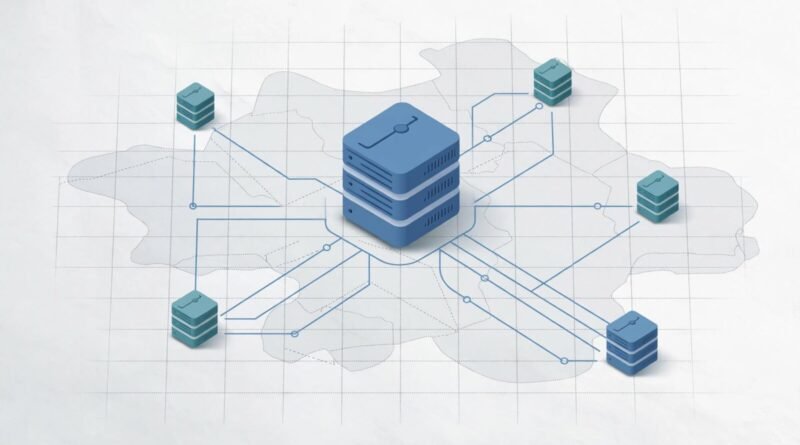
The original model favored scale: one enormous campus with power, networking and computing concentrated in a single location. That can reduce duplication and simplify infrastructure planning, but it also creates a single point of failure.
The revised approach prioritizes resilience. Distributed facilities can make an outage, attack or local power problem less likely to disrupt the entire network at once.
03 Why It Matters
AI infrastructure is becoming strategically important in the same way that ports, energy systems and telecommunications networks are. A large data-center cluster does not just host websites; it can support national AI systems, financial services, enterprise workloads and sensitive government applications.
That means future data-center design may increasingly include physical-security considerations that used to be associated mainly with military or energy infrastructure.
04 What It Means for You
For cloud and AI customers, distributed infrastructure can improve resilience if workloads can fail over between locations. The trade-off is cost: duplicating power, cooling, network links and security across several sites can be more expensive than concentrating everything in one campus.
For governments and investors, the story changes the definition of a “good” data-center project. Cheap land and power are not enough. Geographic risk, grid redundancy, physical security and recovery planning become part of the economics.
05 Numbers + Context
The project under review is planned at roughly 5 gigawatts, an extraordinary amount of computing-related power demand. The original design covered about 10 square miles. Reuters also reported that an early phase of the UAE’s Stargate project involves a $30 billion investment, with initial capacity planned to come online in stages.
Those numbers explain why architecture matters. A facility of this scale is too important to treat physical resilience as an afterthought.
06 Earnyx Takeaway
The AI boom has mostly been discussed in terms of chips, power and capital spending. The UAE rethink adds another constraint: resilience.
Concentrating infrastructure can be efficient, but efficiency loses value if one event can take too much capacity offline at once. The next generation of AI mega-projects may therefore look less like one giant campus and more like a distributed network designed to survive disruption.
The resilience issue goes beyond physical security. A single giant campus can concentrate electricity demand, network traffic, cooling needs and operational dependencies in one location. Distributing capacity across several sites makes the system more complicated to manage, but it can reduce the chance that one regional disruption knocks out an outsized share of computing capacity.
That trade-off is becoming more important as AI infrastructure grows. Earnyx has already examined how AI data-center spending is creating large power and water demands, while Google’s Finland investment tied AI expansion to long-term nuclear power. The UAE decision adds another constraint to the list: geographic concentration itself can become a risk.
A distributed design may also affect cost. Several smaller sites can require duplicated networking, security, backup power and support systems. On the other hand, they can make it easier to match new facilities with available grid capacity rather than forcing one region to absorb the entire load at once.
For governments trying to attract AI investment, that changes the pitch. Cheap land and large power allocations are no longer enough. Operators increasingly need reliable grids, redundant fiber routes, water or alternative cooling options, and a risk profile that supports continuous operation.
The UAE rethink is therefore less about abandoning scale than changing how scale is built. Five gigawatts of capacity remains enormous whether it sits in one campus or several. The question is whether the network can keep operating when one site, one grid connection or one regional corridor is disrupted.