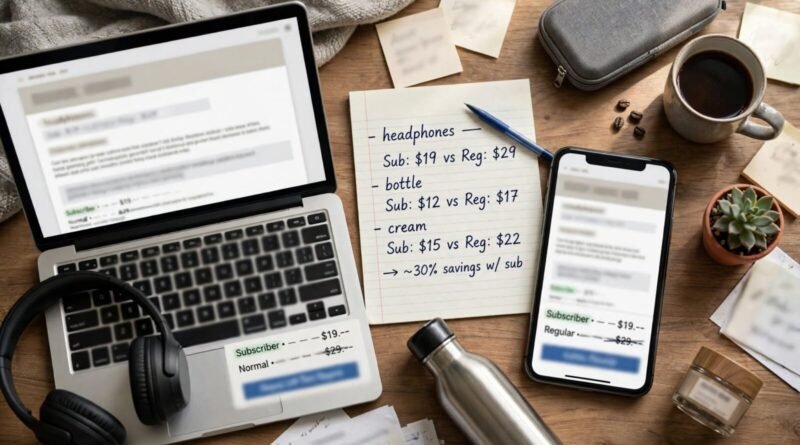
Black Friday Email Deals: Are Subscriber Discounts Better Than Public Sales?
Email subscriber discounts can make Black Friday feel like there are two different sale prices: the public price everyone sees and a private code reserved for people on the retailer’s list. Sometimes the subscriber offer is genuinely better. Other times the email simply announces the same promotion early, adds a small coupon with exclusions, or creates urgency around a price already available elsewhere.
The useful comparison is not “subscriber versus non-subscriber.” It is the final price for the exact product after all codes, exclusions, shipping, and competing offers are considered.
Table of Contents
Subscriber access can create real savings
A private coupon can be valuable when it stacks with an existing sale or reduces the price below competing retailers. If joining the email list is free, the financial barrier is low.
But the deal still needs to be compared against the market. Exclusivity is not proof of value.
Check whether the code stacks
Many subscriber codes exclude sale items, certain brands, gift cards, marketplace products, or other promotions. Black Friday can be especially restrictive because the public price is already discounted.
Read the terms before assuming “extra 15% off” applies to the product you want.
Example: a subscriber coupon that does not change the best price
Suppose a retailer publicly lists a product for $120. Email subscribers receive a 10% coupon, bringing it to $108. Another trusted retailer sells the same product for $105 with no sign-up.
The subscriber discount is real, but it is not the best market price.
These figures are illustrative.
Early access can be more valuable than a lower price
An email list may give subscribers access before the general public. That can matter when inventory is limited or the exact size, color, or configuration is important.
In that case, the value is reduced stock risk rather than a larger percentage discount.
Marketing exposure can increase spending
Joining a list means receiving more promotions, product recommendations, countdowns, and reminders. That can be useful for planned purchases and costly for impulse control.
The FTC has documented how urgency and digital design can influence consumer behavior through dark patterns. See its dark-pattern report.
Use a separate email folder or alias
If you subscribe primarily for discounts, routing promotional mail to a separate folder can help you use codes when needed without turning your main inbox into a constant shopping feed.
This is a behavioral control, not a financial one, but it can reduce the number of unplanned purchase prompts you see.
Welcome coupons may have waiting periods
Some new-subscriber discounts arrive immediately; others may take time or apply only to a first order. Terms change by retailer.
If you are joining for a specific Black Friday product, verify that the code has arrived and is valid before assuming the price.
Personalized email prices can be difficult to compare
A retailer may send different offers to different customer segments. That makes screenshots and saved emails useful when a promotion does not appear at checkout.
Keep the offer terms until the transaction is complete.
Email links deserve security caution
Major shopping periods attract phishing messages designed to resemble retailers and delivery companies. Instead of entering credentials through a suspicious email link, navigate to the retailer’s official site or app when uncertain.
A discount is not valuable if the message is fraudulent.
Compare against price history
A private code can still be applied to an inflated reference price. The FTC’s Guides Against Deceptive Pricing explain why former-price comparisons should reflect genuine prior pricing.
Earnyx’s holiday sale pricing guide provides a practical framework for checking whether the subscriber price is actually unusual.
Free shipping can matter more than the percentage
One email may offer 10% off; another may offer free shipping. The stronger option depends on basket size and delivery cost.
Calculate the final checkout total under each promotion rather than comparing percentages alone.
Do not subscribe to paid programs by accident
An email-list sign-up should be distinguished from a paid membership or subscription. If the offer requires a trial that later renews, the renewal terms are part of the deal.
Check for recurring charges before entering payment information.
Unsubscribing is part of the decision
If you joined only for a one-time code, you can review your preferences after the purchase. Reducing promotional exposure can make it easier to stick to a post-holiday budget.
A practical subscriber-deal test
Ask four questions: Is the code valid on the exact item? Does it stack with the sale? Is the final price lower than competing sellers? Would I buy the product even without the email urgency?
If all four answers are yes, the subscriber offer is likely creating genuine value.
Bottom line
Black Friday email discounts can be better than public sales, but only when the code actually applies and produces the lowest realistic total price for a purchase you already wanted.
Verify stacking rules, compare competitors, watch shipping, and separate useful early access from marketing pressure. The inbox label “exclusive” is not the important part—the final checkout price and the quality of the purchase are.