Home Inspection Costs: What Buyers Are Paying to Learn Before Closing
A home inspection is one of the few purchases in the homebuying process designed primarily to help the buyer understand the property’s physical condition before completing the purchase. The inspection fee can feel like another closing expense, but its value is not measured by whether the inspector “finds enough problems.” Its value is the information it gives you before you take responsibility for the house.
The right question is not whether the inspection is cheap. It is whether the scope is appropriate for the property and whether the findings help you make a better purchase decision.
Table of Contents
What a home inspection is for
HUD’s home inspection guidance explains that an inspection is intended to inform and educate the buyer about the condition of the property before making a financial commitment.
A qualified inspector generally evaluates visible and accessible components of the home and identifies items that appear defective, unsafe, near the end of useful life, or in need of further evaluation.
An inspection is not the same as an appraisal
HUD explicitly states that an appraisal is not a home inspection. The appraisal is primarily concerned with value and the lender’s collateral requirements. The inspection is for the buyer.
A home can appraise at the expected value and still have an aging roof, drainage problems, electrical issues, plumbing leaks, or other costly conditions that affect ownership.
Inspection fees vary because homes vary
There is no single inspection fee that applies to every property. Pricing can depend on:
- home size;
- age;
- location;
- property type;
- number of systems or structures;
- travel requirements;
- local licensing or market conditions;
- and whether specialized testing is added.
Use actual local quotes rather than treating a national average as a guaranteed price.
Ask what is included before comparing prices
Two inspection quotes can have very different scope. Ask whether the inspection covers:
- roof and exterior;
- foundation and visible structure;
- electrical system;
- plumbing;
- heating and cooling;
- attic and insulation where accessible;
- basement or crawlspace;
- built-in appliances where applicable;
- doors and windows;
- drainage and grading;
- garage;
- and other structures on the property.
Request a sample report and the inspector’s Standards of Practice before hiring.
Specialized testing may cost extra
A general home inspection does not automatically include every possible environmental or specialty test. Depending on the home and location, a buyer might consider separate testing or evaluation for radon, pests, sewer lines, wells, septic systems, mold, lead, asbestos, pools, chimneys, or other specific concerns.
HUD notes that buyers should ask whether additional health or safety testing is relevant to the property.
The cheapest inspection can be expensive if the scope is weak
Suppose Inspector A charges $350 and Inspector B charges $550. If Inspector B includes a more thorough report, better photo documentation, longer on-site time, or a relevant service that would otherwise cost separately, the higher price may be better value.
Those numbers are illustrative. The point is to compare scope and quality, not only the fee.
The inspection can change the purchase decision
A strong inspection can reveal information that affects:
- whether you proceed with the purchase;
- whether you request repairs;
- whether you renegotiate price or credits;
- whether you ask for specialist evaluations;
- and how much cash you should reserve for near-term work.
The exact rights available depend on the purchase contract and local law.
An inspection contingency can matter
Some purchase contracts include an inspection contingency or due-diligence period that allows the buyer to investigate the property and exercise specified rights within a deadline.
Waiving or shortening that protection can reduce your ability to respond to problems discovered later. Buyers should understand the contract language before making that trade.
Do not expect the inspector to predict every failure
A home inspection is generally visual and non-invasive. Inspectors cannot see through finished walls, predict the exact day an appliance will fail, or guarantee that no hidden defect exists.
The report is a snapshot based on accessible conditions at the time of inspection.
Age alone is not a repair estimate
An older roof, furnace, water heater, or electrical panel may deserve closer attention, but age does not tell you the exact remaining life or replacement date.
Use age as one input alongside condition, maintenance history, observed defects, and specialist advice.
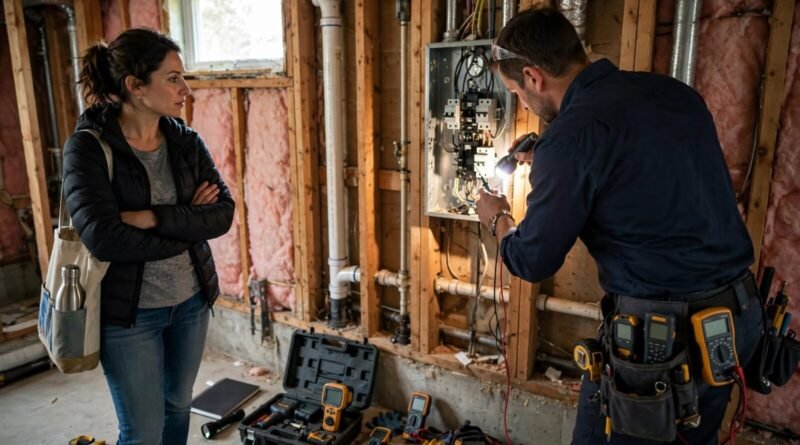
Attend the inspection when possible
Being present can help buyers understand how systems work, where shutoffs are located, which findings are urgent, and which are routine maintenance.
The written report remains important, but the walk-through can add context that is hard to capture in a list of defects.
Read the whole report, not just the summary
The summary often highlights major issues, but lower-priority observations can still matter for future maintenance and budgeting.
Separate findings into categories such as:
- immediate safety issues;
- major repairs;
- systems near end of service life;
- routine maintenance;
- and cosmetic items.
Convert findings into a financial plan
An inspection becomes more useful when you translate the report into likely ownership costs.
If the report identifies an older roof, active plumbing leak, failing appliance, or damaged exterior component, obtain qualified estimates where appropriate before closing or as soon as practical.
Do not invent repair costs from generic internet averages when the actual property can be quoted.
Use specialists for issues outside the inspector’s expertise
A general inspector may recommend further evaluation by a structural engineer, electrician, plumber, HVAC contractor, roofer, pest professional, or other specialist.
That recommendation is not necessarily evidence of a major defect. It often means the issue requires expertise beyond the general inspection.
New construction can still benefit from inspection
A newly built home can have installation errors, incomplete work, drainage issues, damaged finishes, or systems that need correction.
New does not mean perfect. The timing and scope of new-construction inspections can differ from resale inspections, so coordinate with the builder, contract, and inspector.
Inspection results should inform your repair reserve
Earnyx’s renting versus buying analysis emphasizes that maintenance and repair risk is part of the real cost of ownership. The inspection is one of the best opportunities to replace generic maintenance assumptions with property-specific information.
If the report suggests several systems may need work soon, closing with minimal cash reserves can be risky even when the mortgage payment itself is affordable.
Do not confuse cosmetic problems with expensive systems
Paint color, worn carpet, or outdated fixtures can be visually obvious but relatively easy to plan for. Structural, roofing, water intrusion, electrical, sewer, or HVAC problems can have much larger financial consequences.
Prioritize safety, water, structure, and major mechanical systems before aesthetics.
A practical inspection-cost checklist
- Get more than one local quote where practical.
- Compare scope, not only price.
- Ask for Standards of Practice and a sample report.
- Confirm whether specialized testing is included.
- Attend the inspection if possible.
- Read the complete report.
- Obtain specialist estimates for major concerns.
- Use findings to revise your post-closing cash reserve.
Bottom line
A home inspection fee buys information before you take ownership of a large, complex asset. The goal is not to find the cheapest inspector or to receive a flawless report. It is to understand the property well enough to price the risk you are accepting.
Choose an inspector based on scope, qualifications, reporting quality, and local requirements. Then use the findings to negotiate where appropriate, plan repairs, and decide whether the home still fits your budget after the hidden costs become visible.