Is Bottled Water Automatically Safer Than Tap Water?
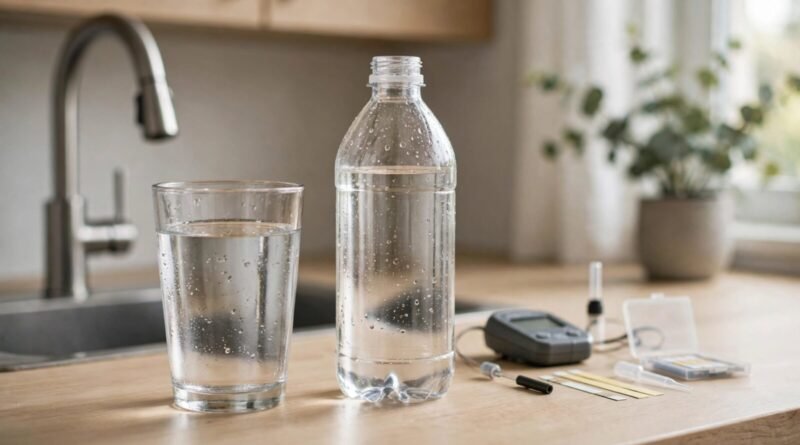
A sealed bottle can look cleaner and more controlled than water from a faucet, which makes “bottled equals safer” an intuitive belief. But packaging alone does not establish water quality. In the United States, public drinking water and bottled water are regulated under different federal frameworks, and both can be safe when requirements are met. The meaningful questions are where the water came from, how it was treated and tested, and whether there is a specific problem with the local supply.
Table of Contents
Different regulators cover tap and bottled water
The U.S. Environmental Protection Agency regulates public drinking-water systems under the Safe Drinking Water Act. The U.S. Food and Drug Administration regulates bottled water as a packaged food product. That means the two products do not follow an identical regulatory pathway, but neither category is simply unregulated.
Public water systems subject to EPA rules monitor for regulated contaminants and provide customers with information about water quality. Bottled-water producers are subject to FDA requirements governing processing and quality. A bottle on a store shelf therefore should not be treated as proof that the water is inherently purer than a compliant municipal supply.
Source water can overlap
Consumers sometimes imagine bottled water as coming only from remote springs. In reality, bottled-water sources vary, and some bottled water can originate from municipal supplies before additional treatment. Labels and producer information can help identify the type of water being sold.
The important safety question is not whether water traveled through a bottle or a pipe. It is whether the finished water meets applicable standards and whether there are local circumstances that change the risk.
Local problems are real
None of this means tap water is always safe everywhere. Contamination events, infrastructure failures, private-well problems and official boil-water or do-not-drink advisories can make an alternative water source necessary. Vulnerable populations may also receive specific medical or public-health advice depending on contaminants and local conditions.
When authorities issue an advisory, follow the instructions from the relevant water utility or public-health agency. A general article about bottled versus tap water should never override a current local warning.
Bottled water has storage considerations too
Packaging does not make water immune to poor handling. Bottles should be stored according to manufacturer guidance and protected from conditions that could damage containers. Once opened, bottled water can also be exposed to microorganisms from hands, mouths or the surrounding environment.
This is another reason to avoid thinking of bottled water as sterile. Ordinary bottled drinking water is a consumer beverage, not necessarily a sterile medical product.
Private wells are a separate case
People using private wells have different responsibilities because the EPA does not regulate individual private wells in the same way it regulates public water systems. Well owners may need to arrange testing and maintenance themselves, following state or local guidance. In that situation, bottled water can be a temporary alternative if testing identifies a problem, but the long-term solution is to understand and address the well-water issue.
Cost and waste matter after safety
If both options are safe, bottled water can cost far more per unit than tap water and creates packaging and transportation impacts. A reusable bottle filled from a safe public supply can therefore be a practical choice for many households. Filters may improve taste or reduce specific contaminants when the filter is certified for that purpose, but a filter should be selected based on an actual need rather than a vague assumption that all tap water requires treatment.
Consumers can review their public water system’s annual water-quality information and any current notices. If a particular contaminant is a concern, use evidence from testing and official guidance rather than judging water by taste, clarity or packaging alone.
Earnyx takeaway
Bottled water is not automatically safer than tap water. In the United States, public tap water and bottled water are regulated through different systems, and safety depends on compliance, treatment, monitoring, infrastructure and local conditions. A sealed bottle can be convenient and can be important during a verified water emergency, but the container itself is not a universal safety guarantee.
For routine decisions, start with the facts about your local supply. Read water-quality reports and official advisories, and use bottled water when there is a specific reason—not simply because packaged water looks more trustworthy.
Explore more consumer reality checks in Earnyx Everyday Myths.
Sources
U.S. EPA — Ground Water and Drinking Water; U.S. FDA — Bottled Water Everywhere: Keeping it Safe.