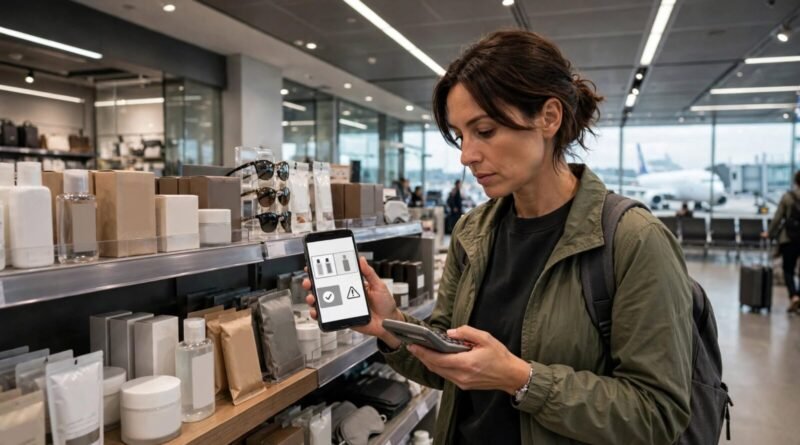
Does Duty-Free Always Mean the Cheapest Price?
“Duty-free” sounds like a synonym for “discount,” which is why airport shops can feel like automatic bargain zones. But duty-free is a tax and customs concept, not a promise that an item is being sold at the lowest available retail price. A product can avoid certain duties or taxes and still cost more than the same or a comparable product elsewhere.
Table of Contents
What duty-free actually means
Duty-free stores sell qualifying goods under customs arrangements that can remove certain domestic duties or taxes when the goods are exported by an eligible traveler. The exact rules depend on the country, destination and product. The label describes the tax treatment of the transaction; it does not regulate the retailer’s base price or profit margin.
A shop can therefore start with a higher pre-tax price than another retailer. Removing a tax from the higher price does not automatically create the lowest final price.
Your destination’s rules still matter
Travelers also need to distinguish buying an item duty-free at departure from importing it without additional charges at arrival. Countries have personal exemptions and allowances. In the United States, U.S. Customs and Border Protection explains that purchases made in a duty-free shop are not necessarily duty-free when brought into the country; whether duty is owed depends on the traveler’s exemption and applicable rules.
That distinction is important for higher-value purchases and regulated products. The fact that a store sold something under a duty-free arrangement does not erase the customs laws of the country you enter.
Why prices vary so much
Airport retail has its own costs and commercial agreements. Rent, staffing, logistics, concession fees, local competition and brand pricing can influence shelf prices. Currency conversion can also change the comparison for international travelers.
A product might be a genuine bargain in one airport and poor value in another. Even two terminals can have different promotions. That is why broad claims such as “perfume is always cheaper duty-free” or “electronics are always a deal at the airport” should be tested against current prices rather than assumed.
Exchange rates can erase an apparent saving
When prices are displayed in another currency, convert them using the rate you will actually receive, not a rough mental estimate. Card issuers may apply foreign-transaction fees, while merchants sometimes offer dynamic currency conversion. The final amount on your statement can differ from the number you first saw.
For expensive goods, a small exchange-rate difference can matter more than the tax saving. Compare the all-in price in a common currency.
Promotions complicate the comparison
Ordinary retailers run sales, loyalty discounts, coupons, bundles and online promotions. A downtown or online price that includes tax can still beat a duty-free airport price if the base price is lower or a promotion is stronger.
Warranty and return terms can also matter. An international purchase may be harder to return, and warranty coverage can vary by market. A small upfront saving is less attractive if after-sales support becomes difficult.
How to check a duty-free deal
Before traveling, record the normal price of any expensive product you expect to buy. At the airport, compare the exact model, size or package—not a superficially similar version. Convert currencies using a realistic rate and include card fees. Then consider the customs allowance at your destination and whether you may owe tax or duty on arrival.
For products with regional specifications, such as electronics, verify voltage, plugs, cellular bands, warranty territory and included accessories. A cheaper sticker price does not compensate for buying the wrong regional version.
Duty-free can still be worthwhile
None of this means duty-free shopping is a bad idea. Some products can be competitively priced, exclusive packages can be useful, and travelers may value the convenience of buying at the airport. The myth is the assumption that the words “duty-free” settle the price comparison before you do the math.
The strongest deals are those that remain cheaper after currency conversion, fees and any import obligations, while still offering acceptable warranty and return conditions.
Earnyx takeaway
Duty-free means a purchase receives particular tax or customs treatment under applicable rules. It does not mean “cheapest available.” Retailers still set prices, airports have different cost structures, exchange rates move, and destination-country allowances can affect what you ultimately pay.
Treat duty-free as one shopping channel, not a guaranteed discount. Compare the exact product’s final price with reputable alternatives before buying, especially for high-value items.
For more travel and consumer fact checks, browse Earnyx Everyday Myths.
Sources
U.S. Customs and Border Protection — Customs Duty Information; U.S. Customs and Border Protection — duty and personal exemption guidance.