
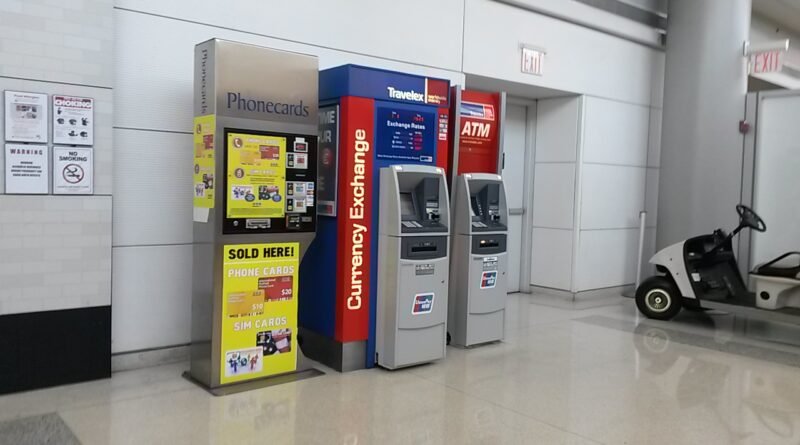
Airport Currency Exchange vs ATM: Which Usually Costs Less?
Table of Contents
01 Event
Travelers often need cash shortly after landing, which makes airport currency counters convenient. The problem is that the easiest place to exchange money is not always the cheapest, and the real cost can be hidden inside a poor exchange rate rather than shown as an obvious fee.
02 What Changed?
Modern travel gives you more ways to get local currency: airport exchange desks, bank ATMs, independent ATMs, debit cards and credit cards. Each can apply its own combination of exchange-rate markup, withdrawal fee, network fee or foreign-transaction charge.
03 Why It Matters
A visible $5 fee is easy to notice. A 4% worse exchange rate on a $500 conversion costs $20 and may look like no fee at all. That is why comparing only the stated transaction charge can be misleading.
04 What It Means for You
Before traveling, check three things: your bank’s foreign ATM fee, whether your card adds a foreign-transaction fee, and whether the ATM operator charges its own fee. When an ATM offers to convert the withdrawal into your home currency, compare that offered rate carefully rather than assuming the convenience option is cheaper.
05 Numbers + Context
The U.S. Consumer Financial Protection Bureau notes that foreign-transaction charges can apply to purchases or cash advances outside the United States or in foreign currency. The exact fee depends on the card agreement. Source: CFPB Regulation Z guidance.
Illustrative example: a 3% exchange-rate disadvantage on $1,000 of trip spending costs $30. Add two $5 ATM fees and the total currency-access cost becomes $40. That is why the effective exchange rate matters as much as the posted fee.
06 Earnyx Takeaway
The cheapest currency option is the one with the lowest total conversion cost, not the one advertising “no commission.” Check the rate, the card fee and the ATM fee together. Convenience at the airport can be useful for a small amount of arrival cash, but it should not automatically be your main exchange strategy.