
Are Unlimited Data Plans Actually Worth Paying For?
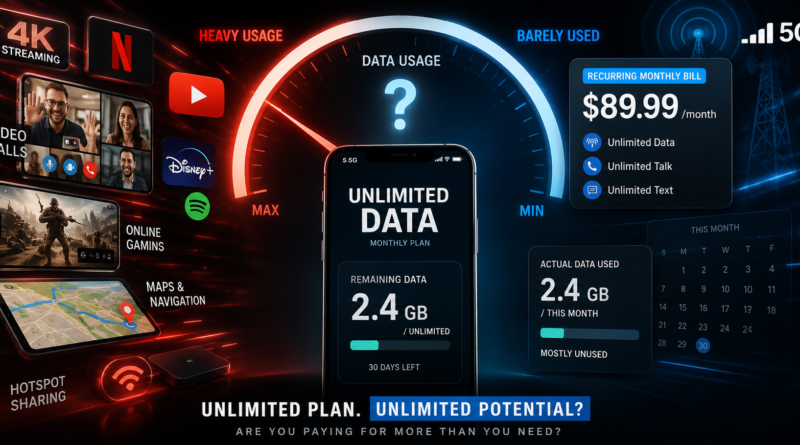
“Unlimited” is one of the easiest mobile-plan features to overbuy. It sounds reassuring because you never have to think about data, but the real value depends on how much data, hotspot use, and network priority you actually need.
Table of Contents
01 Event
Major carriers continue to market unlimited plans as the default premium option, but the details vary significantly. Some plans include unlimited high-speed smartphone data, while others introduce network-management thresholds, hotspot caps, or slower speeds after certain usage levels.
02 What Changed?
The word “unlimited” now covers a wide range of plan designs rather than one simple product. For example, AT&T’s current unlimited lineup includes plans with different amounts of high-speed data and hotspot allowances, while Verizon’s plans also separate premium data and hotspot features by tier.
03 Why It Matters
That means shoppers can pay more for capacity they rarely use. A plan can be technically unlimited while still treating hotspot data, video quality, or network priority differently after a threshold.
The cost also compounds. A plan that is only $10 more per month costs $120 more over a year; a $20 monthly premium becomes $240 annually.
04 What It Means for You
Check three to six months of actual mobile-data usage before choosing a plan. If you spend most of your time on Wi-Fi and rarely approach a normal data allowance, unlimited may be solving a problem you do not have.
Heavy streamers, frequent travelers, remote workers, and people who regularly tether laptops or tablets have a stronger case for paying more. Hotspot use is especially important because some plans provide much smaller high-speed hotspot allowances than their smartphone-data headline suggests.
For the broader ownership picture, compare the service cost with our five-year smartphone ownership-cost analysis.
05 Numbers + Context
- $10 extra per month: $120 per year.
- $20 extra per month: $240 per year.
- AT&T example: its Extra 2.0 plan lists 100GB of high-speed data and 50GB of hotspot data before additional network-management or hotspot-speed limits apply.
- AT&T Value 2.0 example: 5GB of high-speed data and 3GB of hotspot data are included before slower or managed usage applies.
- Verizon example: current plans can include separate premium-network-access and hotspot allowances depending on the plan.
These examples show why plan names are not enough. The useful comparison is the exact amount of priority data, hotspot data, and annual cost you are buying.
06 Earnyx Takeaway
Unlimited data is worth paying for when your usage is genuinely heavy, unpredictable, or business-critical—not simply because “unlimited” feels safer.
The best plan is the one that gives you enough headroom without charging you every month for capacity you almost never use. Check your actual usage, read the hotspot and network-management terms, and compare the annual premium before upgrading.
Sources: AT&T unlimited-plan details and Verizon plan comparison. Carrier terms, prices, and thresholds can change.


Pingback: The Real Cost of Owning a Smartphone for 5 Years - Earnyx