
Crypto Exchange Fees Explained: Trading Fees, Spreads, Withdrawal Fees and Hidden Costs
Table of Contents
01 Event
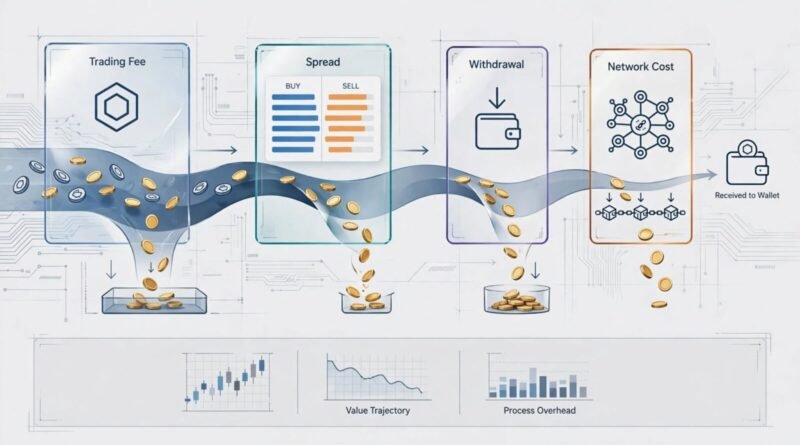
Crypto exchanges often advertise low trading fees, but the headline percentage is only one part of what a user can pay. The real cost of buying, selling or moving crypto can include maker and taker fees, a bid-ask spread, deposit or card charges, network withdrawal fees, conversion costs and sometimes different pricing based on volume or payment method.
02 What Changed?
Competition has pushed many exchanges to advertise very low spot-trading rates, but pricing structures have also become more complex. Some platforms use transparent order-book fees, while others present a simple buy or sell quote that already includes a spread.
03 Why It Matters
A small percentage difference compounds for active traders, while fixed withdrawal charges can matter more to occasional users moving small balances. The cheapest place to buy is not always the cheapest place to withdraw from, and a zero-fee promotion can still be expensive if the spread is wide.
04 What It Means for You
Before choosing an exchange, compare the total transaction rather than one fee line. Check the quoted buy price against the market price, the trading tier you actually qualify for, the withdrawal fee for the specific asset and network, and whether card or instant-purchase methods carry extra charges.
05 Numbers + Context
Suppose Exchange A charges a 0.4% trading fee with a tight spread, while Exchange B advertises 0% commission but its quote is 1% worse than the broader market. On a $1,000 purchase, the first structure could cost about $4 before withdrawal costs, while the second effectively costs about $10 through the price difference.
06 Earnyx Takeaway
The right metric is not “What is the trading fee?” but “How much crypto do I end up with, and what will it cost to move or sell it later?” Transparent fee schedules help, but users should still compare the final quoted price and withdrawal cost before committing.
Sources: official fee schedules and help documentation from the exchange you use; Investor.gov — bid-ask spread.


