
Virtual Power Plants Explained: How Home Batteries Get Paid to Support the Grid
Table of Contents
01 Event
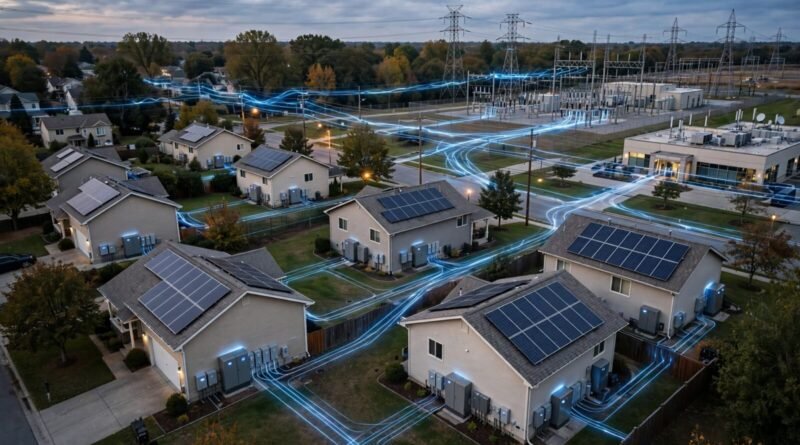
A virtual power plant, or VPP, links many distributed energy resources—such as home batteries—so they can respond together when the grid needs support. Instead of relying only on one large power plant, a utility or aggregator can coordinate thousands of smaller devices and use part of their stored energy during peak demand or emergency events.
For homeowners, the appeal is straightforward: a battery that normally provides backup power or stores solar energy may also earn incentives for participating in grid programs.
The important detail is that VPP compensation is not standardized. Current programs pay in very different ways: upfront incentives, monthly bill credits, seasonal payments, or dollars per kilowatt-hour actually delivered.
02 What Changed?
California’s Demand Side Grid Support program provides a current policy framework. The California Energy Commission’s Fifth Edition DSGS guidelines, updated February 27, 2026, describe performance-based payments for customers who reduce net load during extreme grid events through capacity commitments and measured reductions.
At the customer level, Tesla currently documents several active VPP arrangements that show how different compensation can be.
For Guadalupe Valley Electric Cooperative customers in Texas, Tesla says eligible Powerwall 3 systems installed on or after April 1, 2026 can receive an upfront incentive of up to $5,922.50 for the first Powerwall 3 and an ongoing incentive of up to $862.50 per year, subject to program terms and capacity limits.
CoServ’s PeakTime Perks program uses a simpler structure: Tesla currently states that participants can earn a $30 monthly electric-bill credit per Powerwall, or up to $360 per Powerwall per year.
Entergy Texas uses a seasonal participation payment. Tesla says eligible participants can earn $325 per Powerwall for the summer season. The 2026 program can call up to 85 events during the June 1-September 30 season, generally on weekdays between 1 p.m. and 7 p.m., with events typically about 90 minutes and potentially lasting up to three hours.
03 Why It Matters
The value of a VPP is not just the incentive check. Participation changes how the battery is used.
During an event, the program may discharge stored energy that the homeowner would otherwise keep for backup or self-consumption. Many programs let participants maintain a backup reserve, but the exact reserve rules differ.
The economic decision should therefore consider:
Net VPP value = program compensation − added charging cost − value of battery energy you would otherwise use − any meaningful battery-wear cost or lost backup flexibility
The terms matter more than the headline incentive. A large upfront payment tied to a multi-year commitment is different from a flexible seasonal program that pays only for measured participation.
VPPs also have system-level value. By reducing peak demand or supplying stored power during stressful periods, distributed batteries can help utilities avoid or defer some grid investments and reduce the need for expensive peaking generation. That is the reason these programs are willing to pay participants.
04 What It Means for You
Before enrolling a home battery in a VPP, check:
- Event frequency: How often can the utility call the battery?
- Event duration: A one-hour dispatch and a three-hour dispatch affect stored energy differently.
- Backup reserve: How much energy remains protected for outages?
- Compensation method: Upfront payment, monthly credit, seasonal payment or performance-based $/kWh?
- Commitment period: Some larger incentives require multi-year participation.
- Opt-out rules: Can you decline an event without losing eligibility?
- Charging cost: Energy exported later usually has to be recharged from solar or the grid.
If you are already evaluating a home battery, compare the VPP incentive with the underlying battery economics rather than treating the program payment as free money. Earnyx’s solar payback guide and solar payback calculator can help frame the broader household-energy decision.
05 Numbers + Context
| Current program example | Published compensation | Important condition |
|---|---|---|
| Tesla + GVEC, Texas | Up to $5,922.50 upfront for first eligible Powerwall 3 installed Apr. 1, 2026 or later; up to $862.50/year ongoing | Larger upfront incentive is tied to program terms including a five-year participation commitment |
| Tesla + CoServ, Texas | $30 monthly bill credit per Powerwall; up to $360/year | Battery dispatches during PeakTime Perks events |
| Tesla + Entergy Texas | $325 per Powerwall per summer season | 2026 program allows up to 85 seasonal events |
| Tesla + PG&E San Carlos VPP | $2 per incremental kWh discharged in response to an event | Events run under the specific 2026 San Carlos initiative terms |
| California DSGS | Performance-based payments under state program rules | Payment depends on capacity commitment and measured load reduction |
These are examples, not a national price list. A homeowner in another utility territory should not assume these incentives are available locally.
The PG&E San Carlos example is especially useful because compensation is tied directly to delivered energy: Tesla’s current program terms state $2 for every incremental kilowatt-hour discharged in response to an eligible event. That makes actual performance central to the payment rather than simply owning the battery.
06 Earnyx Takeaway
A virtual power plant can improve the economics of a home battery, but the incentive should be treated as payment for a service—not as a rebate with no strings attached.
You are allowing part of your battery capacity to become a grid resource under defined event rules. The strongest programs are the ones where compensation is meaningful, backup reserves remain acceptable, and the event commitment fits how you use the battery.
Compare the contract, not just the headline payment. Two VPP programs can both use the same Powerwall and still produce very different value because the frequency, reserve settings, payment formula and commitment period are different.
Sources: California Energy Commission — 2026 DSGS Program Guidelines; Tesla — GVEC VPP; Tesla — CoServ VPP; Tesla — Entergy Texas VPP; Tesla — PG&E VPP.