
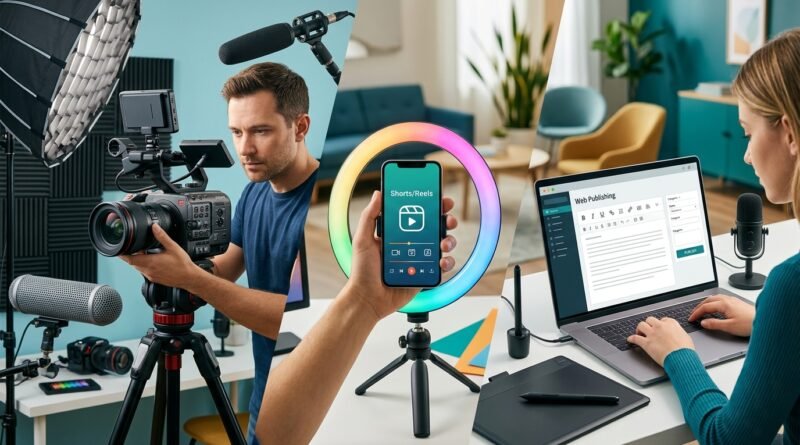
YouTube, TikTok or a Blog: Which Side Hustle Has the Lowest Cost to Start?
If you want to start a creator side hustle, the obvious question is usually “Which platform gives me the best chance to grow?” A more practical first question is: “Which one can I afford to keep doing long enough to find out?”
YouTube, TikTok and blogging can all be started cheaply. They can also become expensive surprisingly fast once cameras, microphones, editing software, hosting, design tools, subscriptions and promotion enter the picture.
The lowest-cost option depends less on the platform name and more on the production standard you choose.
Table of Contents
01 Event
YouTube, TikTok, and blogging can all be started cheaply, but the real startup burden includes both cash and the time required to publish consistently.
02 What Changed?
Creator platforms now let people begin with equipment they already own: a smartphone for video or a computer for blogging. The biggest cost difference often appears later, when creators add cameras, microphones, editing tools, hosting, design software, promotion, and higher production standards.
03 Why It Matters
The cheapest platform to open is not always the cheapest side hustle to sustain. A format that requires constant publishing or long editing sessions can consume far more time than its low cash cost suggests.
04 What It Means for You
Start with the format you can produce using what you already own. Measure cash cost per published piece and time per piece before buying equipment. Let evidence of audience demand—not the equipment aisle—tell you when to invest more.
05 Numbers + Context
YouTube’s Partner Program illustrates why platform choice eventually connects to monetization thresholds as well as production cost. Starting February 1, 2027, new applicants seeking ads and Premium revenue sharing need 1,000 subscribers plus either 8,000 qualified watch hours in 365 days or 20 million qualified Shorts views in 90 days. Startup cost is only one side of the creator-business equation.
06 Earnyx Takeaway
If the only question is which costs the least money to try, short-form video usually wins for someone who already owns a smartphone. But the best side hustle is the one you can afford to keep producing long enough to learn what works.
Compare the long-term creator economics in our 100,000 views pay-per-hour reality check.
Source: YouTube — 2027 YPP changes.
Deep Dive
The true startup cost has two parts
Most people think only about cash. But a creator side hustle consumes both money and time.
A useful comparison is:
Total startup burden = upfront cash + recurring monthly costs + production time
The first two are easy to see. The third is where many creator projects become unsustainable.
TikTok: usually the lowest cash barrier
Short-form video can be started with a smartphone you already own, natural light, and free editing tools. That makes TikTok-style content one of the easiest formats to test without buying much equipment.
Your basic costs may be close to zero if you already have a capable phone and internet connection.
But “cheap to start” does not mean “cheap to sustain.” Short-form platforms reward frequent experimentation. That can mean constant scripting, filming, editing, trend research, captions, thumbnails or cover frames, replies and analytics review.
If you end up buying lighting, microphones, editing subscriptions or paid promotion, the financial gap versus other formats starts narrowing.
YouTube: cheap at the beginning, expensive if you chase production quality
YouTube can also begin with a phone. Plenty of useful videos do not require a cinema camera.
Where YouTube gets expensive is the temptation to upgrade everything: camera, lenses, microphone, lights, tripod, background, storage, editing software, music licensing and a faster computer.
Long-form video also tends to demand more production time per piece. Research, scripting, filming, editing, thumbnails and upload preparation can turn one video into a substantial project.
That does not make YouTube a bad side hustle. Long-form content can remain discoverable for years, and one strong video can continue attracting viewers long after publication. The question is whether you need expensive production before your audience proves that the topic works.
Do not buy the equipment for the creator you hope to become before proving that you enjoy the work required to become that creator.
Blogging: low equipment cost, but not completely free
A blog requires less production hardware. If you already own a computer, your main cash costs are usually the domain, hosting and any optional software or design tools.
You can publish with very little equipment, and text content is comparatively easy to update when information changes.
But blogging has its own hidden cost: research and writing time. Search-focused articles may require topic research, fact checking, screenshots, charts, internal links, formatting and ongoing updates.
There is also a slower feedback loop. A short-form video can receive signals quickly. A blog may take much longer to build search visibility.
Illustrative startup comparison
The numbers below are examples only. You can spend far less—or vastly more—on any of these formats.
| Format | Lean starting setup | Main hidden cost |
|---|---|---|
| TikTok / short-form | Existing smartphone + free editor | High publishing frequency and idea generation |
| YouTube | Phone + basic microphone/tripod if needed | Editing time and equipment creep |
| Blog | Computer + domain + hosting | Research, writing and slow audience buildup |
Which one has the lowest financial risk?
If you already own a decent smartphone, short-form video usually has the lowest immediate cash barrier because you can test the idea before purchasing anything.
Blogging is also relatively inexpensive, particularly if you are comfortable writing and already have a computer. You will have modest infrastructure costs, but you do not need production equipment.
YouTube has the widest range. It can be nearly as cheap as TikTok if you stay phone-first, or easily become the most expensive if you build a full production setup.
But time can reverse the ranking
Suppose a short video takes 90 minutes to plan, shoot, edit and publish, and you produce five per week. That is 7.5 hours.
A blog article might take four hours but only be published once a week. A YouTube video might require eight hours but remain useful for much longer.
Suddenly, the “free” platform is not necessarily the cheapest side hustle when measured in hours.
This is why we keep coming back to effective hourly return when evaluating side hustles. Cash cost is only half the equation.
What are you trying to monetize?
Your best platform also depends on the business model.
- Audience and sponsorships: video platforms can be powerful when personality and reach matter.
- Affiliate or search-driven traffic: a blog can work well when people actively search for solutions and comparisons.
- Services: any of the three can function as a portfolio and lead-generation channel.
- Products: short-form video can demonstrate products quickly, while blogs and YouTube can explain them in more depth.
Do not choose a platform only because its creators appear to earn the most. Choose the format you can produce consistently and connect to an actual source of income.
The creator equipment trap
A common mistake is treating better equipment as progress.
A new camera feels productive. A premium microphone feels professional. A paid editing package feels like an investment.
But none of those automatically makes the topic more interesting.
For a new creator, the first goal should be proving three things:
- You can consistently create the format.
- People show signs of caring about the topic.
- You understand how attention could eventually become revenue or another useful outcome.
Only then should equipment upgrades compete for your budget.
Measure cost per published piece
A useful creator metric is:
(Monthly tools + equipment allocation + promotion) ÷ number of pieces published = cash cost per piece
Then add:
Total hours ÷ pieces published = time per piece
Those two numbers let you compare formats based on your actual workflow instead of someone else’s setup.
Our earlier analysis of what 100,000 views really pays per hour becomes especially relevant once you have enough data to compare production effort with actual return.
The Earnyx reality check
If the only question is “Which costs the least money to try?”, short-form video probably wins for someone who already owns a smartphone.
If you prefer writing, blogging remains one of the cheapest ways to build a searchable body of work. If you enjoy deeper video and can resist unnecessary equipment upgrades, YouTube can also start surprisingly lean.
But the cheapest platform is ultimately the one you can keep producing on without continually buying tools, burning through your free time, or quitting after six weeks.
Start with what you already own. Publish enough to learn. Let the audience—not the equipment aisle—tell you when it is time to invest more.



Pingback: YouTube Is Reportedly Offering Creators Millions to Stay Off Netflix - Earnyx
Pingback: Kick’s Team Launched a Creator App That Takes 20%. Is Direct Fan Monetization Worth It? - Earnyx
Pingback: The Real Cost of Starting a Website in 2026 - Earnyx
Pingback: Filipino Vertical Dramas Are Becoming a Serious Mobile Entertainment Format - Earnyx