Are Water-Saving Fixtures Actually Worth Replacing Early?
Table of Contents
01 Event
Water-saving toilets, showerheads and faucets are often marketed as eco upgrades, but the more useful question is whether replacing a working fixture early actually pays. EPA WaterSense publishes benchmark savings that make the tradeoff easier to estimate.
02 What Changed?
Modern labeled fixtures are designed to use less water without simply reducing usefulness. The decision has shifted from “does low-flow mean weak performance?” to “how quickly will lower water and hot-water use repay the purchase?”
03 Why It Matters
Fixtures affect both water and energy costs. A lower-flow showerhead, for example, reduces the amount of water purchased and the energy needed to heat it. That means the value can be larger in homes with expensive water, sewer or water-heating costs.
04 What It Means for You
Do not replace every fixture automatically. Prioritize old toilets, high-flow showerheads, frequently used faucets and anything already needing repair. If a fixture is rarely used, its payback can be much slower. Compare the full installed cost with your household’s actual usage.
05 Numbers + Context
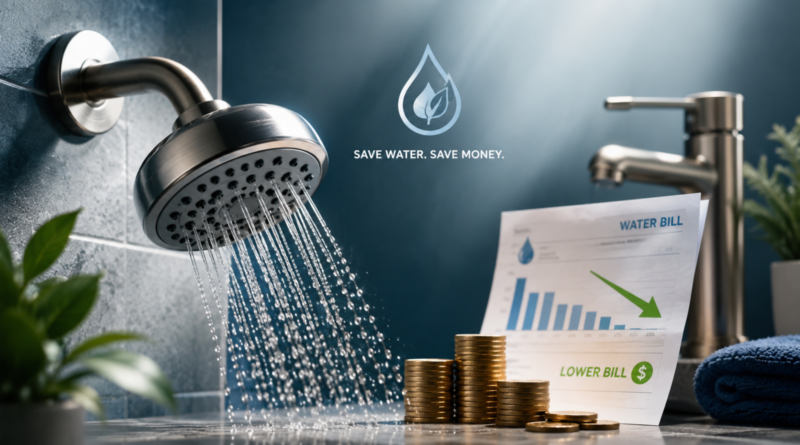
EPA WaterSense says replacing old showerheads with labeled models can save an average family more than 2,700 gallons of water per year and about $70 in annual water and energy costs. It also says a main-bathroom efficiency makeover can pay for itself in as little as one year in some cases. Source: EPA WaterSense, “Statistics and Facts” — https://www.epa.gov/watersense/statistics-and-facts
06 Earnyx Takeaway
A water-saving fixture is not automatically a good purchase just because it is efficient. The strongest candidates are fixtures you use heavily or already need to replace. Efficiency becomes valuable when it reduces a real recurring cost, not when it becomes an excuse to buy something unnecessarily.