
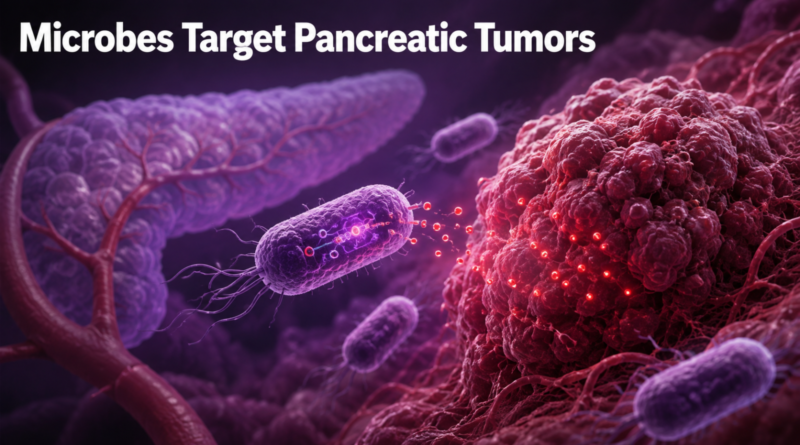
Scientists Turned Probiotic Bacteria Into Tiny Drug Factories for Pancreatic Tumors
Table of Contents
01 Event
University of Chicago researchers engineered a probiotic bacterium to travel into pancreatic tumors and release a modified immune-stimulating molecule directly inside them.
02 What Changed?
The approach uses Bifidobacterium longum as a living delivery system. Because the bacterium prefers low-oxygen environments, it can accumulate inside solid tumors and produce treatment where researchers want it rather than throughout the body.
03 Why It Matters
Pancreatic cancer is notoriously difficult to treat with immunotherapy because its tumor environment tends to block effective immune attacks. A targeted “bugs as drugs” strategy could provide a new way to make those tumors more responsive.
04 What It Means for You
The work is preclinical. It has not been tested in people, and many questions about safety, dosing, durability, and delivery remain. The positive result is that researchers found a plausible way to concentrate immune treatment inside tumors while potentially limiting exposure elsewhere.
05 Numbers + Context
In animal models, the engineered bacteria slowed pancreatic tumor growth and performed better when combined with chemotherapy, radiation, or anti-PD-L1 immunotherapy. Source: University of Chicago Medical Center via ScienceDaily; study published in Science Advances.
06 Earnyx Takeaway
This is the kind of cancer research worth watching because the innovation is not simply a new drug—it is a new delivery method. If future human studies confirm that engineered bacteria can safely act as tiny drug factories inside tumors, the idea could have uses well beyond pancreatic cancer.