The Convenience Economy: How Much Are We Paying Just to Save Time?
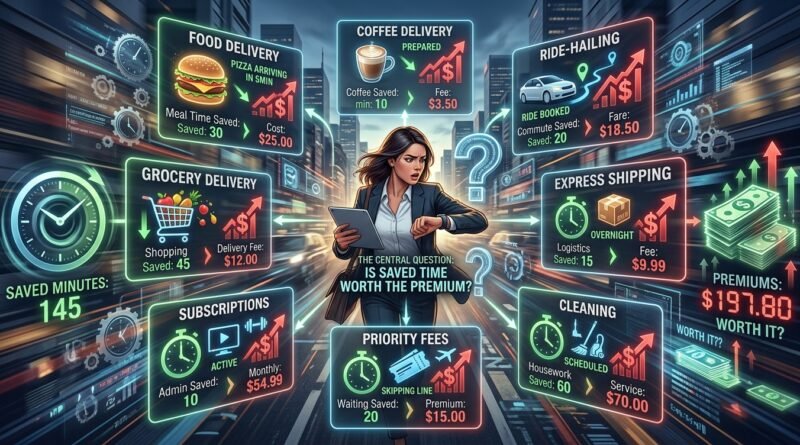
Convenience has become an entire economy. Food delivery, ride-hailing, grocery apps, express shipping, cleaning services, and priority fees all charge extra to remove friction from everyday life.
Table of Contents
01 Event
More services now sell time as much as they sell the underlying product. A delivery fee, booking fee, surge price, or service charge is often the premium you pay to avoid travel, waiting, planning, or manual work.
02 What Changed?
The cost of convenience is increasingly fragmented into many small charges. Used occasionally, each fee can look harmless. Used several times a week, those premiums can become a meaningful monthly expense that is easy to miss because it is bundled into larger purchases.
03 Why It Matters
Convenience is not automatically waste. Ride-hailing can avoid parking and car ownership costs. Grocery delivery can reduce impulse buying. Paying someone to handle a task can free time for paid work, childcare, exercise, rest, or family. The trade-off becomes poor only when the premium is invisible or habitual.
04 What It Means for You
Separate the convenience premium from the underlying purchase. If a delivered meal costs $8 more than pickup, ask how much time and effort that $8 saves. If the saved time matters more to you than the premium, the service may be good value. If not, convenience has become an expensive default.
05 Numbers + Context
Three $8 convenience premiums per week equal $24 weekly, about $104 monthly, and roughly $1,248 a year. Even a $3 fee used five times a week is around $780 annually. Our convenience-fee analysis shows how small charges accumulate, while our commute-cost guide helps value time saved from travel.
06 Earnyx Takeaway
Convenience is worth paying for when the time, stress, or alternative cost you avoid is more valuable than the premium. It becomes expensive when dozens of small time-saving charges turn into invisible habits. Track the premium for one month; keep the services that clearly buy back valuable time and question the ones that do not.