Satellite Internet: When the Higher Cost Can Still Be Worth It
Table of Contents
01 Event
Satellite internet serves a different problem from most broadband technologies: getting useful connectivity to locations where terrestrial networks are weak or nonexistent. Newer low-Earth-orbit systems have improved speeds and latency compared with traditional geostationary satellite service, making satellite a realistic primary connection for more households. It can still carry higher equipment costs and unique performance trade-offs.
02 What Changed?
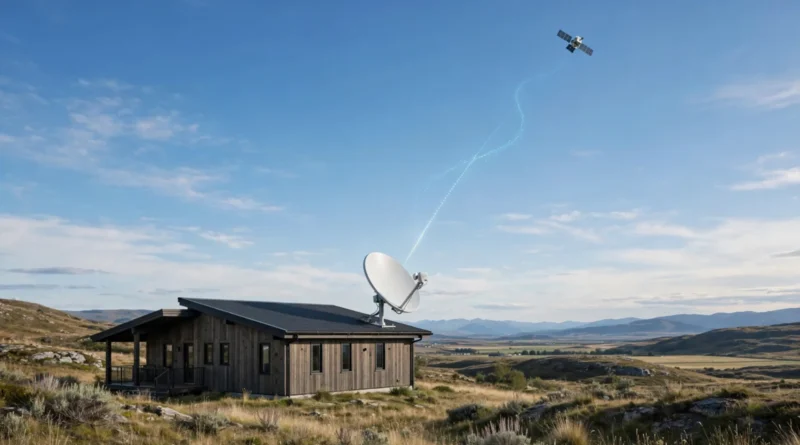
Traditional satellite broadband communicates with satellites positioned very far above Earth, which introduces substantial signal travel time. Low-Earth-orbit constellations operate much closer to the planet and use many satellites moving across the sky, reducing latency and increasing potential capacity. Consumer terminals have also become easier to install.
These improvements do not eliminate physical constraints. The terminal generally needs a clear view of the sky, weather can affect performance, and capacity can vary by location and network demand. Service plans may also differ in priority, data treatment and equipment terms.
03 Why It Matters
Satellite can look expensive when compared with urban fiber, but that may be the wrong benchmark. For a rural household choosing between slow legacy service, limited mobile coverage and satellite, the value comes from making modern remote work, education, communication and entertainment practical at all.
Total cost matters. Hardware purchases, installation accessories, shipping and higher monthly rates can make the first year significantly more expensive than the advertised monthly fee alone.
04 What It Means for You
First determine whether a reliable terrestrial option exists. Fiber or cable will often provide strong value where available. If satellite is the practical choice, use the provider’s obstruction or placement tools before ordering and identify a safe location with a clear sky view.
Check equipment ownership, cancellation rules, priority-data policies, expected speed ranges and whether service can be paused or moved. Households with gaming or real-time work should pay particular attention to latency and consistency, not just download speed.
Also plan for installation realities. Roof mounting, cable routing, snow, trees and landlord restrictions can affect the true cost and feasibility of the service.
05 Numbers + Context
Suppose satellite hardware and setup cost $500 and service costs $100 per month. The first-year total is roughly $1,700 before taxes or optional accessories, equivalent to about $142 per month when the equipment is spread across that year. If the equipment serves for three years, its monthly equivalent falls to about $14, bringing the simplified three-year average closer to $114 per month.
Those figures are illustrative; actual plans change by provider and region. Use current provider terms, coverage information and regulator broadband resources when comparing options. Local user experience can also reveal obstruction or congestion issues that national specifications cannot.
Reliability planning is particularly important in remote locations because a repair visit or replacement terminal may take longer to arrange. If internet access supports income or essential communication, consider whether a mobile connection or other secondary option is available for emergencies and include that resilience cost in the broader connectivity budget.
06 Earnyx Takeaway
Satellite internet should be evaluated against the alternatives actually available at the property. It may be poor value beside inexpensive fiber but excellent value where it transforms an unreliable connection into usable broadband. Calculate the full first-year and multi-year cost, verify the sky-view requirements and judge performance by the applications you depend on.