
OPEC+ Keeps October Oil Output Policy Unchanged as the Iran Conflict Limits Its Control
Table of Contents
01 Event
OPEC+ decided on September 6 to keep its oil output policy unchanged for October, according to Reuters. The decision comes while the Iran conflict continues to disrupt oil flows through the Strait of Hormuz and reduce the group’s ability to translate production targets into predictable physical supply.
The group had previously agreed to gradually unwind a 1.65 million-barrel-per-day supply cut dating from 2023. In a more normal market, that kind of policy path would be watched closely because additional production can increase supply, put pressure on prices and shift market share among exporters.
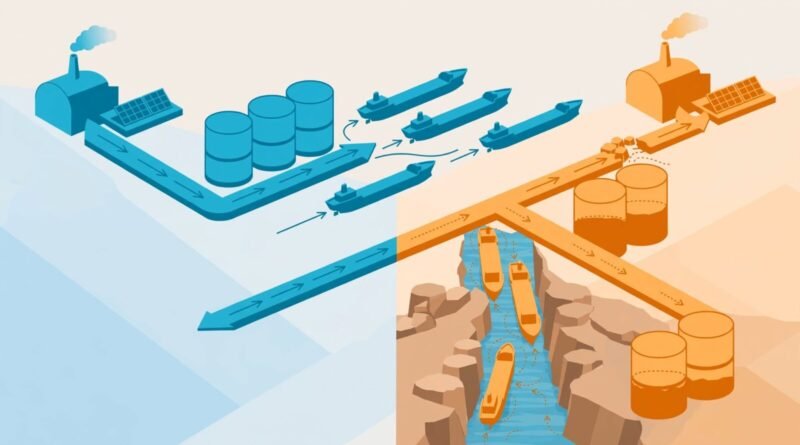
But the current market is not normal. Reuters reported that many OPEC+ members remain below target production because of war-related disruption and practical constraints. When producers cannot pump or ship the volumes implied by their quotas, changing the quota itself can have less effect than the headline suggests.
The October decision therefore looks less like a dramatic strategic move and more like recognition that geopolitical disruption is currently stronger than the group’s monthly fine-tuning.
02 What Changed?
The key change is that OPEC+ is operating in a market where its traditional policy lever—adjusting production targets—has become less precise. The Iran conflict and constrained traffic through the Strait of Hormuz mean actual export flows may be determined by security, shipping and infrastructure rather than by quota decisions alone.
OPEC+ normally influences the market by coordinating production among major exporters. If the group cuts output, the market may tighten. If it raises output, more barrels can become available. That relationship depends on members having spare capacity, being able to produce, and being able to move those barrels to buyers.
Reuters said the group is also reassessing members’ production capacities to establish 2027 baselines. Baselines matter because they determine the reference point from which future cuts or increases are calculated. A country with a higher recognized baseline may receive a higher production allocation in future agreements.
The current review makes sense because production capacity changes over time. Investment, depletion, sanctions, war and infrastructure problems can all change how much oil a country can realistically produce. Using outdated baselines can create disputes and reduce compliance.
The next OPEC+ meeting is scheduled for October 4. Reuters reported that the current reassessment process could lead to a pause in output increases during the final quarter of 2026, although future decisions have not yet been made.
03 Why It Matters
Oil prices affect far more than what drivers pay at the pump. Higher crude and refined-product prices feed into freight, aviation, agriculture, manufacturing and household energy costs. They can also contribute to inflation and influence central-bank policy.
For consumers, the practical question is not whether OPEC+ announces an increase or a pause. It is whether enough additional oil actually reaches the market to change the balance between supply and demand.
That is especially important when shipping through the Strait of Hormuz is disrupted. The strait is one of the world’s most important energy chokepoints. If tankers face delays, restrictions or higher risk, oil can become more expensive even if producers say they are willing to pump more.
This is why OPEC+ can appear to “increase supply” on paper while consumers see little relief. The difference between a quota and a delivered barrel becomes crucial during geopolitical disruption.
Earnyx has already covered how oil prices have been reacting to Strait of Hormuz developments and interest-rate expectations. The new OPEC+ decision adds another layer: producer policy is only one part of the price equation when physical shipping routes are under stress.
04 What It Means for You
Drivers should avoid assuming that an unchanged OPEC+ policy means fuel prices will also be unchanged. Retail fuel prices depend on crude costs, refinery margins, taxes, exchange rates, distribution costs and local inventory conditions.
Businesses that use fuel intensively face the same problem. A trucking company, airline, delivery service or manufacturer may see costs rise even when the official OPEC+ target has not changed. What matters is the actual price of the fuel they buy.
For investors, the decision reinforces the importance of distinguishing between nominal production capacity and effective export capacity. A producer can have barrels underground and even spare production equipment, but if transport routes are constrained, those barrels may not reach customers when needed.
For households, the main transmission channel is inflation. Persistent high energy prices can raise the cost of food and goods through transportation and production expenses. Central banks may also become more cautious about cutting rates if energy keeps inflation elevated.
Consumers therefore should watch actual oil and fuel prices rather than treating OPEC+ meeting headlines as direct predictions. Policy decisions matter, but they operate through a supply chain that can be interrupted at several points.
05 Numbers + Context
The supply cut being gradually unwound totals 1.65 million barrels per day. That is a meaningful quantity, but its impact depends on how much of the planned increase can actually be produced and exported.
Reuters reported that several OPEC+ members are producing below their targets. That means the published quota can overstate the amount of oil available to the market. If a country is already 200,000 barrels per day below target, raising its quota by another 100,000 barrels per day does not automatically create 100,000 additional delivered barrels.
The group’s capacity review for 2027 is therefore more than administrative housekeeping. Future quotas depend on these baseline numbers, and disagreements over realistic capacity can affect cooperation inside the group.
The next scheduled OPEC+ meeting is October 4. Between now and then, the market will be watching actual exports, tanker traffic, inventory changes and the Iran conflict more closely than the unchanged October target itself.
To understand the consumer effect, imagine crude and shipping costs combine to add just a few cents per liter to wholesale fuel. For a household that uses 100 liters a month, even a 5-cent increase adds 5 units of currency per month. For a fleet using 100,000 liters, the same change is 5,000. Small unit changes scale quickly for fuel-intensive businesses.
The example is illustrative, not a forecast of actual pump-price changes. It shows why energy-market disruptions that look modest in percentage terms can matter materially once multiplied across large volumes.
06 Earnyx Takeaway
The September OPEC+ decision shows the difference between controlling a production target and controlling the market.
OPEC+ still matters because its members represent a large share of global oil supply. But when war, sanctions or shipping constraints prevent barrels from moving normally, monthly quota adjustments become a weaker signal of what consumers will actually pay.
The important question is not “Did OPEC+ change its target?” It is “How many additional barrels can reach refiners and buyers?” That is the number that ultimately matters for fuel costs.
For readers, the practical takeaway is to treat OPEC+ headlines as one input among several. Watch the Strait of Hormuz, refinery conditions, inventories, freight rates and local currencies alongside production decisions.
In a disrupted market, logistics can be more powerful than policy. A barrel that cannot be shipped is not useful supply, no matter what the official quota says.
Source: Reuters, September 6, 2026.


