
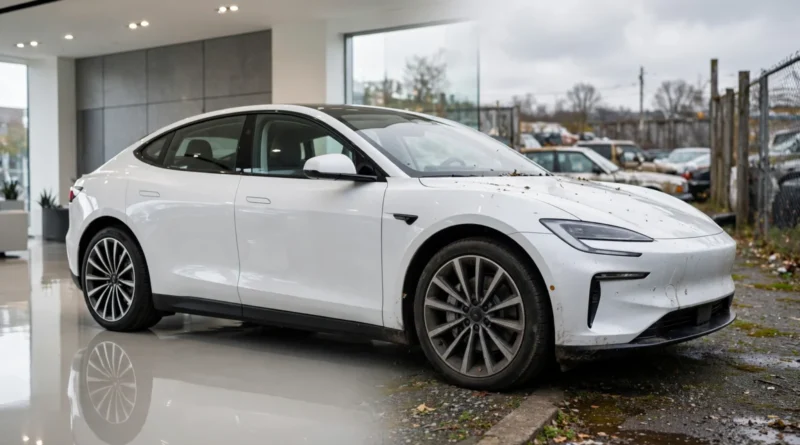
EV Depreciation: Why Resale Value Can Change the Total Cost of Ownership
Table of Contents
01 Event
Electric vehicles can be inexpensive to power and maintain, but ownership economics do not end with charging costs. Depreciation—the decline in a vehicle’s market value over time—can become one of the largest expenses of owning any car. For EV buyers, resale values can be particularly sensitive to technology changes, incentives, battery perceptions and new-vehicle price cuts.
02 What Changed?
The EV market is evolving quickly. New models are gaining range, charging speed and software features, while manufacturers periodically adjust pricing. When a new EV becomes materially cheaper or better equipped, older models can lose value faster than buyers expected.
Government incentives can also affect used-market pricing. If a new buyer can receive a substantial tax credit or rebate, the effective new-car price falls, which can pressure resale values of recent used vehicles.
03 Why It Matters
A car that saves $1,000 a year in energy but loses several thousand dollars more in value than an alternative can still be the more expensive vehicle overall. This is why depreciation should be part of any total-cost comparison.
It also matters differently depending on ownership length. Someone who trades every three years is exposed directly to near-term resale value. A buyer who keeps the vehicle for ten years may care less about early depreciation because there is less remaining value to preserve by the time the car is sold.
04 What It Means for You
Before buying, compare used prices for the same model one, three and five years old where enough market history exists. Look for manufacturer price cuts and incentive changes that may distort historical comparisons.
Battery condition, remaining warranty, accident history, charging capability, software support and model reputation can all affect resale. Popularity matters too: a technically excellent EV with limited service support or an obsolete charging standard may face a narrower pool of used buyers.
If you plan to finance, remember that rapid depreciation can create negative equity if the loan balance falls more slowly than the vehicle value.
05 Numbers + Context
Suppose a $40,000 EV is worth $24,000 after three years. That is $16,000 of depreciation, or roughly $5,333 per year before financing and other costs. If a comparable $36,000 gasoline vehicle is worth $24,000 after the same period, its depreciation is $12,000. The EV would need to recover that additional $4,000 through energy, maintenance or other benefits to remain ahead on total ownership cost.
The figures vary by model and market, so broad averages are less useful than model-specific used listings, trade-in data and published residual-value estimates.
For buyers deciding between new and lightly used EVs, depreciation can also create opportunity. A model that lost value quickly during its first few years may become compelling on the used market if battery condition, warranty coverage and charging capability remain strong. The same market force that hurts the first owner can improve value for the second.
06 Earnyx Takeaway
EV depreciation is not a reason to avoid electric vehicles. It is a reason to stop treating fuel savings as the whole financial story. Buyers who keep vehicles for many years can absorb depreciation differently from frequent upgraders. If resale value matters to you, compare the specific model’s used-market history and expected ownership period before deciding how much of an upfront premium you are willing to pay.