Home EV Charging vs Public Charging: Which Is Cheaper and More Convenient?
Table of Contents
01 Event
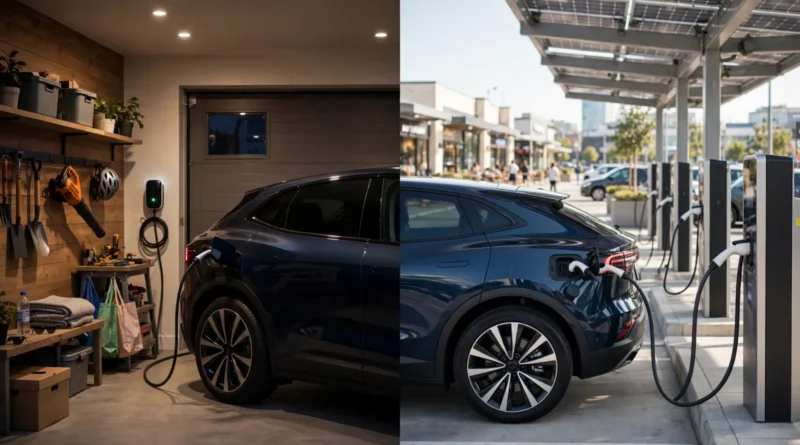
Where you charge an electric vehicle can matter almost as much as which EV you buy. Home charging is usually the most convenient option for drivers who have a private parking space and suitable electrical access, while public charging is essential for apartment residents, long-distance travelers and anyone without reliable home infrastructure.
02 What Changed?
Public charging networks have expanded, fast chargers have become more capable and home chargers have become easier to install in many markets. At the same time, public charging prices often vary by network, location and speed, while household electricity rates can depend on time of use.
This means the simple assumption that “EV charging is cheap” needs more context. The cost per mile can look very different for a driver who charges overnight at home compared with one who relies heavily on public fast charging.
03 Why It Matters
Charging economics affect total ownership cost. A buyer who expects large fuel savings but has no access to low-cost home charging may recover the EV’s purchase premium more slowly than expected.
Convenience also has financial value. Home charging lets drivers plug in when parked and start the next day with a replenished battery. Public charging requires travel to a charger, waiting for an available stall and sometimes paying idle or session fees.
04 What It Means for You
Estimate your home electricity cost per kilowatt-hour and compare it with the public chargers you would realistically use. Include any time-of-use discount available overnight.
For home charging, add the cost of equipment and installation. If an electrical-panel upgrade is required, the upfront investment may be substantial. Spread that cost across the years you expect to use the charger rather than treating it as a one-time invisible expense.
For public charging, consider reliability, travel time, charging speed and membership requirements. A cheaper station that is frequently unavailable may provide less practical value than a slightly more expensive but reliable alternative.
05 Numbers + Context
Suppose an EV uses 30 kWh to travel 100 miles. At a home electricity rate of $0.15 per kWh, the energy cost is $4.50 per 100 miles before charging losses. At a public fast-charging rate of $0.45 per kWh, the same 30 kWh costs $13.50.
If a driver travels 12,000 miles per year, that simplified difference is about $1,080 annually. A $1,500 home-charging installation could therefore pay back quickly for a heavy public-charging user, though actual rates, efficiency and charging losses vary.
Use current utility tariffs, charging-network prices and the vehicle’s efficiency rating for a realistic estimate.
Drivers who split charging between home and public stations should model both instead of assuming one rate applies to all miles. Even a household that charges mostly at home may use expensive fast charging on road trips, while an apartment resident may occasionally find free workplace charging. A blended annual cost is often the most realistic number.
06 Earnyx Takeaway
Home charging usually offers the strongest combination of convenience and low energy cost, but only when installation is practical. Public charging can make EV ownership possible without a driveway, but frequent fast-charging dependence can materially increase operating cost. Before buying an EV, calculate where most of your charging will actually happen. The charging setup can change the economics of the entire vehicle.