EV Battery Warranties: What They Cover, Exclude and Require for Degradation Claims
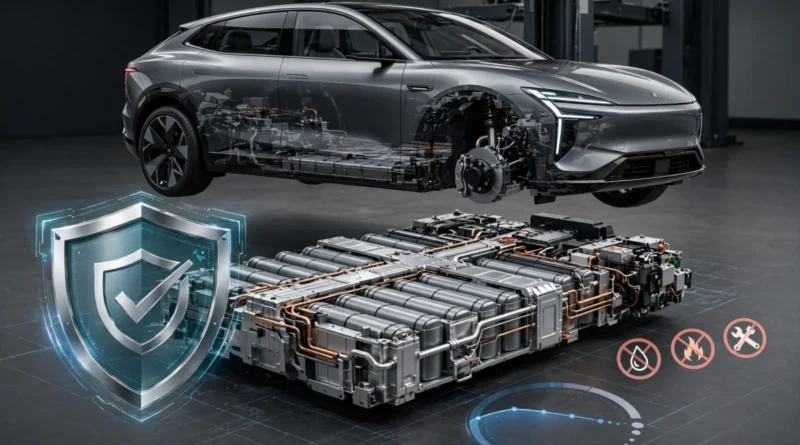
The battery is one of the most expensive components in an electric vehicle, so a long battery warranty can provide meaningful protection. But the headline number of years or miles is only the beginning. Buyers need to understand whether the warranty covers defects, capacity degradation, both, or neither under particular circumstances—and what conditions must be met before a claim is accepted.
Table of Contents
Battery defect coverage and degradation coverage are different
A battery can fail because of a defect, or it can continue operating while gradually losing usable capacity. Those are not necessarily treated the same way under a warranty. Some manufacturers provide specific capacity-retention language, while others structure coverage differently.
That distinction matters because lithium-ion batteries normally age. A warranty should not be interpreted as a promise that the vehicle will retain its original driving range throughout the covered period. The actual contract determines what level of degradation, if any, triggers a remedy.
Read the warranty for the exact vehicle and market
Do not rely on a generic statement that “EV batteries have long warranties.” Terms can vary by manufacturer, model year and country. Obtain the warranty booklet for the exact vehicle you are considering and identify the time limit, mileage limit, degradation threshold if one exists, exclusions, transfer rules and available remedy.
For U.S. shoppers, the Environmental Protection Agency’s electric-vehicle information provides broader context about EV batteries and vehicle operation, but the manufacturer’s written warranty remains the primary source for a specific claim.
Capacity thresholds can change what “covered” means
Suppose a manufacturer’s warranty promises a remedy if measured usable capacity falls below 70% during the covered period. A battery measured at 82% may produce noticeably less range than when new but still sit above that contractual threshold. A battery measured at 68% might qualify, subject to the rest of the warranty terms and diagnostic confirmation.
The 70% figure here is an illustrative example, not a statement about every EV warranty. Some manufacturers use different thresholds or different definitions of battery failure. Never transfer a threshold from one brand to another.
Dashboard range is not the same as measured battery capacity
Drivers often notice degradation through the estimated range shown on the dashboard. That estimate is influenced by temperature, recent driving behavior, speed, climate-control use and other conditions. A lower displayed range therefore does not automatically prove that battery capacity has crossed a warranty threshold.
For example, if a vehicle was originally rated at 300 miles, 70% of that number is 210 miles mathematically. But a car displaying 205 miles on a cold day is not necessarily at 68% battery health. Official range ratings, real-world range and diagnostic capacity measurements are different concepts.
Earnyx’s guide to EV range degradation explains why battery aging should be separated from temporary changes caused by driving and weather.
Exclusions deserve as much attention as the headline term
A warranty may exclude damage caused by events or uses outside its intended coverage. Depending on the manufacturer, relevant provisions can involve collision damage, flooding, unauthorized modifications, improper repairs, use of unsuitable equipment or failure to follow specified procedures. The exact exclusions vary, so use the actual warranty rather than assuming a generic list applies.
Also determine whether commercial or high-intensity use is treated differently. A vehicle used for ride-hailing, delivery or fleet work can accumulate mileage rapidly, making a mileage cap more important than the number of calendar years advertised.
Understand the claim process before you need it
If you suspect excessive degradation, contact an authorized service channel and ask how battery health is measured for warranty purposes. Manufacturers may use diagnostic tools and internal battery data rather than a consumer range test.
Keep service records and documentation related to any battery or charging problems. If warning messages appear, record when they occurred and seek appropriate service rather than repeatedly clearing or ignoring them. Documentation can make it easier to establish the history of a problem.
What remedy does the warranty promise?
Coverage does not always mean receiving a brand-new battery. Depending on the contract, the manufacturer may repair the battery, replace modules, install a replacement pack or restore capacity to a specified level. Buyers should read the remedy language instead of assuming the result of a successful claim.
A replacement component may also have its own warranty terms. If you are comparing used EVs with prior battery work, ask for documentation and determine what coverage remains.
Used-EV buyers should verify transferability
A battery warranty can be especially valuable on a used EV because the buyer is acquiring a battery that has already accumulated age and mileage. But first confirm that the remaining coverage transfers to subsequent owners and whether any registration or service requirements apply.
Compare the vehicle’s current mileage with the warranty limit. A six-year-old EV with low mileage can have a different remaining warranty profile from a three-year-old high-mileage vehicle. Both time and mileage can matter.
Remaining coverage can affect value
Two otherwise similar used EVs may deserve different prices if one has substantial transferable battery coverage remaining and the other is near the end of protection. The warranty does not eliminate battery risk, but it can change who bears certain qualifying repair costs during the remaining term.
Buyers should combine warranty review with a broader assessment of battery condition, service history, charging capability and expected use. A strong warranty cannot compensate for a vehicle that does not fit the driver’s range or charging needs.
Weather complicates informal range comparisons
Cold conditions can reduce EV driving range even when the battery is healthy. Cabin heating and battery temperature both affect energy use. Earnyx’s cold-weather EV range guide explains why winter performance should not automatically be interpreted as permanent degradation.
Similarly, highway speed, elevation and climate control can alter real-world range. If you are monitoring battery health over time, compare similar driving conditions rather than drawing conclusions from one unusually difficult trip.
Ask these questions before buying
Find the exact battery warranty and answer a short checklist: When does it expire by date? At what mileage? Is degradation covered? Is there a stated capacity threshold? What is excluded? Does coverage transfer? How is capacity measured? What remedy can the manufacturer provide? Those answers are more useful than the marketing phrase “battery warranty.”
If a seller cannot provide the warranty information, retrieve it from the manufacturer’s official support materials or ask an authorized dealer or service center to confirm coverage using the vehicle identification number where appropriate.
Earnyx takeaway
An EV battery warranty can reduce one of the largest perceived ownership risks, but only when you understand the contract behind the headline. Separate defect protection from degradation protection, verify the capacity threshold and exclusions, confirm transferability, and learn how claims are tested. For used buyers especially, remaining battery coverage is a financial asset worth checking before agreeing on a price.