
Athletes Are Becoming Creators Because Medals Alone Don’t Pay Enough
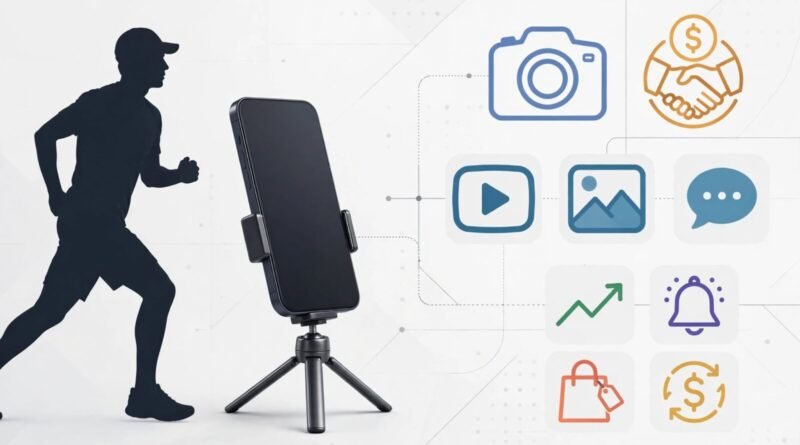
Elite athletes are increasingly building creator businesses because winning medals does not always translate into stable income. Social media, sponsorships and side ventures are becoming part of the financial model of professional sport rather than optional personal branding.
Table of Contents
01 Event
Reuters reported that World Athletics is leaning further into the creator economy by giving athletes dedicated opportunities to produce content away from competition. At the Ultimate Championship in Budapest, the federation created a separate “Day Before” event for media and content creation.
Olympic champion Noah Lyles, who has about 1.5 million Instagram followers, supported the idea of creators being involved in sport while arguing that clear boundaries are needed around competition itself.
02 What Changed?
Social media used to be mostly promotional. For many athletes it is now an income stream. Brand deals, direct audience relationships and side businesses can supplement prize money and sponsorship contracts that may be inconsistent or concentrated among only the biggest stars.
Athletes are also launching businesses outside competition. Reuters cited examples including trading cards, specialty coffee, philanthropy, media projects and other ventures.
03 Why It Matters
Professional sport can look financially glamorous from the outside, but many athletes have short careers and limited guaranteed income. Training, travel, coaching and medical costs continue even when performance dips or injuries interrupt competition.
Building an audience gives athletes another asset: attention they can monetize independently of one race result or one federation.
04 What It Means for You
For creators, the lesson is broader than sport. Expertise or talent alone may not produce durable income unless the person also builds distribution and a direct relationship with an audience.
For sports organizations, creators can expand reach, but uncontrolled content activity can interfere with competition and traditional media access. Dedicated creator zones and content windows are one way to separate promotion from the event itself.
05 Numbers + Context
Lyles and pole-vault star Mondo Duplantis each have around 1.5 million Instagram followers, according to Reuters. That audience can make an athlete commercially valuable beyond prize money.
The new Ultimate Championship also carries a $10 million prize pool, with individual event winners earning $150,000. Bigger prize money helps, but the creator trend exists precisely because most athletes cannot rely on winning top prizes consistently.
06 Earnyx Takeaway
Athletes are becoming creators for the same reason many professionals build personal brands: income tied to one employer, sponsor or performance metric is fragile.
The strongest model is not choosing between sport and content. It is using performance to build attention, then turning that attention into income streams that can survive injuries, retirement and changes in competitive form.
For athletes outside the very top tier, income can be unusually uneven. Prize money depends on performance, contracts can be short, and injuries can interrupt earnings with little warning. Building an audience creates another asset that is not tied directly to finishing position.
That is why the creator model is attractive. A social following can support sponsorships, speaking opportunities, merchandise, coaching products or brand partnerships even during periods when competition income is weak. It also gives athletes more control over how they present themselves instead of relying entirely on broadcasters or governing bodies.
Earnyx has covered several parts of this broader ecosystem, including social-media platforms with monetization options and platforms that directly pay creators. Athletes increasingly operate inside the same creator economy, even if sport remains their primary profession.
The risk is distraction. Content production takes time, and athletes still need training, recovery, travel and competition preparation. The strongest creator strategies usually build around what the athlete is already doing rather than creating an entirely separate workload.
There is also a career-length advantage. Competitive careers can end early, but an audience can continue after retirement. An athlete who builds trust while still competing may be able to carry that audience into coaching, commentary, fitness, business or entertainment later.
For sponsors, creator-style athletes are attractive because they can deliver both performance credibility and direct distribution. A medal can generate attention, but a consistent audience gives the sponsor repeated access. That helps explain why follower count, engagement and storytelling ability are becoming more economically important alongside results.