Canadian Shoppers Are Boycotting U.S. Products — and Grocery Supply Chains Are Already Changing
Canadian shoppers are increasingly avoiding U.S. products, and grocery retailers are responding by changing sourcing, labeling and supplier relationships. What started as a consumer reaction to trade tensions is beginning to reshape parts of the food supply chain.
Table of Contents
01 Event
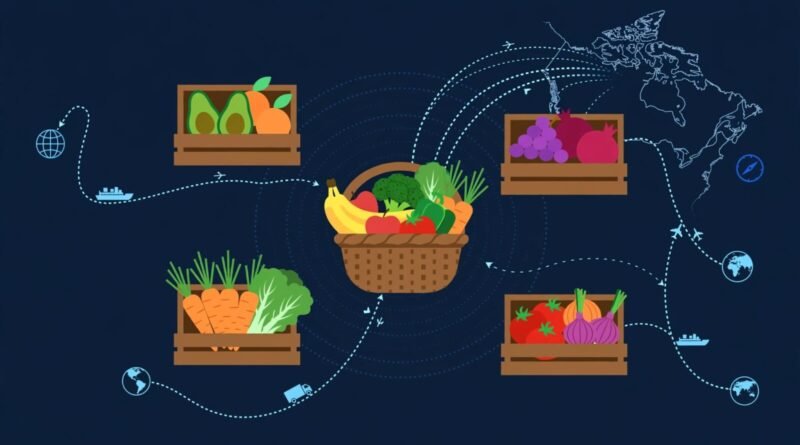
Reuters reported that Canadian grocers are sourcing more products domestically and from countries such as Morocco, South Africa, Spain, Brazil and Honduras as shoppers pay closer attention to country of origin.
Large retailers are highlighting Canadian products more aggressively, while independent grocers are also adjusting procurement in response to customer pressure.
02 What Changed?
Price and quality used to dominate many sourcing decisions. Country of origin has now become a third major factor for some Canadian consumers and retailers.
That changes procurement because the cheapest or most familiar supplier may no longer be the preferred choice if shoppers actively reject products from that country.
03 Why It Matters
Supply chains become more resilient when retailers have multiple sources, but diversification can increase complexity and cost. Produce that previously moved through a well-established U.S.-Canada corridor may need to travel farther or come through suppliers with different seasonal patterns.
At the same time, demand for domestic products can encourage investment in local capacity, particularly in greenhouses and controlled-environment agriculture.
04 What It Means for You
For consumers, the most visible effect is better country-of-origin labeling and a wider mix of imported produce. Prices may not always fall, because replacing a nearby supplier with a more distant one can increase logistics costs.
For retailers, the challenge is balancing customer preference with affordability. National sentiment can influence buying behavior, but shoppers may become more price-sensitive if alternatives remain consistently more expensive.
05 Numbers + Context
The U.S. share of Canadian vegetable imports fell to 62.6% in July 2026 from 69% in the same month of 2023, according to government data cited by Reuters.
Canada is also investing roughly C$3 billion over 10 years in greenhouse infrastructure and other efforts to increase domestic food production.
One Ontario independent grocer told Reuters that about 90% of its produce is now Canadian, illustrating how strongly some retailers are responding.
06 Earnyx Takeaway
Consumer boycotts are often treated as temporary political gestures, but they can have lasting economic effects if retailers build new supplier relationships and invest in new infrastructure.
The real test is what happens when tensions ease. If the new supply chains remain competitive on price and reliability, the shift could persist. If they stay materially more expensive, economics may eventually pull some purchasing back toward U.S. suppliers.
The immediate effect of a boycott is usually measured in sales, but the more durable effect can be supply-chain change. Once a retailer builds relationships with new growers, distributors and importers, some of those sourcing shifts can remain even if consumer sentiment later cools.
That can improve resilience by reducing dependence on one country. A supermarket that sources the same product from several regions has more options when tariffs, weather, transport disruptions or political tensions affect one supplier. The trade-off is complexity: more suppliers mean more quality checks, contracts, logistics routes and seasonal planning.
Canada has already seen broader trade friction with the United States. Earnyx previously covered Canadian retaliatory tariffs on U.S. imports, which provides useful context for why retailers and consumers are paying closer attention to where products come from.
For shoppers, diversified sourcing does not automatically mean lower prices. Importing from a more distant country can add freight cost, while switching suppliers quickly can reduce bargaining power. But additional competition among suppliers can also protect consumers from shortages and extreme price spikes.
Local production is another part of the equation. Canada’s planned greenhouse and vertical-farming investment can reduce exposure to imported produce for some categories, but controlled-environment agriculture has its own energy, capital and operating costs. It works best where year-round domestic production can offset expensive or unreliable imports.
The real test is what the grocery basket looks like after the political moment passes. If retailers permanently broaden their supplier base and invest in domestic capacity, the boycott will have changed more than labels on a shelf. It will have altered how Canadian grocers manage risk.