
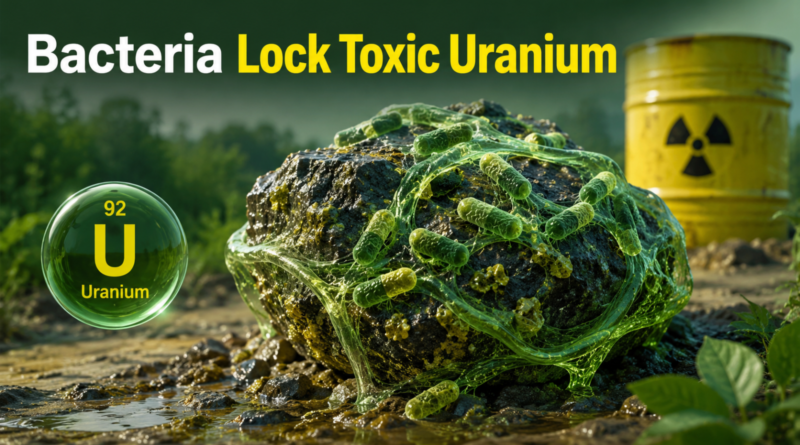
Scientists Found Bacteria That Can Lock Toxic Uranium Into a Stable Form
Table of Contents
01 Event
Researchers studying uranium-contaminated mine water found that naturally occurring bacteria can transform dissolved uranium into a much more stable chemical form when given glycerol as a food source. The work was published in Nature Communications. Source: Helmholtz-Zentrum Dresden-Rossendorf via ScienceDaily.
02 What Changed?
Scientists already knew some bacteria interact with uranium. What is new is evidence that the microbes can help produce a stable uranium compound that was previously thought to be only a temporary chemical state. The uranium accumulated in bacterial cell walls rather than remaining mobile in the water.
03 Why It Matters
Dissolved uranium can spread through groundwater and create long-term contamination problems. A biological process that converts it into a less mobile form could eventually become useful in cleaning polluted mine sites or limiting the spread of uranium through water systems.
04 What It Means for You
This is still laboratory research, not a ready-to-deploy cleanup product. But it is a good example of scientists using processes already present in nature as potential environmental tools instead of relying only on expensive mechanical or chemical treatment.
05 Numbers + Context
After 130 days, only about 5% of the dissolved uranium remained in the experimental samples, meaning roughly 95% had been removed from solution. Researchers also found evidence that the resulting compound can remain stable even when exposed to oxygen.
06 Earnyx Takeaway
The hopeful part is not that uranium contamination has suddenly been solved. It is that microbes may offer researchers another way to trap a dangerous pollutant before it travels farther. The next question is whether the process can work safely and efficiently outside the lab.