
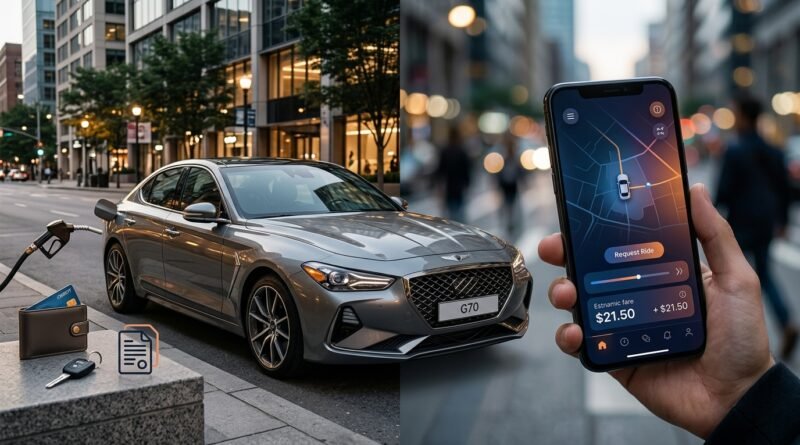
Car vs Grab Calculator: Find Your Monthly Break-Even Point
Owning a car feels cheaper once ride-hailing becomes part of your everyday routine. But the comparison is easy to distort because the two costs arrive differently.
Table of Contents
01 Event
This calculator compares the monthly cost of owning a car with the monthly cost of ride-hailing and estimates the approximate number of one-way trips where the two options break even.
02 What Changed?
Ride-hailing makes transport costs visible one trip at a time. Car ownership spreads costs across financing or depreciation, insurance, registration, fuel, parking, maintenance, tires, and other fixed expenses. That difference in how costs appear makes simple comparisons unreliable.
03 Why It Matters
Comparing only fuel with a Grab fare understates the real cost of ownership. Comparing only a car payment with ride-hailing also misses maintenance, insurance, parking, and depreciation. The useful comparison puts both options on the same monthly basis.
04 What It Means for You
Enter your own realistic numbers, ideally based on the last one to three months of actual spending. Use ride history for average fares and include the car costs people usually forget. Then treat the result as a financial baseline rather than a command to ignore convenience, privacy, flexibility, or lifestyle.
For the broader decision beyond the calculator, read our car ownership vs Grab analysis.
05 Numbers + Context
This is a planning tool, not a guarantee. Enter your own realistic numbers. It does not price convenience, privacy, flexibility, parking availability, financing opportunity cost, accident risk or the value of having a car available whenever you want it.
Car vs Grab Break-Even Calculator
What counts as a monthly car cost?
The most common mistake is comparing ride-hailing with only fuel and the monthly loan payment.
A more complete monthly estimate includes:
- Loan payment, lease cost or depreciation
- Fuel or charging
- Parking and tolls
- Maintenance and tires
- Insurance
- Registration and other annual fixed costs divided by 12
You can add other recurring costs by folding them into the closest input. For example, regular car-wash expenses or paid storage can be included in maintenance or parking.
What should you use for “car payment / depreciation”?
If you finance the car, entering the monthly payment is the simplest cash-flow comparison.
If the vehicle is already paid off, entering zero makes the car appear artificially cheap because the vehicle is still losing value as it ages and accumulates mileage.
For an ownership-cost comparison, estimate monthly depreciation instead. One simple approach is to take the amount you expect the car to lose in value over the next few years and divide it by the number of months.
This will never be perfectly precise, but it is usually more realistic than assuming a paid-off car has no capital cost.
How the break-even calculation works
The tool first adds the monthly ownership costs you entered.
Then it calculates:
Monthly car cost ÷ average one-way ride-hailing fare = approximate break-even rides per month
If the result is 100 rides per month, that is roughly 50 round trips.
But treat this as an approximation. Car fuel and maintenance also rise as you drive more, while ride-hailing fares vary by time, distance, demand and weather.
Use your real ride history
Do not guess if you can avoid it.
Look at your actual ride-hailing history for the last one to three months. Add completed rides and divide total spending by the number of rides to estimate your average one-way fare.
That naturally captures your real mix of short trips, long trips and peak-period pricing better than a generic citywide average.
Include trips beyond commuting
If you would use a personally owned car for groceries, family trips, school runs, weekend travel or emergencies, include comparable ride-hailing trips in your monthly total.
Otherwise you are comparing a multi-purpose car with only your commute spending.
A car may cost more and still be worth it
Financial break-even is not the only decision.
Car ownership can provide convenience, privacy, storage, predictable availability and the ability to make several stops without repeatedly booking transportation.
Ride-hailing avoids driving stress, parking problems, maintenance administration and large repair surprises.
Those benefits are real even though the calculator does not assign them a peso value.
Avoid counting the same cost twice
If your monthly car payment already includes a bundled insurance product, do not add the same insurance again.
If you use depreciation instead of a loan payment, decide whether you are measuring economic ownership cost or monthly cash flow. They answer slightly different questions.
The calculator is most useful when all inputs follow the same logic.
Parking can completely change the comparison
Someone with free home and office parking may face a very different break-even point from someone paying daily CBD parking.
The same applies to toll roads. A faster expressway route may save significant time while adding a meaningful monthly cash cost.
Our broader comparison of owning a car versus using Grab explores those trade-offs beyond the calculator.
What if you commute only a few days a week?
Hybrid work often favors ride-hailing because many car ownership costs remain fixed whether you commute 22 days a month or eight.
That does not automatically make ride-hailing cheaper. It simply raises the number of trips required before spreading fixed ownership costs across more usage begins to help the car side of the calculation.
Our guide to calculating the true monthly cost of commuting can help you include time and other transportation costs that are not captured here.
Run more than one scenario
Try at least three:
- Current behavior: what you actually spend today.
- Heavy-use scenario: more commuting and weekend trips.
- Low-use scenario: hybrid work or fewer regular trips.
If the same option remains clearly cheaper across all three scenarios, the decision becomes easier.
06 Earnyx Takeaway
There is no universal answer to “car or Grab?” because the break-even point is highly personal.
A person with expensive parking and occasional travel can arrive at a completely different result from someone with free parking, a long commute and multiple family trips every day.
Enter the numbers you actually live with. Include the costs people usually forget. Then use the result as a financial baseline—not as an instruction to ignore convenience, time and lifestyle.
Source: Grab Philippines fare information. Ride prices vary with route, demand, traffic, and other conditions.



Pingback: Owning a Car vs. Using Grab: At What Point Does One Actually Become Cheaper? - Earnyx
Pingback: How Much Is Your Commute Really Costing You Every Month? - Earnyx
Pingback: LTO Flags 11 Taxis at NAIA Over Colorum Operations and Overcharging - Earnyx
Pingback: Grab Expands GrabCoins and Adds Monthly Double Coins Days in the Philippines - Earnyx