
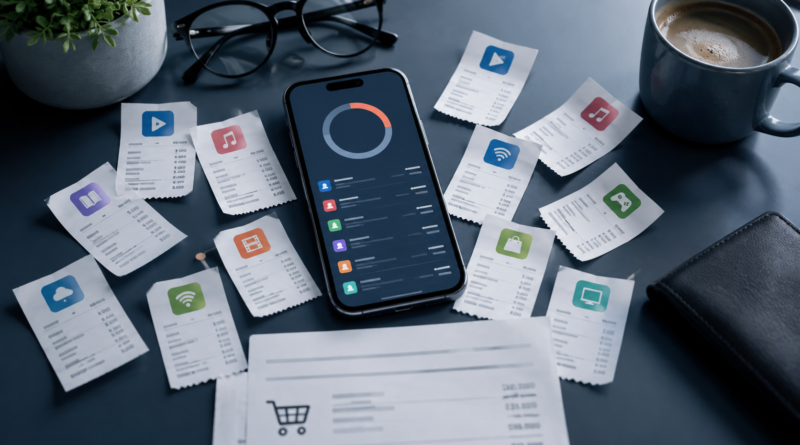
Your “Cheap” Subscriptions May Be Costing More Than Your Biggest Purchase
A small subscription rarely feels like a major financial decision. That is part of what makes recurring charges easy to carry for months without re-evaluating them.
Table of Contents
01 Event
Subscription spending often grows one service at a time: streaming, cloud storage, software, delivery memberships, fitness apps, premium mobile features, and other recurring digital services.
02 What Changed?
The payment model changed how people experience cost. A one-time $120 purchase feels significant because the full amount appears at once. A $10 monthly charge can feel trivial even though it becomes the same $120 over a year.
As a concrete current example, Spotify Premium Individual is listed at $12.99 per month in the U.S. A subscription at that price becomes roughly $155.88 over twelve months before promotions or price changes.
03 Why It Matters
Large purchases trigger comparison and hesitation. Recurring charges disappear into the background after the first approval, so yesterday’s decision can keep renewing even when usage falls.
Duplicate value is another hidden cost. Several video services, multiple cloud-storage plans, overlapping productivity tools, or similar memberships can each look reasonable alone while becoming expensive together.
04 What It Means for You
Annualize every recurring charge. Then ask: If this company asked me to pay the full annual amount today, would I still subscribe?
Also separate “available” from “used.” For each service, write down the last time you actively used it and what value you would lose if it disappeared tomorrow.
For related spending checks, compare the hidden cost of convenience fees and our annual-vs-monthly subscription reality check.
05 Numbers + Context
Imagine five services costing $8, $10, $12, $15, and $20 per month:
- Total per month: $65
- Total per year: $780
- $9.99/month annualized: about $120
- $24.99/month annualized: about $300
The useful comparison is not whether each subscription is individually affordable. It is whether the entire recurring stack deserves the amount of your budget it consumes.
A practical approach is to set a subscription budget—perhaps $50, $100, or another amount that fits your finances. New services then have to compete with existing ones instead of quietly stacking on top.
06 Earnyx Takeaway
The problem is not subscriptions. The problem is evaluating recurring charges one at a time while paying them as a group.
Annualize the cost, look for overlap, and judge each service against actual use. You may keep every subscription—but at least the decision will be based on the real total rather than a collection of harmless-looking monthly prices.
Reference: Spotify Premium U.S. pricing. Subscription prices and promotions change over time.

Pingback: The Convenience Fee Problem: How Much Are We Paying Just to Save a Few Minutes? - Earnyx
Pingback: Netflix, Disney+, Spotify and More: How Much Are Your Streaming Subscriptions Really Costing Per Year? - Earnyx
Pingback: Why Paying Annually Isn’t Always the Cheapest Option - Earnyx
Pingback: The True Cost of a “Free” App - Earnyx
Pingback: How Much Are You Really Paying for Cloud Storage? - Earnyx