
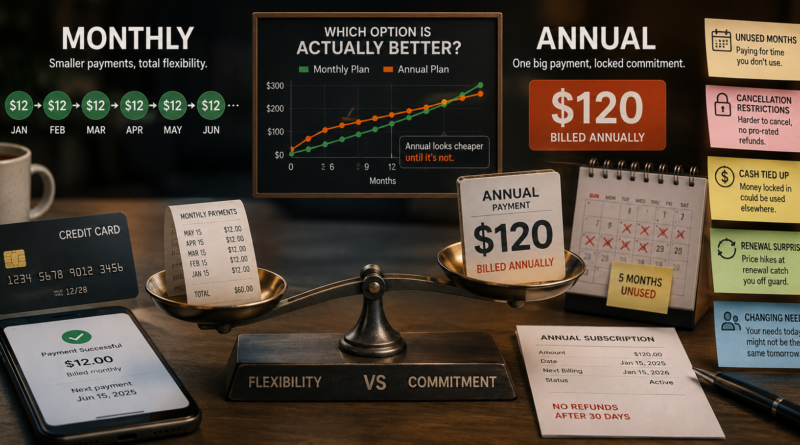
Why Paying Annually Isn’t Always the Cheapest Option
Annual billing is usually presented as the responsible choice: pay once, get a discount, and forget about it for a year. Sometimes that is exactly right. But “save 20% annually” does not automatically mean the annual plan is the cheapest decision for you.
Table of Contents
01 Event
More subscription services offer lower monthly-equivalent pricing when customers pay for a full year upfront. The headline is usually simple: commit longer and save more.
02 What Changed?
The math changes once real usage enters the picture. An annual plan can have a lower unit price but still cost more overall if you stop using the service early, switch products, or discover that the tool no longer fits your needs.
03 Why It Matters
Subscription decisions are often framed around percentage discounts rather than actual usage. That encourages buyers to focus on the price per month instead of the amount of money they are committing today.
Flexibility also has value. Software, jobs, hobbies, budgets, and competing products can change quickly. Monthly billing gives you the ability to stop paying when the service stops being useful.
04 What It Means for You
Annual billing makes the most sense when you have already used a service long enough to know you will keep it, the renewal terms are clear, and the discount is meaningful. Monthly billing is often better for new tools, experimental subscriptions, seasonal services, or anything you are still evaluating.
This is especially relevant if you already carry several recurring subscriptions. See our broader breakdown of how much subscriptions can cost over a full year, and our reality check on how cheap subscriptions can quietly become expensive over time.
05 Numbers + Context
Suppose a service costs $20 per month or $192 per year. The annual plan looks like a 20% discount because 12 monthly payments would total $240.
- Monthly for 12 months: $240.
- Annual plan: $192.
- Headline saving: $48.
- Monthly for four months: $80.
If you quit after four months, the “discounted” annual plan has cost you $112 more than simply paying monthly for the period you actually used the service.
There is also an opportunity-cost question. Paying hundreds upfront may be harmless if your budget is comfortable, but keeping cash available can matter more than a modest discount when money is tight.
06 Earnyx Takeaway
The cheapest plan is not always the one with the lowest monthly equivalent. It is the one you are most likely to use for the full period you are paying for.
Annual billing is a good tool when the commitment matches your behavior. It becomes a bad deal when the discount persuades you to prepay for usage that never happens. Before choosing annual, calculate the break-even point and ask how confident you are that you will still want the service when that point arrives.


Pingback: The Real Cost of Owning a Smartphone for 5 Years - Earnyx
Pingback: Your “Cheap” Subscriptions May Be Costing More Than Your Biggest Purchase - Earnyx
Pingback: Why 50% Off Doesn’t Always Mean You’re Saving 50% - Earnyx
Pingback: Free Trial or Subscription Trap? What to Check Before You Click Start - Earnyx
Pingback: The Lifetime Deal Trap: When “Pay Once” Isn’t Really a Bargain - Earnyx
Pingback: AI Transcription Apps 2026: Rev vs Descript vs Otter