
Cold Wash vs Hot Wash: Does Laundry Temperature Really Change the Cost?
Table of Contents
01 Event
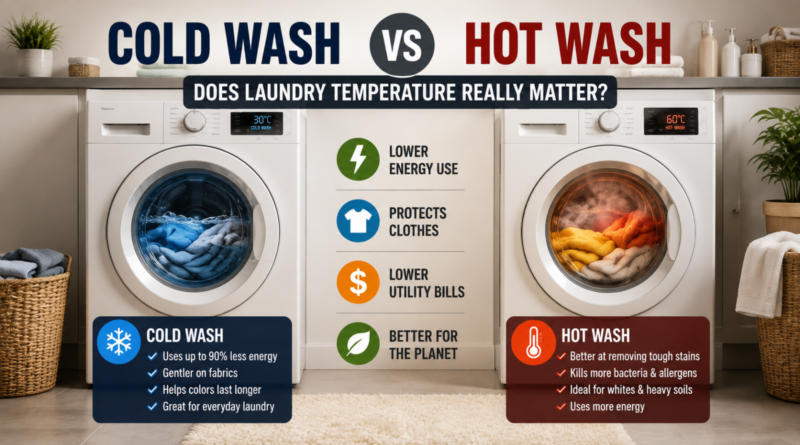
Laundry advice often focuses on detergent, stain removal and fabric care, but water temperature also changes the energy cost of every load. ENERGY STAR says water heating can account for about 90% of the energy used by a clothes washer.
02 What Changed?
Modern detergents are generally designed to work well in cold water for ordinary loads, which means hot water is no longer necessary for most everyday washing. That makes temperature selection a real operating-cost decision rather than just a cleaning preference.
03 Why It Matters
A washer itself does not use much electricity compared with the energy needed to heat water. If a household runs many loads each week, repeatedly choosing hot cycles can create a noticeable annual cost difference.
04 What It Means for You
Use cold water for normal clothing and lightly soiled loads. Reserve warmer cycles for situations where fabric-care instructions, sanitation needs or stubborn oily stains justify the extra energy. Running full loads also improves efficiency because washers use similar amounts of energy across load sizes.
05 Numbers + Context
ENERGY STAR states that water heating consumes about 90% of the energy required to operate a clothes washer and recommends cold washing for most loads. It also advises running full loads whenever possible. Source: ENERGY STAR, “Clothes Washers” — https://www.energystar.gov/products/clothes_washers
06 Earnyx Takeaway
Cold washing is one of those small household habits that can save money without requiring a purchase. The key is not turning every load cold by rule; it is matching the temperature to the actual cleaning job instead of paying for hot water automatically.