
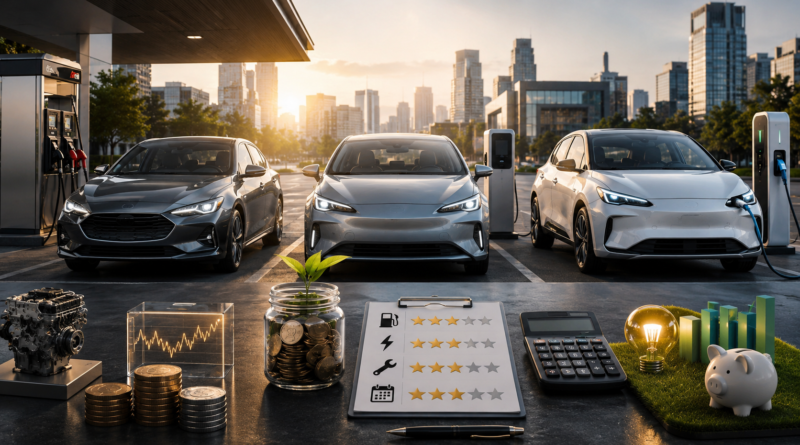
Gas vs Hybrid vs EV: Which One Really Costs Less to Own?
The cheapest car is not always the one with the lowest price tag. Gas cars, hybrids, and EVs distribute their costs differently, so the right answer depends on how you actually drive and how long you keep the vehicle.
Table of Contents
01 Event
Buyers increasingly compare gasoline, hybrid, and electric vehicles on more than purchase price. Fuel or electricity, maintenance, financing, depreciation, insurance, and charging access can change the total cost dramatically over several years.
02 What Changed?
EVs and hybrids have become mainstream enough that the powertrain itself is now a practical ownership decision rather than a niche technology choice. The U.S. Department of Energy notes that all-electric vehicles generally require less routine maintenance than conventional vehicles because they have fewer moving parts and fluids, while hybrids retain many conventional-engine service needs.
03 Why It Matters
A lower sticker price can be erased by years of higher energy or maintenance costs. The reverse can also happen: a more expensive EV may never recover its premium if you drive very little, rely on expensive public fast charging, or sell the vehicle before the operating savings compound.
Depreciation can overturn every fuel calculation. That is why the best comparison is between specific models, not generic categories.
04 What It Means for You
Gas may win if you drive relatively little, need the lowest up-front price, or lack convenient charging.
Hybrid may win if you drive enough for fuel savings to matter but want to keep normal refueling habits.
EV may win if you drive regularly, can charge cheaply at home, and plan to keep the vehicle long enough to spread the purchase premium across years of use.
If your real decision is whether to own a vehicle at all, compare our car ownership vs Grab analysis.
05 Numbers + Context
A useful ownership comparison includes:
- Purchase price and financing
- Fuel or electricity
- Maintenance and tires
- Insurance and taxes
- Expected resale value
For a hybrid premium, use a simple payback check. If the hybrid costs $3,000 more than the comparable gas model and saves $750 per year in fuel, the simple payback is about four years.
For energy cost, compare the same distance. Gas: distance ÷ fuel economy × fuel price. EV: distance × energy consumption × electricity price. Use your actual local rates rather than national averages.
Home charging is especially important. Public fast-charging rates can materially reduce an EV’s operating-cost advantage.
06 Earnyx Takeaway
Do not ask which powertrain is cheapest in general. Ask which one is cheapest for your mileage, energy prices, charging access, financing, and ownership period.
Build a five-year cost sheet before buying. Then run a second scenario with fuel and electricity prices 20% higher. The winner is not the car with the most impressive technology—it is the one that still makes sense after your real life is added to the spreadsheet.
Sources: U.S. DOE Alternative Fuels Data Center — EV Maintenance and U.S. Department of Energy — Electric Vehicle Future.


Pingback: Owning a Car vs. Using Grab: At What Point Does One Actually Become Cheaper? - Earnyx
Pingback: Tesla Semi Europe: Can Electric Trucks Beat Diesel Costs?