
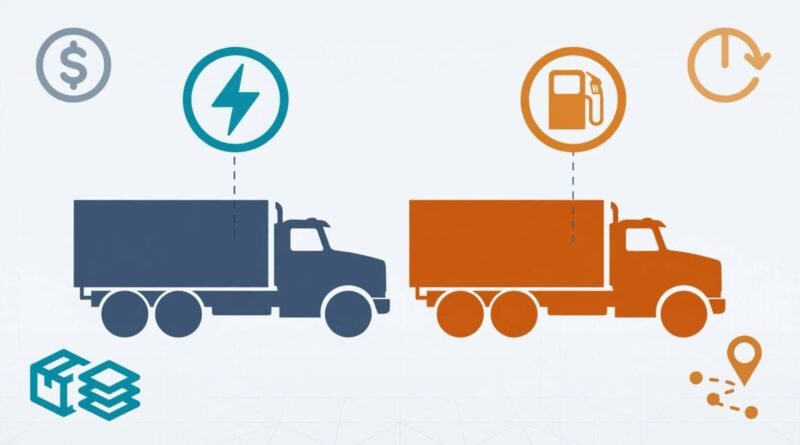
Tesla Is Finally Bringing the Semi to Europe — Can Electric Trucks Actually Compete With Diesel?
Tesla is bringing the Semi electric truck to Europe, pushing into a freight market where battery-powered heavy trucks already face a much tougher test than passenger EVs. For fleets, the key question is not whether an electric truck can move cargo. It is whether total operating economics can beat diesel over years of real commercial use.
Table of Contents
01 Event
Reuters reported that Tesla plans to introduce the Semi in Europe and disclose regional specifications and launch details at the IAA Transportation trade fair in Hanover, Germany. The move comes nearly a decade after the Semi was first unveiled in 2017.
Tesla began limited U.S. deliveries in late 2022, including to PepsiCo, after production was delayed several times.
02 What Changed?
The European launch expands Tesla’s commercial-vehicle ambitions beyond North America. Europe is also a demanding market: freight operators must account for long-distance routes, payload, charging downtime, depot infrastructure, driver schedules and tight operating margins.
Unlike passenger EV buyers, fleet operators usually make decisions based on total cost of ownership. Purchase price matters, but so do energy costs, maintenance, utilization and how much revenue the truck can generate each day.
03 Why It Matters
Heavy-duty trucking is one of the harder transport segments to electrify because batteries add weight and long-haul vehicles need large amounts of energy. Charging infrastructure must also support megawatt-scale demand if many trucks recharge at the same depot.
If electric trucks can become competitive on high-mileage routes, the economics may be attractive because commercial vehicles consume large amounts of fuel and accumulate mileage quickly.
04 What It Means for You
For fleets, the best early use cases are likely to be predictable routes where trucks return to a depot and charging can be planned. Operations with uncertain routes or very long continuous driving requirements may find diesel easier until charging networks mature.
For consumers, freight electrification matters indirectly. Transportation costs are built into the price of groceries, parcels and manufactured goods. Lower operating costs could eventually reduce logistics pressure, while expensive charging infrastructure could initially push the other way.
05 Numbers + Context
The Semi was unveiled in 2017 and was originally expected to enter production around 2019, highlighting how difficult the project has been to scale. Limited customer deliveries began in 2022.
The European launch will provide the specifications that matter most for comparison: usable range, charging speed, payload impact and fleet pricing.
06 Earnyx Takeaway
The Semi’s European launch is less about proving that an electric truck can drive and more about proving that it can make money.
For commercial fleets, the winning technology will be the one that keeps trucks moving at the lowest reliable cost per kilometer. If electric trucks can deliver that, diesel’s advantage starts to shrink quickly. If charging and downtime reduce utilization, the economics remain much harder.
Electric trucks are a harder problem than electric passenger cars because commercial fleets are paid to keep moving. Every minute spent charging, every kilogram of battery weight and every unavailable charger can affect how much freight a truck can move in a day. That makes total cost of ownership more important than sticker price alone.
The comparison with diesel also depends heavily on route type. A truck running a predictable depot-to-depot corridor can charge at known locations and plan around downtime. Long-haul operations with variable routes need a much denser public charging network before electric trucks can compete without operational compromises.
Earnyx has already looked at the broader economics in our gas-versus-hybrid-versus-EV total-cost comparison. The same principle applies here at a much larger scale: purchase price is only one line in the calculation. Energy, maintenance, financing, utilization and resale value determine whether the vehicle actually saves money.
Charging speed is another constraint. Faster charging reduces downtime but can require expensive electrical infrastructure and high-capacity grid connections at depots. Fleet operators therefore have to think like energy managers as well as transport companies.
There is also a payload trade-off. Large battery packs add weight, and commercial operators care about how much revenue-generating cargo remains after the vehicle itself is accounted for. Regulations can partially compensate for that, but physics still matters.
Tesla’s European push will therefore be judged less by acceleration or novelty and more by fleet spreadsheets. If operators can show lower cost per kilometer without sacrificing route flexibility, electric trucks have a credible business case. If charging, payload or downtime erode those savings, diesel will remain hard to displace on many routes.