
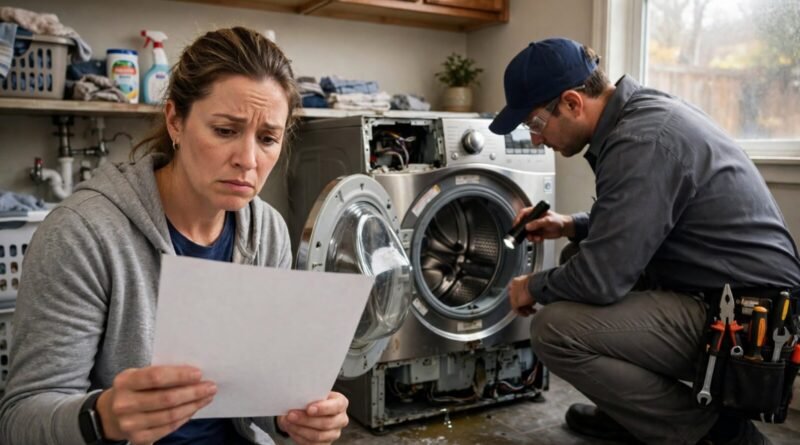
Home Warranty Plan Exclusions: What Repairs Can Still Come Out of Pocket?
A home warranty can sound like a simple way to turn unpredictable appliance and system repairs into a predictable annual cost. In practice, a so-called home warranty is often a paid service contract, not the same thing as the warranty included with a product or a builder’s warranty on a new home. Coverage depends heavily on the contract.
The right question is not “Does this plan cover appliances and HVAC?” It is “Under what exact conditions will this company pay for the repair I am worried about?”
Table of Contents
A home warranty is often a service contract
The Federal Trade Commission explains that many products sold as “home warranties” are really service contracts that cost extra. They can cover repairs or replacements for specified systems and appliances for a set period, but they are not the same as warranties included in the purchase price of a product.
This distinction matters because the contract itself controls much of the coverage.
Start with the covered-item list
Do not assume that “appliance coverage” includes every appliance or that “systems coverage” includes every component.
Read the schedule of covered items and identify:
- which HVAC components are covered;
- which plumbing and electrical components are covered;
- which appliances are listed;
- whether optional equipment requires an add-on;
- and whether there are separate limits for particular items.
The FTC advises consumers to assume that a repair not listed in the contract may not be covered.
Exclusions are contract-specific
Common service-contract limitations can involve causes of failure, maintenance requirements, pre-existing conditions, excluded parts, modifications, cosmetic damage, secondary damage, or code-related work—but no single list applies to every plan.
That is why this article should not be used as a substitute for reading the actual contract. Look at the exclusions section before buying, not after a claim is denied.
Service-call fees change the economics
Many plans charge a service fee or deductible each time a technician is dispatched. A plan that costs $700 per year plus a $100 service fee is not a $700 repair budget.
If you make four service calls, the out-of-pocket cost could become $1,100 before considering uncovered work.
These figures are hypothetical.
Coverage caps can leave large balances
A contract may limit how much it pays per appliance, per system, per claim, or per contract period. A repair can therefore be “covered” while still leaving the homeowner responsible for a substantial amount.
Ask for the dollar limits in writing and compare them with realistic replacement exposure for the equipment in your home.
Pre-existing-condition language deserves special attention
Some contracts restrict coverage for conditions that existed before the contract began or for failures that could have been detected earlier. The definition and proof requirements vary.
If you are buying a plan during a home purchase, keep inspection reports, maintenance records, and closing documentation because they may become relevant to a future claim.
Maintenance requirements can affect claims
The FTC’s service-contract guidance warns that contracts can require customers to follow maintenance instructions.
If a plan requires annual HVAC maintenance, filter changes, flushing, or other service, understand what records you must keep.
The company may choose the contractor
Some plans require the homeowner to use the provider’s network and obtain authorization before repairs begin. If you call your own contractor first, the plan may not reimburse the work.
That can matter during urgent failures when you care more about speed than the claims process.
Repair versus replacement may not be your choice
A service contract can give the administrator discretion over whether to repair, replace, offer cash, or use a specified replacement standard, depending on the terms.
Do not assume a failed 12-year-old appliance automatically produces a brand-new premium replacement.
Code upgrades can create uncovered cost
When older equipment is replaced, current building codes or installation standards can require additional work. Whether those modifications are covered depends on the plan.
Ask specifically about permits, code upgrades, electrical changes, drain modifications, refrigerant work, disposal, access, and haul-away where relevant.
Secondary damage may be separate
A plan might cover the failed component but not every resulting loss. For example, a covered plumbing failure and the water damage it causes may fall under different contracts or exclusions.
Homeowners insurance, the service contract, and the homeowner’s own funds can each play different roles.
Duplicate coverage reduces value
The FTC notes that service contracts can duplicate manufacturer warranties or other existing protection. A newer appliance may already have parts or labor coverage, while a credit card or retailer program may add protection.
Paying twice for the same period of coverage reduces the economic value of the home warranty.
A plan should compete with self-funding
Instead of automatically buying a contract, compare the expected annual plan cost with maintaining a dedicated home-repair reserve.
Annual plan cost = premium + expected service fees + expected uncovered repairs
Compare that with the flexibility of keeping the same cash in savings. Self-funding does not transfer catastrophic repair risk, but it also does not restrict contractor choice or claims.
Example: plan versus repair reserve
Imagine a plan costs $650 annually and has an $85 service fee. During three years, you make five service calls and receive $1,700 of repairs the provider pays for. Your direct plan spending is $2,375 before any uncovered costs.
Whether that was good value depends on what would have happened without the contract and how much the same repairs would have cost independently.
These figures are hypothetical.
Claims friction has economic value
A contract can look strong on paper and still be frustrating if appointments are slow, parts take weeks, or authorization is difficult. The FTC recommends checking the claims process and company reputation before buying.
Waiting without air conditioning, hot water, or a refrigerator can create costs not captured by the reimbursement total.
Cancellation terms matter
Check whether you can cancel, how refunds are calculated, and whether cancellation fees apply. This is especially important for multi-year plans or contracts sold as part of a real-estate transaction.
Do not confuse a warranty plan with homeowners insurance
A service contract generally addresses specified mechanical failures. Homeowners insurance addresses covered losses such as certain sudden property damage and liability risks. Neither substitutes for the other.
Earnyx’s insurance exclusions guide uses the same principle: the contract’s coverage and exclusions matter more than the product label.
Questions to ask before buying
- What exact systems and appliances are covered?
- What exclusions apply?
- What are the dollar caps?
- How much is each service fee?
- Who chooses the contractor?
- Is preauthorization required?
- What maintenance records are required?
- Are code upgrades, permits, disposal, and modifications covered?
- How are replacements valued?
- How can the contract be canceled?
Bottom line
A home warranty can be useful when the contract covers the systems you actually own, the limits are meaningful, the claims process works, and the total cost compares favorably with self-funding repairs.
But the word “warranty” does not guarantee broad protection. Read the exclusions, caps, service fees, authorization rules, and maintenance requirements before paying. The most expensive repair is often the one you assumed was covered until the claim was denied.