
Property Maintenance Budgets: How Much Should You Really Set Aside for a Home?
Homeowners are often told to set aside a fixed percentage of the home’s value every year for maintenance. That rule is easy to remember, but it can be a poor fit for an individual property. A newer condominium with association-covered exterior maintenance and an older detached home with aging roof, HVAC, plumbing, and drainage systems do not create the same ownership risk.
A stronger maintenance budget starts with the actual house: its systems, age, condition, climate, service history, and known upcoming work.
Table of Contents
Separate maintenance from repairs and upgrades
A practical home budget should distinguish three categories:
- Routine maintenance: recurring work intended to keep systems functioning.
- Repairs and replacements: fixing failures or replacing worn systems.
- Upgrades: discretionary improvements that change quality, style, capacity, or efficiency.
Mixing all three into one number makes it difficult to know whether the reserve is actually adequate.
Start with the inspection and major systems
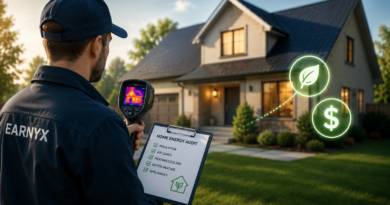
HUD emphasizes that a home inspection is intended to help buyers understand property condition. Use the inspection report as the first maintenance-budget document.
List major systems and components such as:
- roof;
- HVAC;
- water heater;
- electrical service;
- plumbing;
- foundation and drainage;
- windows and doors;
- exterior finishes;
- appliances;
- sewer, septic, or well systems where applicable;
- and any pool, fence, driveway, or other site improvements.
Age is useful context, not a replacement date
Manufacturers and industry sources may publish expected service ranges, but actual useful life depends on installation quality, environment, maintenance, usage, material, and failure mode.
Do not budget as if a 15-year-old system must fail this year or a 5-year-old system cannot fail. Use age together with condition and service history.
Build a five-year project list
Instead of asking for one universal annual percentage, identify likely work over the next five years.
For each item, record:
- current condition;
- known defect;
- priority;
- local repair or replacement quote;
- and the likely timing range.
This converts maintenance from a vague percentage into a property-specific capital plan.
Use local quotes for major items
Roof, HVAC, foundation, plumbing, electrical, and exterior costs vary heavily by home and location. Generic online averages often omit permits, access, demolition, code upgrades, disposal, or property-specific complications.
For major components that appear near replacement, obtain local quotes before closing or before building the annual budget.
Routine work deserves its own calendar
Some home expenses are small but predictable: filter changes, gutter cleaning, HVAC servicing, pest inspection, landscaping, drain maintenance, smoke-alarm replacement, or winterization depending on the property and climate.
Create a calendar rather than relying on memory. Regular maintenance can reduce avoidable damage, although it cannot prevent every failure.
Water problems deserve a high priority
Roof leaks, plumbing leaks, poor drainage, gutter overflow, foundation seepage, and failed caulking can create secondary damage that costs more than the original defect.
A maintenance budget should prioritize stopping active water intrusion before cosmetic upgrades.
Safety issues belong ahead of appearance
Electrical hazards, structural concerns, carbon-monoxide risks, unsafe stairs or railings, failing combustion equipment, and major leaks should generally receive priority over paint, flooring, or decorative projects.
The exact urgency should be determined by qualified professionals when the issue exceeds ordinary homeowner maintenance.
A hypothetical reserve plan
Imagine an owner expects $1,200 of routine annual maintenance, has a $6,000 exterior project likely within three years, and believes a $9,000 mechanical replacement may be needed within five years based on actual local quotes.
A simple sinking-fund approach could reserve:
$1,200 + $2,000 + $1,800 = $5,000 per year
That does not mean $5,000 is the correct maintenance budget for other homes. It is simply the result of this hypothetical property’s identified needs.
Keep an emergency repair reserve separate
A sinking fund covers expected work. An emergency reserve covers surprises: a sudden pipe failure, storm damage below the insurance deductible, a failed refrigerator, or a broken garage door.
If all maintenance savings are already committed to a roof project, the household still needs liquidity for unrelated failures.
Insurance does not replace maintenance reserves
Homeowners insurance generally responds to covered causes of loss, not routine wear, deferred maintenance, or every mechanical failure.
Earnyx’s insurance exclusions guide reinforces why an insurance policy should not be treated as a substitute for repair savings.
Home warranties do not eliminate the reserve either
Service contracts can have exclusions, service-call fees, coverage caps, and authorization rules. Even when a repair is covered, the homeowner may still owe money.
A maintenance fund remains necessary.
HOA ownership changes the calculation
In a condominium or HOA property, some exterior or shared maintenance may be funded through dues. But owners still need to budget for unit-level systems and for the possibility of dues increases or special assessments.
Review the association’s responsibility matrix before removing a component from your personal maintenance plan.
Climate changes what matters
Freeze exposure, heat, humidity, salt air, heavy rain, wildfire smoke, snow load, wind, termites, and other local conditions change both maintenance frequency and failure risk.
A national percentage cannot capture these property-specific environmental differences.
Track actual spending over time
After a year or two, compare your budget with actual spending. Separate routine maintenance, emergency repairs, replacements, and upgrades.
This gives you a better property-specific baseline than a generic rule.
Buying decisions should include the reserve
Earnyx’s renting versus buying analysis emphasizes that maintenance is a real cost of ownership. A buyer should not use every available dollar for the down payment and then assume future repairs will somehow fit into monthly income.
A practical property-maintenance worksheet
For every major component, record:
- condition;
- known issues;
- last service date;
- likely work within five years;
- local quote or budget range;
- monthly sinking-fund contribution;
- and who is responsible—owner, HOA, utility, or other party.
Bottom line
A good property maintenance budget should be built from the home you actually own, not a universal percentage of purchase price.
Use the inspection, system condition, local quotes, maintenance calendar, and five-year replacement plan to calculate a realistic sinking fund. Then keep a separate emergency reserve. The goal is not to predict every failure—it is to make predictable ownership costs boring instead of financially disruptive.