
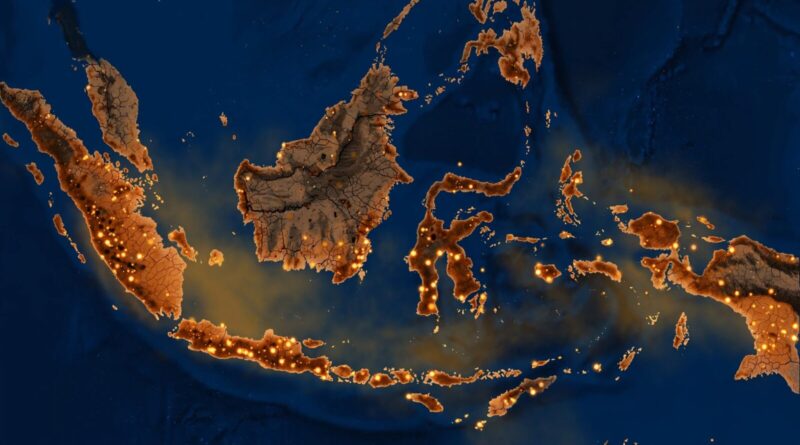
Indonesia Braces for Harder Wildfire Fight as El Niño Peaks in September
Table of Contents
01 Event
Indonesia is preparing for a difficult September wildfire period as the El Niño weather pattern reaches its expected peak, according to the country’s forestry ministry. Officials said fire-control efforts improved in parts of the country during August, but warned that dry conditions could intensify again and make suppression more difficult.
Forestry Minister Raja Juli Antoni described much of the fire damage as human-caused, while El Niño is making the environment hotter and drier and allowing fires to spread more quickly. The government has called for stronger prevention and readiness across fire-prone areas, including tighter coordination with forestry concession holders and local response teams.
Kompas.com background video: Indonesia’s 2026 El Niño outlook and the heightened drought and wildfire risk during the dry season.
02 What Changed?
The warning comes after a sharp escalation in wildfire indicators during the middle of 2026. Reuters reported more than 9,000 fire hotspots across Indonesia in August, compared with 5,077 in August 2015. Nearly 95,000 hectares burned in July alone, almost double the area damaged during the previous six months combined.
Authorities have deployed cloud-seeding operations and firefighting aircraft in an effort to limit fire spread and smoke, particularly in five key provinces on Borneo where peatlands can sustain fires underground for long periods. Indonesia’s forestry ministry said September requires heightened readiness because the seasonal weather pattern could make containment harder.
03 Why It Matters
Indonesia’s wildfire risk is not only an environmental problem. Large peat and forest fires can produce severe air pollution, disrupt transportation, affect schools and businesses, damage crops and create cross-border haze affecting neighboring countries. Peat fires are especially difficult because they can continue smoldering below the surface even when visible flames appear controlled.
El Niño is an important factor, but it is not the direct cause of the fires. Indonesian authorities and experts point to land clearing, deforestation and other human activity as major sources of ignition and vulnerability. Drier El Niño conditions then make those fires easier to spread and harder to suppress.
This distinction matters because weather alone does not explain the scale of the problem. Prevention, land management, enforcement and peatland restoration remain central to reducing fire risk even when climate conditions are unfavorable.
04 What It Means for You
For residents and travelers in Indonesia and neighboring parts of Southeast Asia, wildfire smoke can affect air quality and visibility. Travel disruption is possible when haze becomes severe, but actual impacts depend on wind direction, fire location and local conditions.
Consumers can also feel indirect effects if fire damages agricultural production or interrupts logistics, although it would be premature to attribute specific food-price changes to the current fire season without market evidence.
Earnyx readers can compare this with our broader coverage of how El Niño is affecting food, shipping and commodity markets worldwide. The Indonesia story is a more specific example: extreme dryness amplifies an existing land-management and fire-control problem.
05 Numbers + Context
Reuters reported that Indonesia recorded more than 9,000 hotspots in August 2026, compared with 5,077 in August 2015. The all-time monthly high cited by Indonesia’s Sipongi fire-monitoring service was 17,302 hotspots in October 2015.
Nearly 95,000 hectares burned in July 2026. Reuters also reported that mean global sea-surface temperatures reached a record 21.1°C on August 22, citing the European Union’s Copernicus climate service. Indonesian authorities said the current El Niño index has exceeded 2015 levels.
The 2015 fire season remains an important reference point because that crisis produced widespread regional haze and enormous health damage. Later research estimated more than 100,000 excess deaths across Indonesia, Malaysia and Singapore from wildfire pollution. The current 2026 season has not yet matched the overall devastation of 2015, according to Reuters.
06 Earnyx Takeaway
Indonesia’s wildfire risk is entering a more difficult phase, but the story should not be reduced to “El Niño causes fires.” The fires depend heavily on human ignition, land use and peatland conditions; El Niño makes an already dangerous system more combustible.
The strongest indicator to watch through September is whether prevention and suppression efforts can keep the rising hotspot count from turning into a repeat of the much larger 2015 disaster. Current conditions are serious, but the available evidence does not support saying that 2026 has already become another 2015.
Indonesia’s forestry ministry says August response trends improved in several areas, which is an important counterpoint to the severe hotspot numbers. That means the situation is neither “under control” nor automatically headed for the worst-case scenario. September’s outcome will depend on weather, prevention, enforcement and how quickly new fires are detected and contained.
The scale of land affected also increased quickly during the summer. Indonesia’s forestry ministry said about 200,000 hectares burned from January through July, up from 107,465 hectares through June. That means July alone accounted for a very large share of the year-to-date increase. Reuters separately reported nearly 95,000 hectares burned in July, the highest monthly damage in decades.
Smoke has already crossed from an environmental problem into a public-service disruption. Reuters reported haze and smoke-related illness across affected provinces and said thousands of schools moved classes online, including schools in neighboring Malaysia. That cross-border effect is one reason Indonesian wildfire seasons are watched closely across Southeast Asia rather than only inside Indonesia.
Indonesia has deployed firefighting aircraft and cloud-seeding operations in key areas. Officials said hotspots had fallen across parts of Kalimantan and Sumatra by the end of August, showing that suppression work was having some effect. The forestry minister’s warning for September was therefore not a claim that every indicator was worsening; it was a warning that the peak of El Niño could reverse recent progress or make new fires harder to control.
Fire-related emissions are another measure of severity. Reuters reported that Indonesia’s fire-related carbon emissions reached 17.1 million metric tons over one recent week, 429% above average and second globally only to Russia at that time. Those emissions figures measure the climate impact of burning vegetation and peat; they do not directly measure local air-quality exposure, which depends on where smoke travels.
Sources: Reuters, September 1, 2026; Reuters wildfire explainer, August 31, 2026; Indonesia Ministry of Forestry, September 1, 2026.