Level 1 Home EV Charging: When a Regular Outlet Is Enough
Table of Contents
01 Event
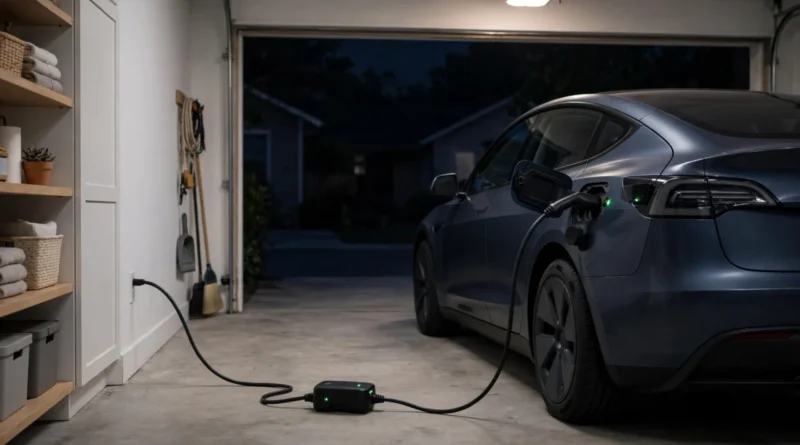
Level 1 charging is the simplest way to charge an electric vehicle at home. Instead of installing a dedicated higher-power circuit, the car plugs into a standard household outlet using compatible charging equipment. The obvious drawback is speed, but slow charging does not automatically mean inadequate charging.
02 What Changed?
As EV battery packs grew larger, Level 1 charging gained a reputation for being too slow. That can be true for drivers who routinely use a large share of the battery each day. But many households drive far fewer miles than a full battery’s range, meaning the relevant question is not how long it takes to charge from empty to full. It is whether overnight charging can replace the energy used that day.
For some owners, avoiding a charger installation can make Level 1 the lowest-cost entry into home charging.
03 Why It Matters
Charging decisions often focus on maximum capability instead of actual need. A driver who uses 25 miles of range per day may not benefit financially from installing a much faster charger if a standard outlet restores that energy overnight.
However, Level 1 can become restrictive when daily mileage rises, winter efficiency falls, several consecutive trips occur or the car arrives home with a deeply depleted battery.
04 What It Means for You
Estimate the number of miles you normally drive between charging sessions. Then compare that with the approximate range your EV can recover per hour from Level 1 charging. Because vehicle efficiency varies, energy added in kilowatt-hours is a better technical measure than a universal miles-per-hour estimate.
Make sure the outlet and circuit are in good condition and suitable for continuous charging. Avoid improvised extension-cord setups unless specifically approved by the vehicle and charging-equipment manufacturer. If the outlet is shared with other high-load appliances, consult a qualified electrician.
Level 1 works best when the vehicle spends long periods parked at home and daily driving is modest.
05 Numbers + Context
As an illustration, a 120-volt circuit delivering roughly 1.4 kW could add around 11 kWh during eight hours of charging before losses. If the EV consumes 30 kWh per 100 miles, that amount of energy corresponds to roughly 37 miles of theoretical driving energy before accounting for charging losses and conditions.
A household driving 20 to 30 miles per day may therefore replace most daily use overnight. A driver covering 80 miles every day would accumulate an energy deficit unless additional charging opportunities exist.
Vehicle manuals, charging-equipment specifications and electrical codes should guide actual setup decisions.
Level 1 can also work as a transitional solution. A new EV owner can use it for several weeks, measure the real daily energy deficit and then decide whether a Level 2 installation is actually necessary. That avoids paying for electrical work based on assumptions rather than actual use.
That measured approach can be especially useful for renters or households unsure how long they will keep the vehicle.
06 Earnyx Takeaway
Level 1 charging is not obsolete; it is simply slow. For low-mileage households with long overnight parking periods, that may be completely sufficient and can avoid hundreds or thousands of dollars in installation work. The right question is not “How fast can I charge?” but “Can this setup reliably replace the energy I use before I need the car again?” If yes, Level 1 can be excellent value.