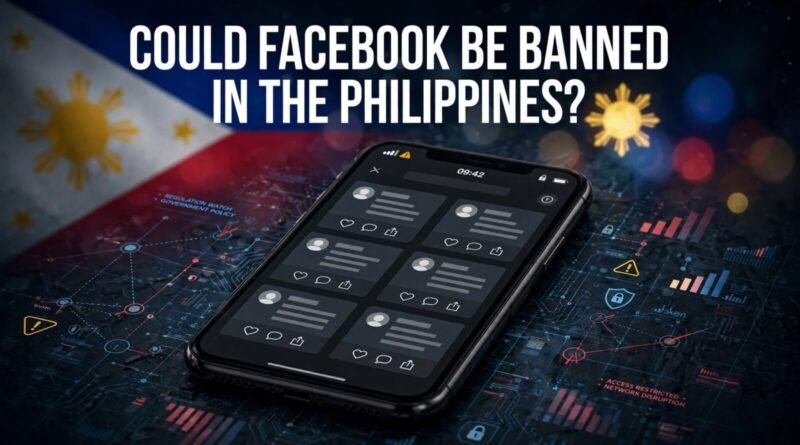
Could Facebook Be Banned in the Philippines? DICT Says It Would Be a Last Resort
The Department of Information and Communications Technology has clarified that blocking Facebook in the Philippines would only be considered as a last resort, as the government pushes Meta to address concerns involving fake accounts, harmful content and online abuse.
Table of Contents
01 Event
DICT Secretary Henry Aguda said the government would first exhaust available measures to get Meta to comply with requests aimed at protecting Filipino users, particularly young people. He emphasized that blocking Facebook is not the preferred course of action.
02 What Changed?
The issue has moved beyond general complaints about harmful content. DICT is now publicly identifying specific areas where it wants stronger cooperation from Meta, including identity verification that could help authorities identify abusive fake or troll accounts and faster removal of harmful content such as disturbing livestreams.
03 Why It Matters
Facebook remains one of the Philippines’ most widely used communications platforms. Any discussion of restricting access therefore has implications for households, businesses, creators, schools and public agencies that rely on the service. The government’s language also signals growing pressure on large technology platforms to respond more quickly to local safety concerns.
04 What It Means for You
For ordinary users, there is no announcement that Facebook is being banned. The key takeaway is that DICT is trying to increase platform accountability before considering more drastic measures. Users should continue strengthening account security, avoiding suspicious profiles and reporting harmful material through official channels.
For businesses and creators, the episode is another reminder not to rely on a single social platform for customer communication or audience reach. Maintaining websites, email lists and multiple social channels can reduce disruption if regulations or platform policies change.
05 Numbers + Context
DICT identified two broad concerns in its public remarks: stronger identity verification and faster removal of harmful content. Aguda also pointed to government engagement with TikTok as an example of platform cooperation that did not require blocking.
Related Earnyx reading: For more context on platform risk and digital dependence, see New Zealand’s Under-16 Social Media Ban Gains Labour Support and The True Cost of a “Free” App.
Source: Pilipino Star Ngayon / Pang-Masa reporting on DICT remarks, Aug. 27, 2026.
06 Earnyx Takeaway
The headline risk is a Facebook ban, but the immediate story is regulatory pressure. The government is signaling that Meta is expected to respond faster to safety and identity concerns. For users and businesses, the practical move is not panic. It is reducing dependence on one platform while watching how Meta and DICT respond.