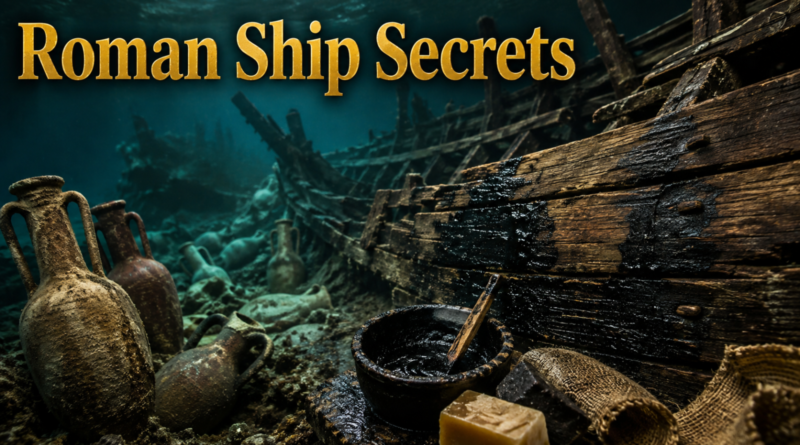
A Roman Shipwreck Revealed How Sailors Waterproofed and Repaired Ships 2,200 Years Ago
Table of Contents
01 Event
Researchers analyzing the 2,200-year-old Ilovik-Paržine 1 Roman shipwreck found that its hull had been protected with pine tar and, in one area, a pine-tar-and-beeswax mixture.
02 What Changed?
Scientists combined chemical analysis with pollen trapped inside the ancient coatings. That let them study not only what Roman sailors used to waterproof wood, but also where some repair materials may have come from.
03 Why It Matters
Ancient shipbuilding is usually reconstructed from surviving wood, fasteners, and cargo. Organic coatings decay easily, so they can preserve a different kind of engineering history: maintenance, waterproofing, and how vessels were kept operating across long routes.
04 What It Means for You
This is not just a story about old tar. It shows how archaeology can recover practical engineering decisions from materials that were once treated as background residue. That can change how researchers understand ancient trade and maritime technology.
05 Numbers + Context
Researchers analyzed 10 coating samples and identified evidence of roughly four to five separate coating batches, suggesting repeated repairs. The wreck sank off what is now Croatia. Source: Frontiers via ScienceDaily; study published in Frontiers in Materials.
06 Earnyx Takeaway
The fascinating part is how ordinary maintenance becomes historical evidence. Pine tar, beeswax, and trapped pollen can reveal where a ship traveled, how often it was repaired, and how much practical knowledge ancient sailors needed to keep Mediterranean trade moving.