
A 400-Year-Old Indigenous Pot in Florida Is Puzzling Archaeologists
Table of Contents
01 Event
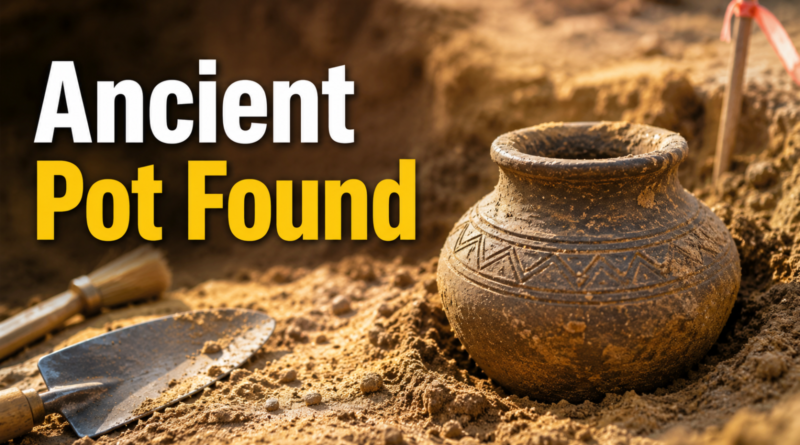
Archaeologists excavating Mission San Francisco de Potano in Florida uncovered a small Indigenous clay pot that had remained intact underground for roughly 400 years.
02 What Changed?
Complete pottery is unusual at land sites because useful objects were normally kept, reused, or eventually broken. This vessel was apparently placed into the ground whole, raising a simple but intriguing question: why leave behind something that still worked?
03 Why It Matters
The site preserves a period when Potano-Timucua communities, Spanish missionaries, trade, migration, and military pressure were reshaping everyday life in Florida. Even a small household object can reveal how people adapted while traditions persisted.
04 What It Means for You
The discovery does not solve a famous historical mystery overnight. Its value is in the context: archaeologists can compare the vessel with structures, weapons, food remains, and thousands of other artifacts to reconstruct a community that written records describe only partially.
05 Numbers + Context
The mission dates to the 1600s and was abandoned in 1706. More than 7,000 artifacts have been recovered from the site since 2006, mostly fragments of Native pottery. The intact pot is small enough to fit in a hand. Source: Florida Museum of Natural History via ScienceDaily.
06 Earnyx Takeaway
Some of the best discoveries are valuable precisely because they create a new question. A complete everyday object can be more revealing than a spectacular treasure when it helps archaeologists understand how real people lived, traded, moved, and interacted centuries ago.


