
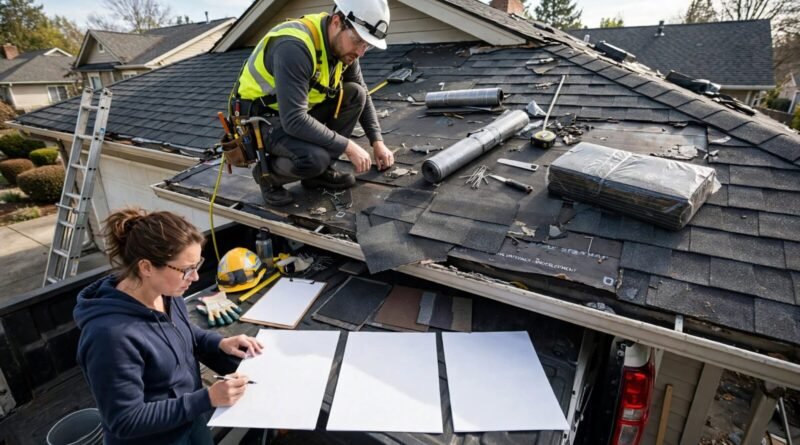
Roof Replacement Costs: How to Compare Quotes Without Missing the Expensive Details
Roof replacement is one of the largest periodic expenses many homeowners face, but a headline price per square foot rarely tells the whole story. The installed cost depends on the roof’s size and geometry, material, number of existing layers, decking condition, flashing, ventilation, access, disposal, permits, code requirements, and local labor.
The useful question is not “What does a roof cost nationally?” It is “What is the complete installed scope required for this specific roof?”
Table of Contents
Start with measured roof area, not house floor area
Roof surface area can differ substantially from the home’s footprint because of slope, overhangs, dormers, hips, valleys, additions, porches, garages, and multiple roof sections.
A contractor’s measured area should therefore be used when comparing quotes. Do not assume a 2,000-square-foot house has exactly 2,000 square feet of roofing material.
Material choice changes both price and scope
Asphalt shingles, metal systems, tile, slate, wood, membrane roofing, and other materials have different material, labor, structural, flashing, and underlayment requirements.
When comparing bids, make sure the contractors are pricing the same material class, manufacturer line, underlayment, flashing, ventilation work, and warranty structure.
Tear-off can be a major cost
Removing existing roofing requires labor, disposal, and site protection. The number of existing layers and material type can affect that work.
A quote that assumes installation over an existing layer is not directly comparable with a quote that includes complete tear-off unless both approaches are code-compliant and technically appropriate for the property.
Decking damage is one of the biggest unknowns
The roof deck may not be fully visible until old material is removed. Rot, delamination, water damage, or inadequate sheathing can create additional work.
Ask each contractor how decking repairs are priced. A bid that gives a unit price for replacement sheathing can be easier to compare than one that simply says “additional charges may apply.”
Flashing deserves its own line item
Leaks often occur around chimneys, walls, skylights, valleys, vents, and penetrations. Reusing old flashing can reduce the quoted price while leaving vulnerable details untouched.
Ask whether the scope includes new step flashing, counterflashing, valley treatment, pipe boots, drip edge, and other relevant details for your roof.
Ventilation can affect the system
Roof replacement may be an opportunity to correct ventilation problems, but ventilation design should be appropriate for the attic and climate.
Ask whether intake and exhaust ventilation are being evaluated together. Do not assume adding more roof vents automatically improves performance.
Permits and code upgrades belong in the installed price
Local jurisdictions can require permits, inspections, ice barriers, flashing details, ventilation, wind-resistance measures, or other code-related work.
Ask whether permits and required code upgrades are included. A cheaper quote that excludes them may not remain cheaper.
Access can change labor and disposal costs
Steep slopes, tall buildings, tight lots, limited driveway access, landscaping, solar panels, roof-mounted equipment, or difficult debris removal can increase labor and staging complexity.
That is why two homes with similar roof area can receive very different bids.
A hypothetical quote comparison
Imagine Contractor A quotes $16,000 and Contractor B quotes $19,000. Contractor A excludes permits, decking replacement, new chimney flashing, and disposal over a stated weight. Contractor B includes permits, full flashing replacement, a defined amount of decking repair, and disposal.
The $3,000 difference is not necessarily a $3,000 saving. The quotes have different scope.
These figures are illustrative.
Normalize every bid
Create a comparison sheet with:
- measured roof area;
- material and exact product;
- tear-off;
- underlayment;
- ice/water protection where relevant;
- flashing;
- ventilation;
- decking repair pricing;
- gutters or related work;
- permits;
- disposal;
- site protection;
- warranty;
- and payment schedule.
Then compare the bids after the scope is aligned.
Warranty terms are part of the value
Roofing can involve separate manufacturer material warranties and contractor workmanship warranties. Read both.
Ask what installation requirements are necessary to preserve the manufacturer warranty and how workmanship claims are handled.
Contractor insurance and licensing matter
Requirements vary by jurisdiction. Verify any required license, registration, insurance, and permit responsibilities using official local sources.
A low bid becomes expensive if the work is unpermitted, poorly installed, or difficult to warranty.
Storm damage changes the insurance question
If replacement follows a storm or other potentially covered loss, review the homeowners policy and claim terms before signing a contract. Insurance coverage depends on cause of loss, policy terms, deductible, depreciation treatment, and other conditions.
Earnyx’s insurance exclusions guide explains why roof age or damage alone does not determine whether a claim is covered.
Do not assume insurance will pay for an old roof
Ordinary wear, age, maintenance, or deterioration are different from sudden covered damage. Coverage varies by policy.
Budget for eventual replacement as a homeownership expense rather than treating insurance as a roof-replacement savings plan.
Solar panels can complicate replacement
If solar panels are installed, removal and reinstallation may require coordination with the solar contractor, roofer, electrical work, storage, and potentially warranty considerations.
Price that work before selecting the roof bid.
Timing can have practical value
Replacing a roof before active leaks create interior or decking damage can reduce secondary repair risk. On the other hand, replacing a functional roof years early sacrifices remaining useful service.
Condition should drive timing more than age alone.
Use the inspection to prioritize the project
HUD’s home-inspection guidance emphasizes evaluating visible property condition before purchase. For an existing owner, a qualified roofer or appropriate building professional can provide a more focused assessment of active leaks, flashing, deck condition, material deterioration, and ventilation.
Build a roof sinking fund
If replacement is likely within several years, divide a current local budget range by the remaining planning horizon.
If three normalized quotes cluster around $18,000 and you want to be prepared within four years, a simple starting sinking fund would be $375 per month.
$18,000 ÷ 48 months = $375 per month
This is a hypothetical budgeting example, not a national roof-cost estimate.
Bottom line
Roof replacement cost is determined by the complete installed scope, not a national average or a single per-square-foot number.
Measure the actual roof, normalize material and flashing details, price decking uncertainty, include permits and disposal, verify contractor qualifications, and compare warranties. The best roof quote is the one that clearly covers the work the house actually needs with the fewest expensive surprises after tear-off begins.