Does Turning the Thermostat Down Actually Save Enough to Matter?
Table of Contents
01 Event
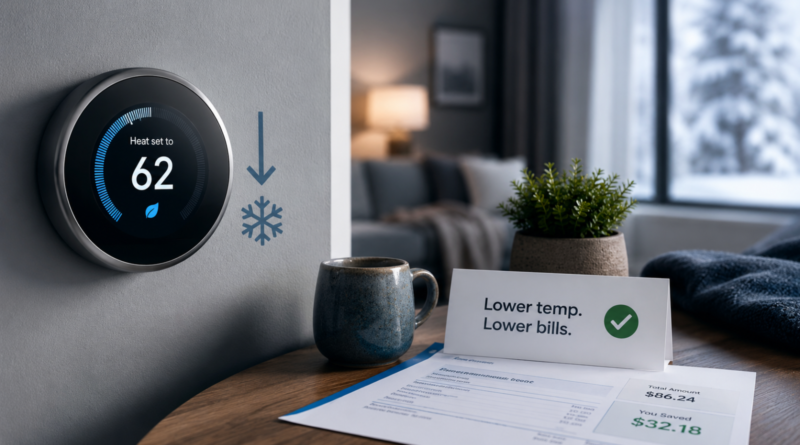
Heating and cooling usually make up one of the largest parts of a household energy bill, which is why thermostat advice is everywhere. The U.S. Department of Energy says households can save as much as about 10% a year on heating and cooling by turning the thermostat back 7°F to 10°F for around eight hours a day, depending on climate, system type and starting temperature.
02 What Changed?
The useful shift is away from the old idea that your HVAC system has to “work harder” later and therefore cancels out the savings. In many homes, reducing the indoor-outdoor temperature difference for several hours lowers total heat transfer enough to reduce energy use overall.
03 Why It Matters
A small thermostat adjustment costs nothing, but the result compounds because heating and cooling run for hundreds or thousands of hours each year. That makes thermostat settings one of the rare home-cost decisions where behavior can matter almost as much as buying new equipment.
04 What It Means for You
Start with periods when comfort matters least: while sleeping or while nobody is home. Avoid extreme setbacks if your system struggles to recover, and be more cautious with heat pumps that trigger expensive auxiliary heat. A programmable or smart thermostat can automate the routine, but automation is only valuable if the schedule actually changes temperatures.
05 Numbers + Context
DOE notes potential heating-and-cooling savings of up to about 10% annually from an appropriate daily setback. If heating and cooling cost a household $1,500 a year, even a 5% reduction would be about $75. At $3,000 a year, the same reduction is about $150. Source: U.S. Department of Energy, Energy Saver, “Why Energy Efficiency Matters” — https://www.energy.gov/energysaver/why-energy-efficiency-matters
06 Earnyx Takeaway
The thermostat myth is worth testing because the downside is almost zero. Before buying windows, insulation or a smart thermostat, measure what a disciplined temperature schedule does to your own bill. The cheapest efficiency upgrade may simply be using the controls you already have more deliberately.