Oversizing a Solar System: When More Panels Stop Being a Better Deal
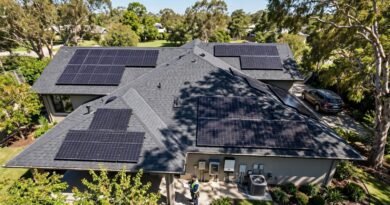
Installing more solar panels than a household currently needs can be sensible when electricity demand is expected to rise. It can also weaken the project’s financial return when the additional generation is exported at low value or comes from poor roof locations. The extra capacity should be evaluated on its own economics.
Table of Contents
01 Event
Solar proposals often offer several system sizes. A larger array produces more electricity, but more production is not automatically more valuable.
The U.S. Department of Energy recommends evaluating home solar using factors such as energy use, site conditions, costs and local policies. NREL’s PVWatts tool can help estimate production from a proposed photovoltaic system.
02 What Changed?
Household electricity demand can increase through EV charging, heat pumps and other electrification. That creates legitimate reasons to plan for future load rather than sizing only to last year’s consumption.
At the same time, export compensation differs by utility and jurisdiction. Electricity consumed in the home may have a different value from electricity sent to the grid, so an oversized system’s marginal output deserves separate analysis.
03 Why It Matters
Each additional increment of capacity has an upfront cost and expected production. If that production mostly offsets electricity the household would otherwise buy, it can be valuable. If it is mostly exported under weak compensation, the payback may be less attractive.
Oversizing also commits more capital and may increase financing costs. Nonfinancial benefits can still matter, but they should not be confused with cash savings.
04 What It Means for You
Ask the installer to show a base system for current demand and the incremental capacity proposed for future demand. Identify the specific expected loads rather than using a vague assumption that electricity use will rise.
Review the utility’s current interconnection and export rules. Ask how much projected production will be self-consumed and how much will be exported.
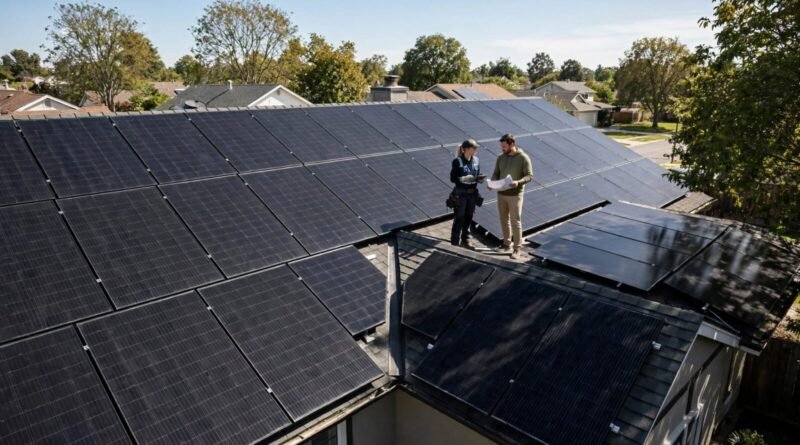
Model the best roof sections first. Additional panels placed on more shaded or poorly oriented surfaces can have weaker production economics.
Earnyx’s undersizing a solar system guide covers the opposite risk: saving upfront only to discover that future electricity demand makes expansion desirable.
05 Numbers + Context
Use:
Incremental cost = larger system price − base system price
Incremental annual value = additional self-consumed kWh × avoided purchase rate + additional exported kWh × applicable export value
Suppose a larger system costs $6,000 more and produces 2,500 additional kWh in its first year. If, in a hypothetical scenario, every additional kWh offsets electricity worth $0.20, gross first-year value is $500. If instead all additional production is exported at $0.06, gross value is $150. These rates are illustrations, not claims about any utility tariff.
Real analysis should also consider degradation, financing, rate changes and the timing of future household demand.
06 Earnyx Takeaway
Oversizing solar is not automatically wasteful. It should have a defined purpose such as known future electrification or valuable export opportunities.
Judge the last increment of system capacity separately. A strong base solar project can hide weak economics in the extra panels if the proposal is evaluated only as one total.
Future EV charging is a common planning consideration, but use realistic driving assumptions. Estimate annual miles, vehicle efficiency and how much charging is likely to occur at home rather than adding an arbitrary electricity number.
Heat-pump adoption can also increase electricity use while reducing another fuel expense. Model the household’s complete energy change rather than treating the higher electric bill in isolation.
Load timing matters. Solar generated at midday can be more valuable when appliances, EV charging or other loads can operate during production hours. Load shifting can increase self-consumption without necessarily adding a battery.
Battery storage should pass its own economic test. Do not assume an oversized array becomes financially attractive simply because a battery could absorb exports. Storage adds cost, efficiency losses and degradation.
Roof replacement timing is important. Adding panels to marginal roof areas shortly before roofing work may create future removal and reinstallation costs.
Interconnection limits can constrain system size or export. Verify current utility rules before paying for capacity that cannot be operated as assumed.
Inverter sizing can affect the value of extra DC capacity. Ask the installer to explain expected clipping and whether the inverter architecture supports the proposed design.
Financing should be modeled on the incremental capacity. A $6,000 addition financed over many years costs more than $6,000 after interest, so the extra production must justify the financing burden too.
Tax incentives or rebates, where applicable, should be verified using current official eligibility rules. Do not build the economics around an incentive that has not been confirmed for the project.
Degradation reduces future production, so lifetime models should not multiply first-year output by the system life without adjustment.
The Earnyx method is marginal analysis: price the extra capacity, estimate the extra usable production and value that production under realistic self-consumption and export assumptions. Add panels while the incremental economics remain attractive—not simply until the roof is full.