Black Friday Subscription Deals: What Happens When the Promotional Price Ends?
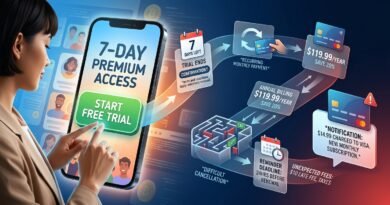
Black Friday subscription deals can make a service look dramatically cheaper by discounting the first month, first several months, or first year. The risk is that the promotional price is temporary while the subscription can continue automatically at a much higher regular rate.
The real cost is not the introductory price. It is the amount you expect to pay over the full period you are likely to keep the service, including renewal.
Table of Contents
Start with the renewal price
Before subscribing, find the regular price that applies after the promotion. Do not assume the discount repeats next year.
If the service is $30 for the first year and renews at $120, a two-year customer pays $150, not $60.
These figures are illustrative, not current pricing for a particular service.
Calculate the effective monthly cost
A useful formula is:
Effective monthly cost = total expected payments ÷ expected months of use
For the example above, $150 over 24 months equals an average of $6.25 per month. Compare that number with alternatives and with what the service is worth to you.
Annual billing can hide the size of renewal
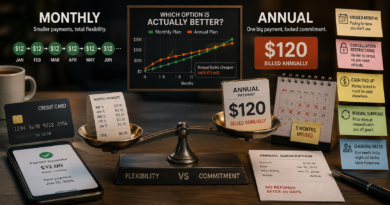
An annual renewal can hit the budget all at once. A service that feels like $10 per month can create a $120 charge on one date.
Record the renewal month and amount in your budget so it does not become an unexpected expense.
Automatic renewal changes the default
Many subscriptions continue unless the customer cancels. That makes forgetting an expensive behavior.
Review the service’s current cancellation and renewal terms before subscribing. The FTC has focused consumer-protection attention on negative-option and difficult-cancellation practices; regardless of the exact legal requirements that apply to a specific service, consumers benefit from documenting renewal and cancellation rules.
Set a reminder immediately
If you are buying mainly because of a Black Friday promotion, create a calendar reminder several days or weeks before renewal.
The reminder is not an instruction to cancel. It creates a deliberate moment to ask whether the service still earns its place in the budget at the regular price.
Free trials can roll into paid plans
Some Black Friday deals add a free period before the discounted or regular subscription begins. Check exactly when the first charge occurs and whether payment details are required at sign-up.
A free trial has value only if you use it and understand the conversion terms.
Price increases can change the long-term calculation
Subscription prices can change after you join, subject to the service terms and applicable law. A five-year forecast based on today’s renewal price is therefore not guaranteed.
For decision-making, use current official pricing and test whether the service would still be attractive if the price rose modestly.
Example: a 50% first-year deal
Imagine a service normally costs $100 per year and Black Friday reduces the first year to $50. If you keep it for three years at unchanged regular pricing, total spending becomes $250.
The promotional saving is $50—not 50% of the entire three-year cost. The longer you remain subscribed, the less the introductory discount affects the average price.
Bundles can create subscriptions you do not need
A device, membership, or software package may include several months of another service. Before activating, check whether it will auto-renew and whether the service duplicates something you already pay for.
Two discounted subscriptions that solve the same problem can still increase total spending.
Compare annual usage, not sign-up enthusiasm
Streaming, fitness, software, news, cloud, and creator subscriptions often feel most valuable when first purchased. Usage can fall over time.
Estimate how often you realistically expect to use the service after the novelty wears off.
Earnyx’s cost-per-use rule works well for subscriptions: divide annual cost by meaningful uses, not merely days of access.
Cancellation timing can affect access
Some services allow access until the end of the paid period after cancellation; others may have different terms. Verify the current policy.
If you cancel to prevent renewal, keep the confirmation.
Refund rules matter on annual plans
An annual subscription can be cheaper per month but less flexible. If your needs change after two months, you may not receive a proportional refund.
Read the refund policy before committing a full year upfront.
Business subscriptions need seat discipline
For teams, Black Friday can encourage buying multiple seats at once. Unused licenses can turn a large discount into waste.
Start with the number of active users you actually have and check how seats can be added or removed later.
Do not count the discount twice
If a service offers 40% off and your credit card gives cashback, track both, but do not mentally treat the Black Friday price as the new permanent baseline.
The renewal still returns to whatever regular price the service states at that time.
Compare the subscription with paying only when needed
Some services have monthly plans, day passes, transaction pricing, or free alternatives. A deeply discounted annual plan can still cost more than using the service for only the few months you need it.
Choose the billing model that matches usage, not the one with the biggest percentage graphic.
Holiday cash flow matters
Annual prepayment moves future spending into November. That can save money over monthly billing while weakening current cash reserves.
Earnyx’s holiday budget planning guide helps frame the trade-off: a future service can be cheaper annually and still be poorly timed for the household budget.
Bottom line
When a Black Friday subscription promotion ends, the service usually becomes a normal recurring expense under the renewal terms you agreed to. The introductory discount is therefore only one part of the total cost.
Check the renewal price, auto-renewal date, refund and cancellation rules, expected usage, and annual cash-flow impact. Buy the subscription because it is worth the regular long-term cost—or because you have a clear plan to reassess it before renewal—not simply because the first year looks cheap.