How Online Stores Make You Spend More Than You Planned
Table of Contents
01 Event
Online shopping is designed to remove friction, but some interfaces go further by steering people toward decisions they might not otherwise make. Regulators commonly describe manipulative interface techniques as “dark patterns.”
The Federal Trade Commission has highlighted practices including disguised ads, difficult cancellation processes, buried terms and fees, and design choices that trick people into sharing data or making purchases.
02 What Changed?
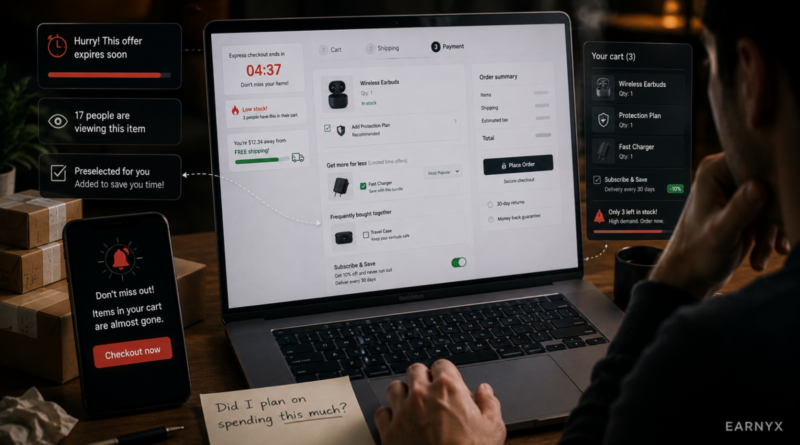
Digital stores can test and optimize almost every part of the purchase journey: button color, default selections, countdown clocks, low-stock messages, checkout order and subscription prompts. That makes persuasion more measurable and scalable than in a traditional store.
Not every persuasive design is deceptive. The problem is when design obscures material information or deliberately interferes with a consumer’s ability to make an informed choice.
03 Why It Matters
Small nudges can compound. A preselected add-on, a shipping threshold and an automatically renewing subscription can turn a modest purchase into a much larger long-term commitment. Earnyx has examined the downstream version of this problem in free-trial subscription traps and subscription creep.
The key financial risk is that checkout design shifts attention away from total cost and toward completing the transaction.
04 What It Means for You
Before paying, ignore the retailer’s urgency and perform a separate checkout audit. Check the final total, recurring charges, selected add-ons, shipping costs, return terms and whether the purchase creates an account or subscription.
Be especially skeptical of timers or scarcity messages that cannot be independently verified. A genuine bargain should survive the few minutes needed to understand it.
05 Numbers + Context
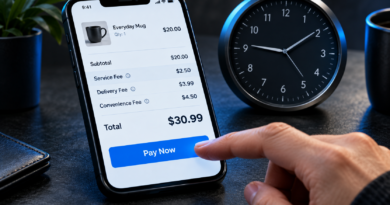
A $60 product can become an $84 checkout after a $10 add-on, $8 shipping charge and $6 service fee—a 40% increase over the headline price. If a $9.99 monthly subscription is also attached and goes unnoticed for a year, the effective cost climbs by another $119.88.
The FTC has taken enforcement and rulemaking actions around deceptive digital practices, emphasizing that interface design does not excuse misleading consumers.
06 Earnyx Takeaway
The most useful defense against manipulative shopping design is to separate the decision to buy from the mechanics of checkout. Decide what you want, what you are willing to pay and whether you want recurring service before the page starts nudging you. When the interface creates urgency, slow the transaction down—that is often exactly what the design is trying to prevent.
Sources: Federal Trade Commission, “Bringing Dark Patterns to Light” and FTC consumer guidance on manipulative online design.